
Condor Software Unveils World's First Clinical Finance AI Agent Purpose-Built for Biopharma R&D
Source: PR Newswire
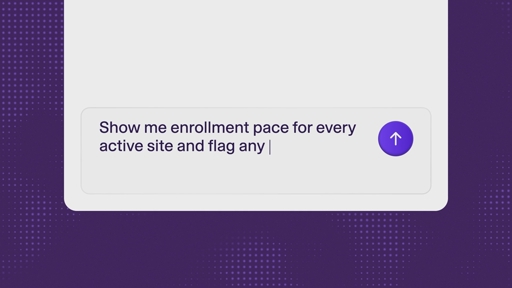
Condor Software launched a clinical-finance AI agent for biopharma R&D teams that analyzes budget variances, forecasts trial cost-to-complete, identifies site-level risks, and models enrollment, site-mix, and investment scenarios. The product aims to reduce clinical-finance analysis from hours or weeks of manual reconciliation across ERPs, CTMS, EDC systems, and spreadsheets to seconds. The launch targets a growing operational bottleneck as pharmaceutical patent cliffs and AI-enabled discovery increase the volume of drug candidates requiring funding and clinical-trial management.
Analysis
This is not a near-term earnings catalyst for ACAD, BBIO, or MDGL; it is a vendor product release with no disclosed contract value, deployment scope, or evidence that customers are paying incremental fees. The more relevant mechanism is indirect: better trial-cost visibility can reduce cash forecasting error and prevent site-level overspend, but those savings are unlikely to be material against the clinical-development budgets of public biotechs for at least 12-24 months. Investors should not capitalize claimed AI productivity into these companies' valuations until management quantifies lower R&D expense, faster enrollment, or reduced trial-cycle duration.
The strategic beneficiary is the clinical-operations software stack, where proprietary data integration and workflow embedment create switching costs. This raises a longer-term competitive issue for point solutions and services-heavy clinical research organizations: if sponsors internalize budget reconciliation, change-order controls, and scenario analysis, CRO administrative revenue and labor utilization could face modest pressure. However, Condor's deterministic-model claim is unverified; implementation quality, source-data completeness, and auditability—not model fluency—will determine adoption in regulated workflows.
Contrarian view: the bottleneck may remain operational rather than financial. A faster forecast does not add qualified sites, investigators, patients, or manufacturing capacity; it can instead expose cost overruns earlier without changing the underlying economics. For ACAD, BBIO, and MDGL, the investable signal is a future management disclosure tying technology adoption to trial timing or R&D efficiency, not the announcement itself.
AllMind Terminal
AI-powered research, real-time alerts, and portfolio analytics for institutional investors.
Request TrialMarket Sentiment
Overall Sentiment
moderately positive
Sentiment Score
0.42
Ticker Sentiment
Key Decisions for Investors
- No standalone trade in ACAD, BBIO, or MDGL on this release; maintain existing fundamental positions and treat it as low-impact vendor news over the next 1-3 months.
- Create an earnings-call watch item for ACAD, BBIO, and MDGL: act only if management quantifies trial-cost savings, enrollment acceleration, or a reduction in R&D guidance attributable to workflow automation. A credible 3-5% reduction in cash R&D spend or measurable timeline improvement would be a positive margin/cash-runway catalyst.
- Monitor CRO and clinical-software exposure over 6-18 months rather than shorting on narrative risk: validate the thesis through sponsor disclosures of lower change-order expense, reduced finance headcount, or slower outsourced clinical-administration spend. Absent those data, implementation friction likely outweighs displacement risk.
- For biotech longs, use any AI-productivity multiple expansion cautiously: falsify the efficiency thesis if quarterly R&D expense continues to exceed guidance or enrollment timelines slip despite reported platform adoption.
More News
- Pokémon card curbs send shares of Japanese online marketplace Mercari on a bumpy ride
- Australia’s central bank chief warns inflation risks materialising
- Asian stocks rise as oil retreat eases inflation fears, BOJ in focus
- US to Sell F-35s to Saudi Arabia in $24.3 Billion Deal
- California AG Bonta on Paramount-Warner Bros., Meta and AI
- A breakout in the 10-year Treasury yield could hold back stocks if it reaches this level
From AllMind Research
- Anthropic IPO Preview: Valuation, Timing, and What to Watch
- Shein After the IPO: Venue, Valuation, and What Must Be Proved
- What AI Research Tools Should a Small Hedge Fund Buy First?
- How to Search Earnings Call Transcripts With AI
- What a Concept From Nature Tells Us About How C-Suite Executives Actually Think About AI