
Holidays at the Disneyland Resort Returns with Festival Favorites and Classic Traditions, Nov. 13, 2026 - Jan. 6, 2027
Source: PR Newswire
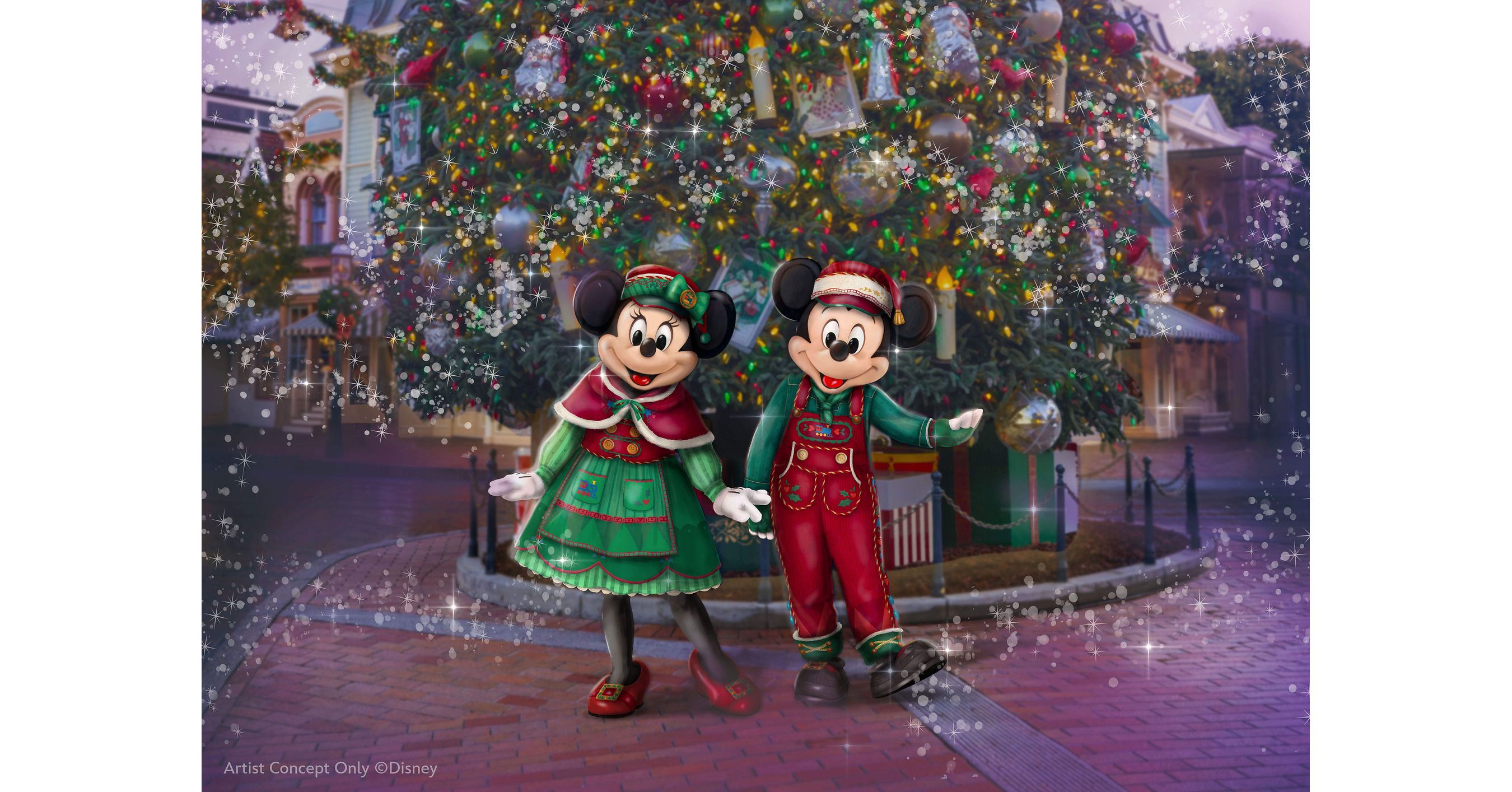
Disneyland Resort announced a multi-park holiday expansion starting Nov. 13 (through Dec. 24 for Santa at Disneyland and California Adventure), including new nighttime/seasonal entertainment like "Wintertime Enchantment" and "World of Color - Season of Light," plus limited-time food and merchandise. The article also details 2026 hotel promos (up to 20% savings on select 3+ night stays, Oct. 11–Dec. 18, 2026) and a new Disney California Adventure event (starting Nov. 13, 2026). Overall, it’s promotional guest-experience news with modest potential to support on-site demand, but no financial guidance or results updates.
Analysis
This reads as a modest monetization lever, not a thesis changer. The important mechanism is mix: holiday overlays primarily lift high-margin per-cap spend through hotels, food, merch, and paid add-ons, while incremental attendance at a capped, reservation-based property is harder to scale than at a normal venue. That means the upside is more about sustaining pricing power into a soft consumer backdrop than creating a new demand leg.
Second-order, the program is effectively a demand capture exercise: it pulls spend from off-property lodging and local restaurants toward Disney-owned inventory, and it reinforces the moat versus regional leisure alternatives that cannot replicate the same immersive premium experience. But because this is a heavily anticipated seasonal playbook, most of the benefit should already be embedded in forward bookings; the market will care more about whether occupancy, average daily room rate, and guest spend hold up than about the content slate itself.
Risk is mostly macro and timing-related over the next 1-3 months: if discretionary spending weakens, families usually cut ancillary purchases before park tickets, which would hit the highest-margin parts of the story first. The contrarian view is that the move may be overread as incremental growth when it is mostly calendar normalization; if management commentary does not show better hotel fill, food attach, or merchandise conversion, the stock likely fades back to broader consumer multiples. A clean falsifier is any evidence of discounting beyond the published offers or softer-than-expected holiday occupancy/park-spend metrics.
AllMind Terminal
AI-powered research, real-time alerts, and portfolio analytics for institutional investors.
Request TrialMarket Sentiment
Overall Sentiment
neutral
Sentiment Score
0.10
Ticker Sentiment
Key Decisions for Investors
- Do not chase DIS on this headline; wait for holiday booking commentary or next-quarter parks disclosures before adding exposure.
- If DIS trades down on macro consumer weakness without a change in park/room data, consider a small tactical long with a 4-8 week horizon; the best setup is a dip that does not coincide with softer occupancy guidance.
- Use DIS as a relative-strength watch item versus XLY: if holiday spend data hold up while broader discretionary weakens, a modest long DIS / short XLY pair can express premiumization resilience.
- Falsify the bullish read if management signals lower hotel occupancy, weaker per-guest spending, or incremental discounting versus the stated offers; that would argue the seasonal lift is being bought, not earned.
More News
- Nvidia GPUs are everywhere. Here are the ways companies are accessing them
- Bank of America is bullish on these top stocks ahead of earnings
- As companies pour billions into Earth-based AI infrastructure, Google is taking the data center race off-planet
- How U.S. know-how is fracking Australia into a gas boom, from Texas oilmen to Trump’s energy secretary
- The world needs Ukraine’s grain. Its farmers are running out of reasons to plant
- Verizon stock heads for worst day since 2002 as SpaceX U.S. network plans whack telcos