
SLACAL Launches Executive Forum Video Series Featuring Lloyd's Americas President Marc Lipman
Source: PR Newswire
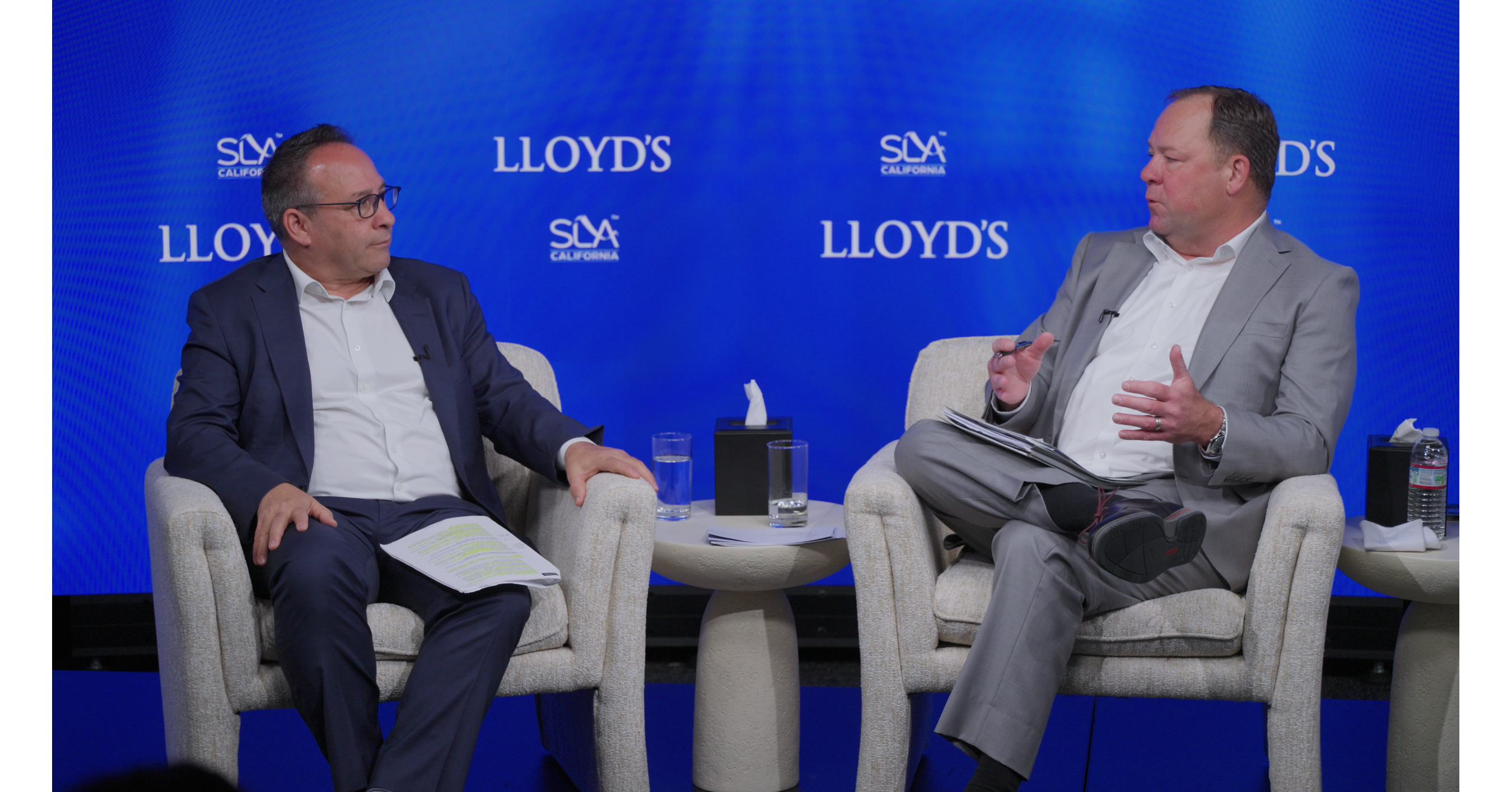
California's surplus-lines insurance market has grown to roughly $24 billion in annual premiums, with Lloyd's holding an 18% share of the state's excess-and-surplus market in 2025. SLACAL and Lloyd's highlighted wildfire exposure, AI-related risks and data centers as pressures reshaping insurance availability, while private equity, hedge funds and sovereign wealth funds provide new risk-transfer capital. The discussion also pointed to parametric wildfire and earthquake products as potential tools to speed homeowner payouts.
Analysis
This is not an earnings-relevant development on its own: the release provides no evidence on binding capacity, rate adequacy, attachment points, or loss-cost trends, so it should not change estimates for listed insurers. The investable implication is directional: continued migration of difficult California property, cyber, and data-center risks into E&S channels raises placement complexity and commission pools, favoring brokers AON, AJG, and BRO more reliably than it favors any single risk carrier. Over 6-18 months, a durable specialty-market expansion would also improve fee revenue for wholesale intermediaries, while admitted personal-lines writers with meaningful California exposure remain constrained by regulatory lag between catastrophe loss trends and approved rates.
The non-obvious risk is that alternative capital is not uniformly bullish for specialty insurers. If pension, sovereign, and hedge-fund capacity enters through collateralized reinsurance or managing-general-agent structures, it can compress E&S pricing precisely as wildfire model uncertainty should command higher returns; this would be most negative for carriers whose valuation assumes sustained specialty combined-ratio outperformance, including KNSL, RLI, and WRB. Parametric products may reduce liquidity stress and uninsured-loss severity after events, but basis risk limits substitution for traditional indemnity coverage. The key 1-3 month signal is whether California’s regulatory process permits materially improved rate/catastrophe-model recognition; the key 6-18 month signal is whether new capacity arrives at disciplined returns rather than chasing premium growth.
AllMind Terminal
AI-powered research, real-time alerts, and portfolio analytics for institutional investors.
Request TrialMarket Sentiment
Overall Sentiment
mildly positive
Sentiment Score
0.18
Key Decisions for Investors
- No event-driven position from this release; treat it as an industry-structure watch item until quarterly disclosures show California E&S premium growth, rate change, and catastrophe-exposed limits.
- Maintain a 6-12 month preference for insurance brokers AON, AJG, and BRO over pure-play specialty underwriters: complex placements generate recurring commission revenue with materially less direct wildfire tail exposure. Reassess if organic brokerage growth decelerates or E&S placement commissions compress.
- Monitor KNSL, RLI, and WRB for a relative-value short or underweight only if renewal-rate commentary turns negative while alternative-capital inflows accelerate; the falsifier is continued double-digit rate growth with stable or improving accident-year loss ratios.
- For California personal-lines exposure, use regulatory approval cadence and reinsurance costs—not public commentary—as the catalyst framework. A meaningful acceleration in approved rate filings would reduce the bearish structural case for ALL and CB; absent that, avoid assuming premium growth converts into adequate returns.
More News
- Here’s the ‘core economic flaw’ in the AI bull case as stock and bond trades unravel, according to a top economist
- Biotech stocks are surging. How investors can play the new drug innovation boom
- AI funding fears rattle Wall Street. Here's how we're adjusting our portfolio
- Nvidia's role as AI financier faces first big test as neoclouds take market hit
- Ukraine says Starlink and Starshield high speed restrictions have been lifted
- French police use tear gas and water cannons after some protests turn violent as shopkeepers board up storefronts across Paris