
Tirer le meilleur parti de chaque rayon de soleil pour alimenter ce qui n'est pas alimenté : L'édition 2026 du Forum mondial de l'industrie à faibles émissions de carbone explore les pistes pour combler le déficit en électricité
Source: PR Newswire
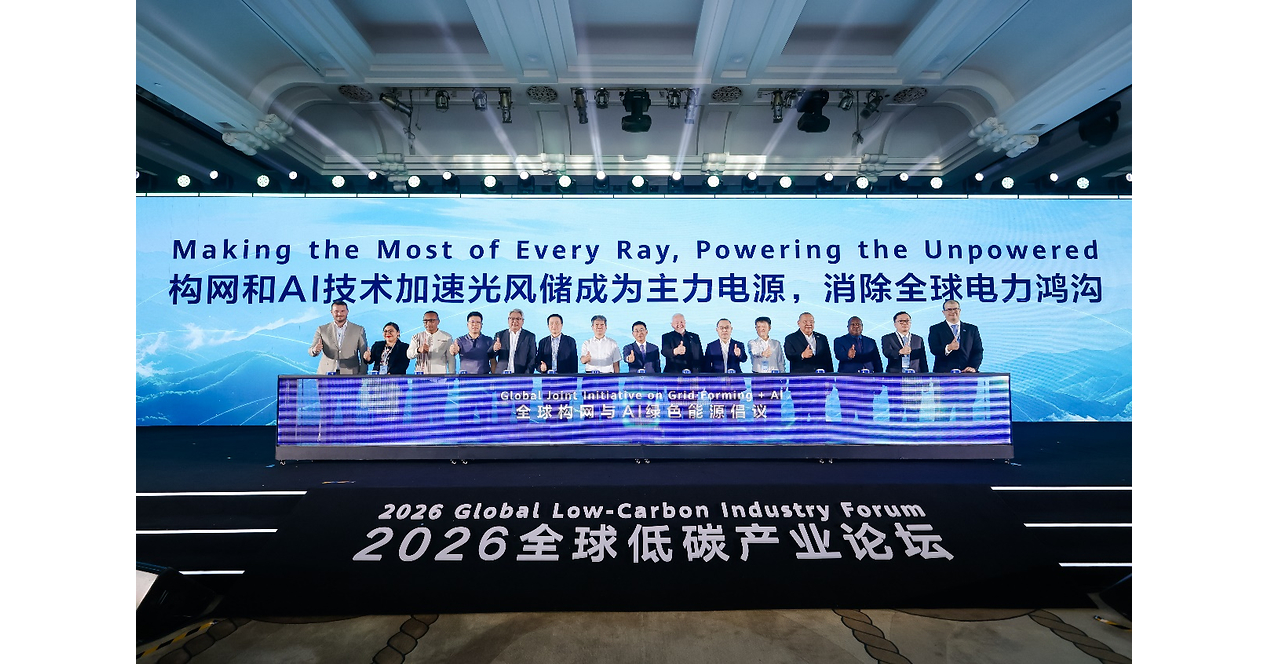
The MTerra Solar Grid-Forming PV+ESS project in the Philippines has commissioned its 2.5GWp solar and 3.3GWh battery-storage Phase 1, part of a planned 3.5GW PV and 4.5GWh storage complex. The project is expected to supply stable clean power to about 2.4 million households and cut more than 4.3 million tonnes of carbon emissions annually. Industry groups and Huawei Digital Power also launched a global initiative to accelerate standardization and deployment of grid-forming and AI technologies, targeting electricity-access gaps affecting roughly 700 million people.
Analysis
The investable implication is not a broad solar rerating; it is a shift in the value chain toward controllable power electronics, grid equipment and storage software. As renewable penetration rises, project economics increasingly depend on interconnection approval, ancillary-service revenue and availability guarantees rather than module cost. That favors GE Vernova (GEV), Eaton (ETN), Siemens Energy (ENR GR) and selectively Fluence (FLNC) over upstream solar beta represented by TAN, where oversupply and weak pricing can still absorb incremental deployment.
AI-load growth creates a second demand pool for storage and power-quality equipment: data-center operators will pay to avoid curtailment, grid-connection delays and outage exposure. The relevant beneficiaries are Vertiv (VRT) and ETN, but the risk is that hyperscalers self-build behind-the-meter generation, reducing the addressable market for merchant grid storage. Over the next 1-3 months, the key catalyst is evidence that grid-forming capability receives explicit procurement value in European ancillary-service auctions and utility RFPs; without contracted price premiums, technical validation alone does not translate into earnings.
Consensus may overestimate the near-term revenue capture by battery integrators. Grid-forming functionality can be bundled into inverter/control systems, while increasingly competitive cell and EPC markets may leave integrators with limited incremental margin; FLNC requires improved bookings quality, gross-margin durability and working-capital discipline before it merits a structural long. Over 6-18 months, standardized performance requirements would create a higher barrier to entry for certified inverter and controls suppliers, potentially compressing the advantage of low-cost, commodity-oriented solar developers.
AllMind Terminal
AI-powered research, real-time alerts, and portfolio analytics for institutional investors.
Request TrialMarket Sentiment
Overall Sentiment
strongly positive
Sentiment Score
0.58
Key Decisions for Investors
- Initiate a 6-12 month long GEV / short TAN pair: position for grid-capex and system-stability spending to outperform commodity-solar economics. Target 15-20% relative upside; exit if utility order growth slows materially or solar-equipment pricing stabilizes enough to reverse the relative-margin thesis.
- Accumulate ETN on market weakness for a 12-18 month horizon, sized as infrastructure exposure rather than AI momentum beta. Upside comes from data-center electrical distribution plus grid hardening; reassess if data-center capex guidance is cut or ETN backlog conversion deteriorates.
- Keep FLNC on a catalyst watchlist, not a core long, pending the next two quarters of positive operating cash flow and disclosed contracted grid-services economics. A long becomes actionable only if gross margin sustains above management guidance while net working capital improves; otherwise, balance-sheet and execution risk dominate.
- Monitor European frequency-response and grid-forming capacity auction clearing prices over the next 3-6 months. If auctions establish recurring, bankable revenue premiums, add exposure to ENR GR and selected storage-system suppliers; if capacity is procured without meaningful price separation, avoid extrapolating technology claims into earnings estimates.
More News
- Bank of Japan raises interest rates to 31-year high, flags concerns over inflation
- Italy to deploy warships to protect shipping through Bab al-Mandeb
- Oil prices fall as Saudi supply hopes outweigh fresh Houthi strikes
- Oil prices fall for 3rd day as supply concerns ease, diplomacy in focus
- Oil Traders Stymied by Iran War Stalemate: Evening Briefing Americas
- Australia’s central bank chief warns inflation risks materialising