
WSSA and APMS Collaborate to Advance Aquatic Weed Management
Source: PR Newswire
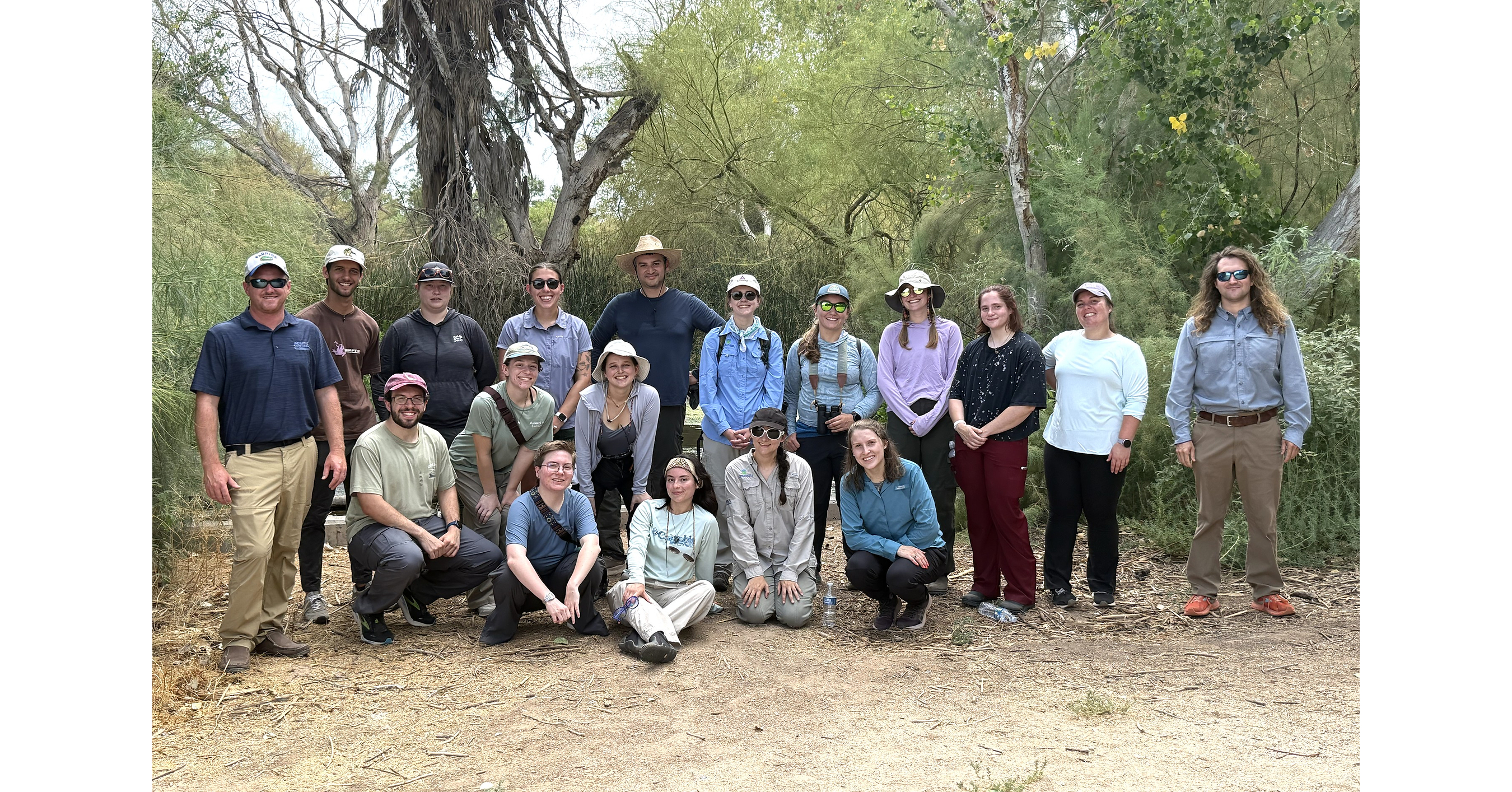
The Aquatic Plant Management Society highlighted expanded collaboration with the Weed Science Society of America on aquatic weed research, water-resource protection and advocacy for sustained federal funding. Its 66th annual meeting drew 113 participants, with 41 research presentations and 15 posters, while a field program supported invasive saltcedar mapping across the nearly 700-acre Tres Rios Wetlands restoration area. The release notes federal funding volatility and a growing preference for non-chemical weed-control methods in some regions, but does not present a material near-term market catalyst.
Analysis
This is not yet investable: the release signals advocacy activity rather than an appropriation, procurement award, regulatory decision, or adoption commitment. Public-market beneficiaries of expanded aquatic-vegetation budgets would likely be indirect—herbicide/formulation suppliers such as Corteva (CTVA) and FMC (FMC), water-infrastructure operators including American Water Works (AWK), and monitoring/equipment providers such as Xylem (XYL)—but aquatic applications are too small a disclosed revenue line to alter near-term estimates.
The more relevant 6-18 month implication is policy direction. A shift toward mechanical, biological, mapping, and targeted-treatment methods could favor sensing and water-management capital spending over broad chemical-volume growth, but only if federal, state, or municipal budgets convert into funded programs. The counterpoint is that constrained public budgets and permitting delays can suppress removal activity even as invasive-species incidence rises, leaving manufacturers with little incremental demand.
Near-term price impact should be nil. The actionable catalyst would be a federal water-resources appropriations increase, USACE program expansion, or state-level treatment contract awards; absent these, this remains an ESG/policy watch item rather than a tradable earnings event.
AllMind Terminal
AI-powered research, real-time alerts, and portfolio analytics for institutional investors.
Request TrialMarket Sentiment
Overall Sentiment
mildly positive
Sentiment Score
0.15
Key Decisions for Investors
- No new position on this release; do not extrapolate scientific-society advocacy into revenue for CTVA, FMC, XYL, or AWK without disclosed contract, budget, or volume data.
- Create a 1-3 month policy alert for USACE and state water-agency appropriations or awarded aquatic-vegetation contracts. Reassess XYL if awarded monitoring/treatment infrastructure programs become material to backlog; missing data are contract value, supplier identity, and procurement timing.
- For existing CTVA/FMC exposure, monitor regulatory restrictions on aquatic herbicide active ingredients and management-method substitution. A material reduction in approved-use labels or explicit municipal migration away from chemical treatment would be a negative read-through; no hedge is warranted solely from this item.
More News
- Attacks on Saudi oil expose Iraqi PM’s struggle to control armed factions
- China's AI leaders keep quiet despite U.S. 'publicity' on tech risks
- Oil prices dip as U.S. inventory build offsets M.East supply jitters
- Karin Rådström is steering Daimler Truck in a new direction as the world’s biggest truckmaker faces a growing challenge from China
- Iran war has cost Pentagon $38 billion and depleted missile stockpiles, CBO says
- AWS says it can't restore service to Bahrain, UAE facilities 6 months after Iran strikes
From AllMind Research
- Anthropic IPO Preview: Valuation, Timing, and What to Watch
- Shein After the IPO: Venue, Valuation, and What Must Be Proved
- What AI Research Tools Should a Small Hedge Fund Buy First?
- Stop Treating AI Like a Chatbot: What Are Agents, SubAgents, MCP, and Skills, and How Do They Actually Work?
- Earnings-Triggered Research Automations: A Control Guide