
How to Become a Botox Injector?
Source: Newswire
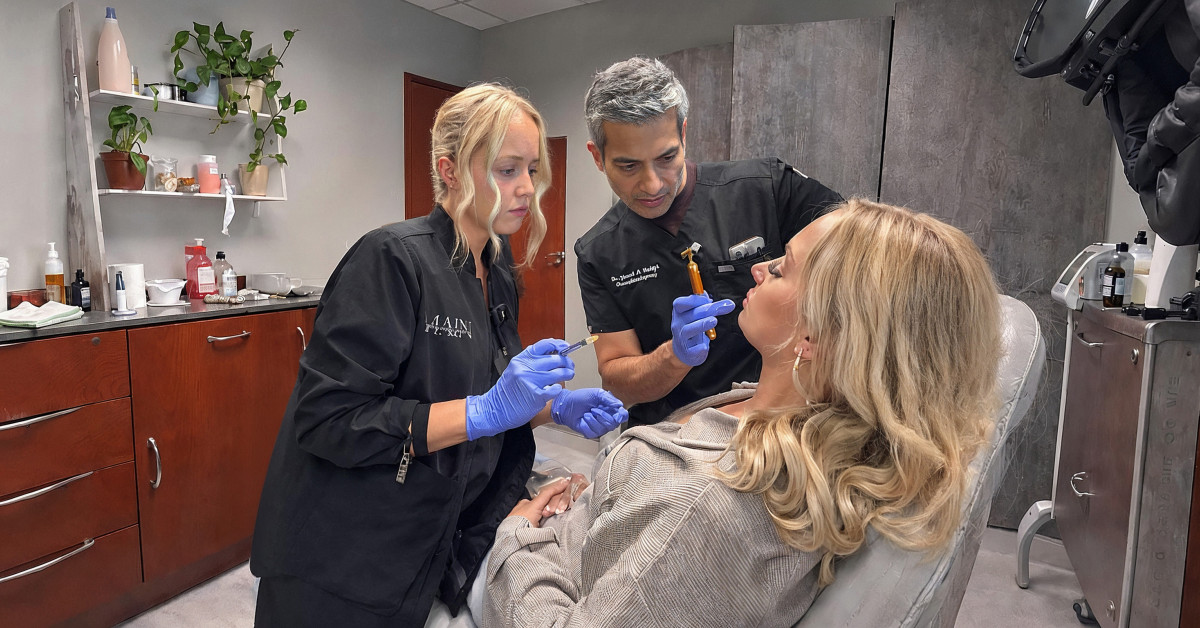
American Academy of Cosmetic Medicine promoted its CME-accredited Botox-injector training programs, which offer 8.5 CME credits and online, one-day 10-hour, or two-day 20-hour course formats. The academy said certification can support careers in med spas, dermatology and plastic-surgery practices as U.S. medical-aesthetics demand expands. The item is primarily promotional content and is unlikely to have material market impact.
Analysis
This is a low-signal, self-promotional item rather than evidence of an investable demand inflection. The relevant mechanism is incremental provider capacity: easier entry into aesthetic practice can expand injection points of distribution, supporting procedure volumes for neuromodulator and filler manufacturers over 6-18 months, but it also fragments the provider base and raises promotional intensity at med spas. More injectors do not necessarily translate into proportional manufacturer revenue if local price competition increases treatment frequency discounts.
The most direct public-market exposure is AbbVie (ABBV), whose aesthetics franchise has the broadest installed base, but new-provider growth is likely more valuable to challengers seeking share gains through training, rebates, and starter inventory. Revance (RVNC) is no longer independently tradable following its acquisition, leaving Galderma (GALD) and Merz (private) as competitive beneficiaries; GALD has greater sensitivity to independent injector adoption given its aesthetics concentration. Consumables/distribution exposure is indirect and likely immaterial for diversified medical distributors.
Near-term, no position is warranted: there is no independent enrollment, procedure-volume, or geographic capacity data to validate that training supply is accelerating. Over 1-3 months, monitor ABBV and GALD commentary on U.S. injector accounts, average selling prices, and promotional spend; rising account growth alongside stable price realization would support a volume-led thesis. The adverse read is rapid account growth paired with lower net pricing, which would imply supply-led commoditization and margin pressure rather than category expansion.
Contrarian view: the market may overestimate the durability of provider-led aesthetics growth. Lower barriers to entry can increase adverse-event, supervision, and state-scope-of-practice scrutiny; regulatory tightening would disproportionately hurt independent med-spa formation while favoring scaled, medically supervised practices. That outcome would be modestly positive for established branded manufacturers only if it preserves pricing discipline.
AllMind Terminal
AI-powered research, real-time alerts, and portfolio analytics for institutional investors.
Request TrialMarket Sentiment
Overall Sentiment
mildly positive
Sentiment Score
0.12
Key Decisions for Investors
- No immediate trade; classify as an alert, not a catalyst, until third-party data show sustained growth in injector accounts or procedure volumes.
- Add GALD to a 6-18 month watchlist as the higher-beta aesthetics pure play; consider a long only after quarterly account growth accelerates without deterioration in net price or gross margin. Thesis is falsified by promotional-spend escalation or U.S. aesthetics guidance cuts.
- Maintain ABBV as the lower-volatility franchise exposure rather than chasing provider-training headlines; reassess if aesthetics revenue growth decelerates for two consecutive quarters while competitor account growth rises.
- Monitor state scope-of-practice actions and adverse-event reporting over the next 6-12 months. A material restriction on non-physician injector autonomy would favor incumbent physician-office channels and undermine the independent med-spa expansion premise.
More News
- Waymo to launch robotaxis in Singapore, its first Southeast Asia market, by 2028
- Waymo to bring autonomous ride-hailing to Singapore in 2028
- Halozyme prices $1.3 billion convertible notes offering
- Waymo says Singapore will be its next international robotaxi city
- Jana Partners pushes Cooper to replace CEO, weigh asset sales- WSJ
- FDA approves Ultragenyx’s Fayuvi for Sanfilippo syndrome Type A