
US to Take Majority Control of Venezuela’s Oil Wealth
Source: Bloomberg
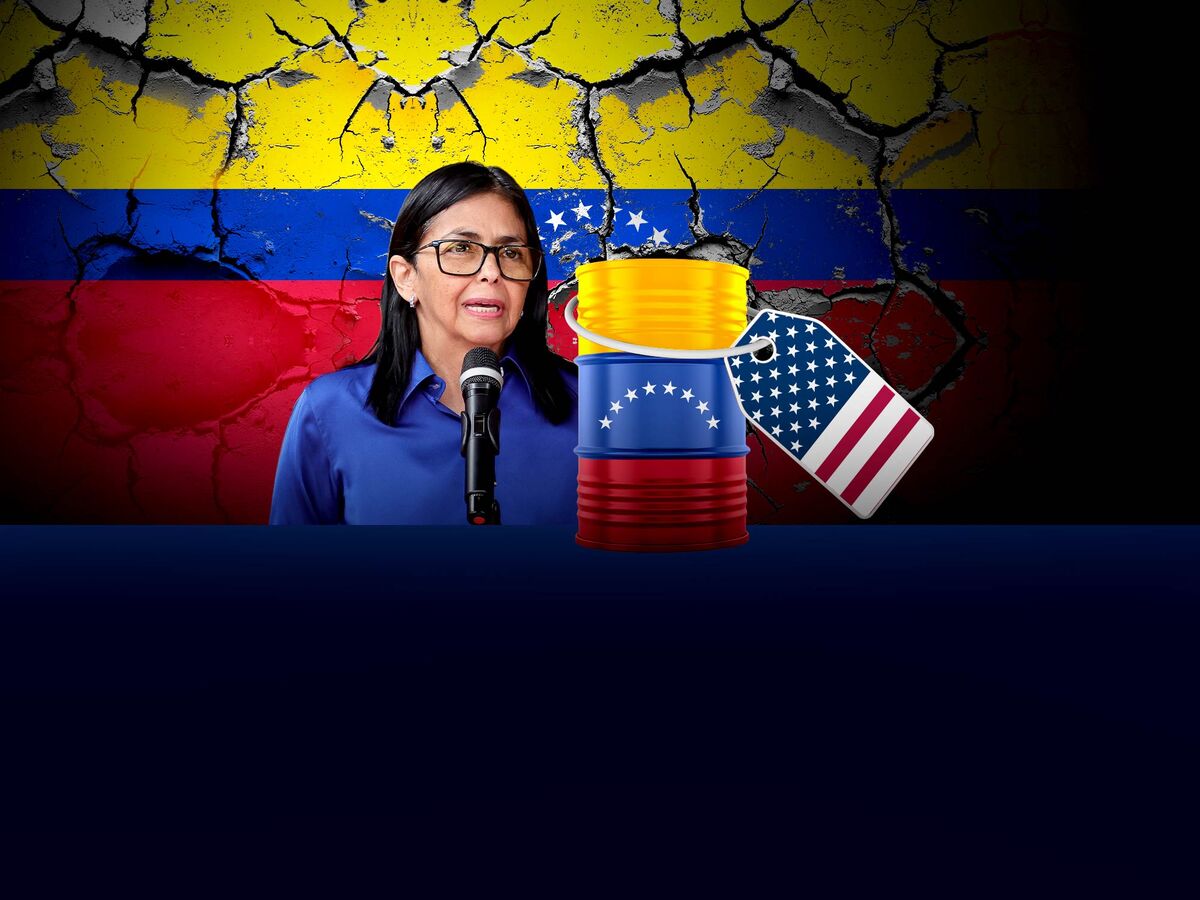
The US is set to take majority control of Venezuela’s oil wealth tied to 65B+ barrels of proven crude reserves, with Venezuela expected to earn about $19 profit per barrel produced. The pact faces cross-ideological criticism over neocolonial concerns, while Trump frames the deal as support for refilling depleted US emergency oil stockpiles. Net impact is likely meaningful for oil-market and political-risk sentiment, but direction for prices is uncertain given the controversy.
Analysis
The immediate market mechanism is not "more oil" so much as a lower geopolitical risk premium on a very heavy, sour crude slate. The first beneficiaries are US Gulf Coast refiners with coker capacity — VLO, MPC, PBF — because incremental Venezuelan barrels would likely come at a discount to global benchmarks and improve crack spreads before they materially affect global supply. By contrast, Canadian heavy producers and Middle East heavy grades are the most plausible second-order losers if the same refinery demand is re-routed.
The near-term price reaction can be faster than the physical effect. Brent and the XLE can re-rate within days on headline-driven expectations, but actual output recovery is a months-to-years process because Venezuelan fields need capex, power, diluents, and a functioning service ecosystem. That means the tradable risk is less a global glut and more a sequence of policy headlines, legal friction, and election-driven reversal risk that can unwind the story before barrels show up.
Contrarianly, the consensus may be overestimating the volume that can be delivered and underestimating who captures the economics. If the state takes most of the profit per barrel, equity upside for any operator is capped even if reserves look enormous on paper. The real watch items are the WTI-Maya spread, Gulf Coast refining margins, and any sharp move in Venezuela sovereign CDS; those will tell us whether this is a durable supply shift or just a political option value trade.
AllMind Terminal
AI-powered research, real-time alerts, and portfolio analytics for institutional investors.
Request TrialMarket Sentiment
Overall Sentiment
mixed
Sentiment Score
-0.10
Key Decisions for Investors
- Pair trade: long VLO or MPC vs short XLE on a 1-3 month horizon. Thesis: refiners capture discounted heavy-crude feedstock before upstream supply effects are reflected; stop if Brent strengthens and refining cracks compress instead of widening.
- Fade the first knee-jerk move in US crude if Brent/WTI sell off more than ~3-5% on the headline. The physical supply response is likely too slow to justify a sustained glut; use USO weakness only as a short-dated tactical trade, not a core position.
- Watch list: buy heavy-oil exposure only after confirmation of actual export growth, not on announcement. The falsifier is visible Venezuelan production/import data or a sustained widening in the Maya/WTI discount over 4-8 weeks.
- Relative-value alert: underweight Canadian heavy producers and heavy-sour benchmark proxies if Venezuelan barrels begin displacing similar slates. This is a spread trade, not necessarily a directional crude call.
More News
- Container ship sinks in Strait of Hormuz as Iran steps up attacks
- Here's the inflation breakdown for September 2026 — in one chart
- Bending Spoons Stock Soars on Berkshire’s Increased Stake
- Travis Kelce joined an activist group pushing Six Flags to consider a sale. The ‘Final Destination’-style death of a patron poured gas on the fire
- ‘The biggest financial institutions are not above the law’: Bessent hits BofA with $1.2 billion fine for money laundering—the third-largest in history
- Ukraine accuses Elon Musk’s SpaceX of throttling Starlink terminals
From AllMind Research
- Anthropic IPO Preview: Valuation, Timing, and What to Watch
- Shein After the IPO: Venue, Valuation, and What Must Be Proved
- What AI Research Tools Should a Small Hedge Fund Buy First?
- State of Public Markets, June 2026: Higher for Longer Meets the AI Supercycle
- AI Research Tools With Exact Source Citations