
Drip Gym Expands Mobile Iron IV Therapy to Texas, Delivering At-Home Venofer® Infusions Across Houston, Dallas, Austin, and San Antonio
Source: PR Newswire
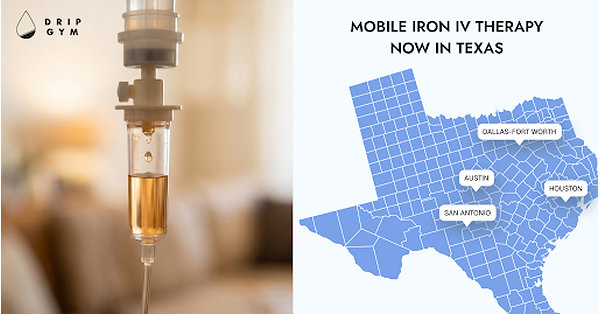
Drip Gym expanded its physician-supervised mobile Venofer® iron-infusion service to Houston, Dallas-Fort Worth, Austin and San Antonio. At-home sessions, administered by licensed RNs, cost $400 each or $2,000 for a buy-five-get-one-free package, targeting iron-deficient patients unable to tolerate or absorb oral iron. The regional service launch addresses a niche healthcare-access need but is unlikely to have broader market impact.
Analysis
This is not yet investable public-equity news, but it highlights a potentially durable site-of-care shift: clinically supervised infusions moving from hospital outpatient departments and infusion centers into the home. The economic pressure falls most directly on hospital systems and standalone infusion operators with meaningful low-acuity administration revenue; however, iron sucrose is generic, so drug manufacturers should see negligible direct benefit. The scalable value pool sits with home-infusion infrastructure, nursing networks, reimbursement authorization, and patient acquisition rather than with the underlying therapy.
Near term, the signal is more relevant as a diligence datapoint for CVS Health (CVS), Option Care/UnitedHealth-adjacent care-delivery assets, and home-health operators such as Amedisys (AMED, pending UNH transaction outcome) than as a catalyst. A cash-pay price point can broaden access where scheduling and coverage fail, but it also limits addressable volume and creates adverse-selection risk: physician oversight, emergency protocols, nurse utilization, and travel time can make unit economics unattractive outside dense metropolitan ZIP codes. Watch Texas payer coverage decisions, adverse-event disclosures, and evidence that recurring-treatment cohorts convert at economically viable acquisition costs.
The contrarian view is that home administration will not rapidly displace established infusion sites. Iron infusions are episodic, patient eligibility is narrow, and insurers may steer covered patients toward lower-cost contracted centers rather than reimburse independent mobile providers. The structural opportunity is therefore likely concentrated in broader home-infusion platforms able to spread nursing, pharmacy, authorization, and logistics costs across higher-value biologics—not in boutique wellness operators.
AllMind Terminal
AI-powered research, real-time alerts, and portfolio analytics for institutional investors.
Request TrialMarket Sentiment
Overall Sentiment
mildly positive
Sentiment Score
0.25
Key Decisions for Investors
- No directional trade on this announcement; the issuer is private and the claimed expansion provides no independently verifiable volume, reimbursement, or margin data.
- Add a 1-3 month diligence alert on CVS and UNH care-delivery assets: look for home-infusion utilization growth, payer reimbursement commentary, and any evidence of outpatient infusion-site volume pressure before treating site-of-care migration as material.
- For a 6-18 month thematic basket, prefer scaled home-infusion and care-coordination exposure over hospital outpatient exposure only after confirmation that commercial payers reimburse home iron and other low-acuity infusions at scale; falsifier is persistent payer steering to ambulatory infusion centers or negative home-care labor-cost commentary.
- Avoid extrapolating this launch into a bullish specialty-pharma thesis: Venofer is generic, and any incremental iron-sucrose volume is unlikely to move earnings for large pharmaceutical suppliers.
More News
- Biotech stocks are surging. How investors can play the new drug innovation boom
- IMDELLTRA® IN COMBINATION WITH IMFINZI® REDUCED RISK OF DEATH BY AN UNPRECEDENTED 58% IN FIRST-LINE EXTENSIVE STAGE SMALL CELL LUNG CANCER
- J&J prostate cancer drug shows promising tumor responses in early trial
- Pfizer reports phase 2 data for 25-valent pneumococcal vaccine
- Fact vs. fiction: Doctors share whether peptides are safe and effective
- Perioperative IMFINZI® (durvalumab) plus neoadjuvant enfortumab vedotin reduced risk of recurrence by 49% and risk of death by 42% in muscle-invasive bladder cancer