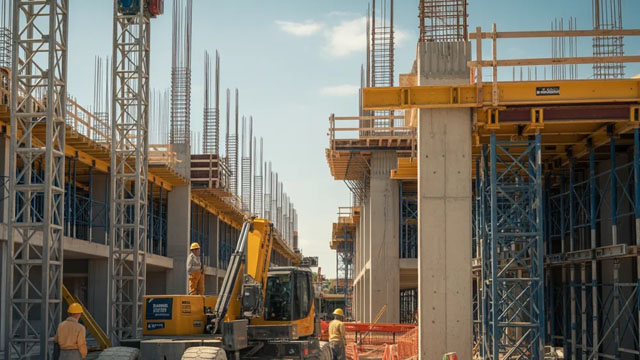
U.S. construction firms should benefit as infrastructure spending remains a key growth driver, with incremental demand tied to data centers, semiconductor manufacturing, and transportation upgrades plus ongoing federal infrastructure programs. The outlook favors contractors with strong project pipelines, specialized capabilities, and disciplined execution. Overall, the news is supportive but framed as a sector tailwind rather than a specific earnings or policy shock.
The cleanest expression is not “construction” broadly, but the small subset of contractors that can monetize mission-critical buildouts: electrical/mechanical scope, transmission/grid work, and data-center adjacency. Those businesses should see better backlog quality and more durable pricing than generalists, while fixed-price EPC names remain exposed to cost drift and schedule slippage if labor or equipment lead times extend. Second-order beneficiaries are the picks-and-shovels suppliers with tight inventories and pricing power—switchgear, transformers, copper-intensive systems, aggregates, and rental equipment—because bottlenecks can lift revenue before they lift true margin.
The near-term catalyst is earnings season: the market will care less about headline project announcements and more about conversion from backlog to revenue, gross-margin stability, and whether management is seeing incremental scope from hyperscale, utility, and federal work. Over the next 1-3 months, any guidance raise tied to bookings or mix will matter more than the macro narrative; over 6-18 months, the real question is whether labor inflation and permitting/grid interconnection delays cap the margin uplift. If backlog grows but EBITDA margins do not, the setup is likely over-owned rather than underappreciated.
Consensus is probably too willing to treat infrastructure demand as a single-factor bullish story. Data-center spend is attractive, but it is also concentrated and negotiable; hyperscalers can squeeze pricing once capacity expands, so not every contractor gets paid for the same backlog quality. The thesis is falsified if the next two reporting cycles show slower book-to-bill, widening labor-cost inflation, or a guide-down on conversion timing; that would argue for fading the basket rather than buying the dip.
AI-powered research, real-time alerts, and portfolio analytics for institutional investors.
Request TrialOverall Sentiment
mildly positive
Sentiment Score
0.15
