
Yellowdish, The Fertile Cavendish Breeding Line
Source: PR Newswire
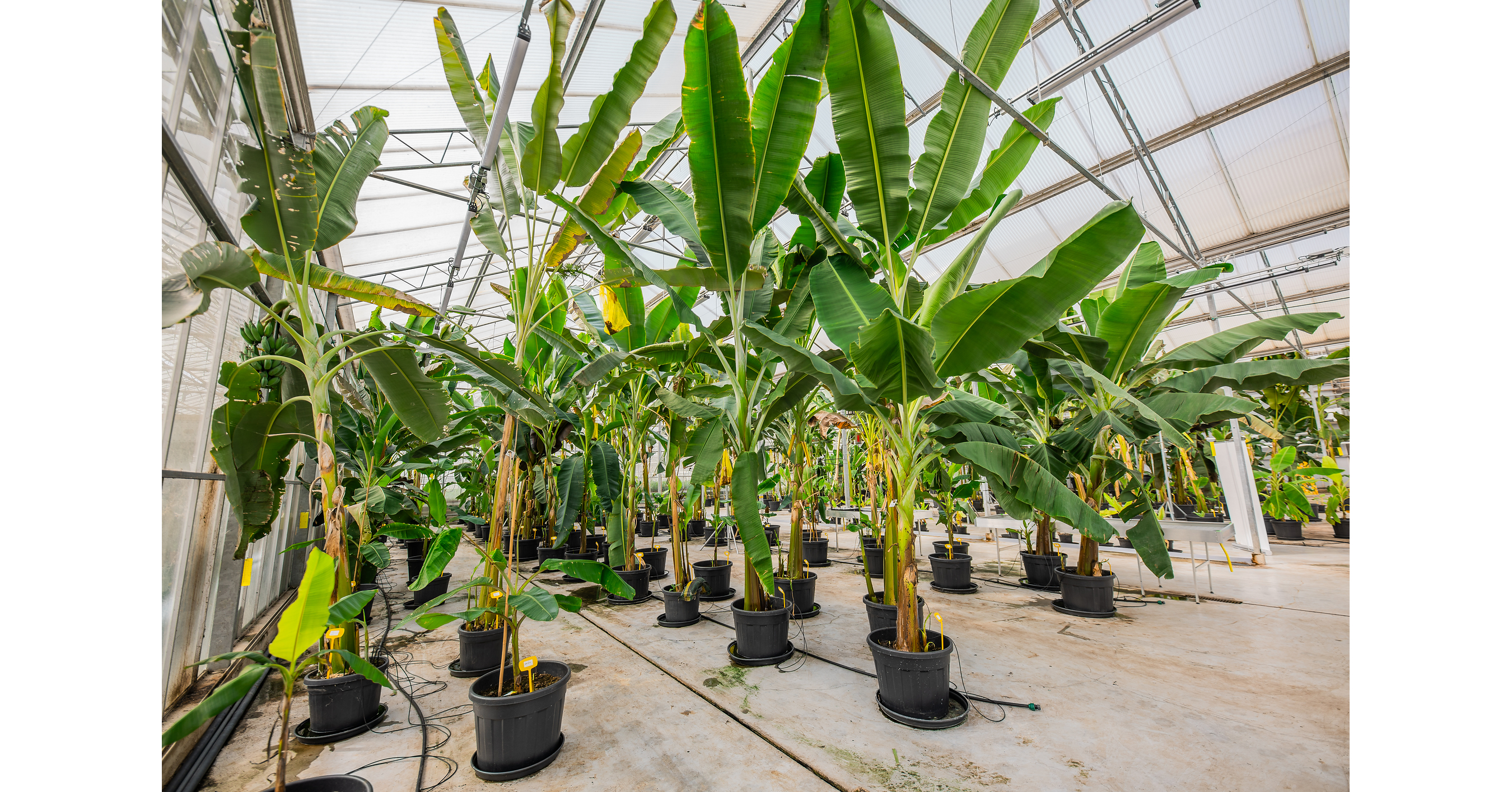
Yelloway, the Chiquita–KeyGene partnership, developed Yellowdish, a fertile Cavendish breeding line that can be used in conventional breeding while retaining 100% Cavendish genetics. Yelloway has crossed it with disease-resistant varieties, and viable offspring are growing in its breeding facility; the company aims to make at least one commercial variety available to key partners through early release by 2030. The breakthrough could support banana varieties designed to resist major fungal diseases and tolerate drought and heat, but no commercial variety has yet been released.
Analysis
The strategic value is less the breeding breakthrough itself than the possibility of reducing the banana industry’s exposure to disease-driven yield shocks without asking retailers and consumers to accept a visibly different product. If offspring preserve commercial yield, ripening, shelf-life and taste, disease resistance could improve supply reliability and reduce growers’ reliance on disease-control practices; that may shift value toward firms controlling germplasm, breeding and distribution. The benefit is not yet demonstrably exclusive to Chiquita: access, licensing terms and whether competitors can develop or obtain comparable varieties are material unknowns.
This remains a long-dated option, not an earnings catalyst. Fertile breeding stock and viable offspring do not establish field performance, scalable propagation or retailer acceptance. Over the next 6–18 months, the useful signals are replicated trial results on disease resistance, yield and post-harvest quality—not further announcement language. The stated early-release ambition is for 2030, and commercial deployment could take longer. A poor agronomic trade-off, unstable traits, regulatory or export-market barriers, or propagation bottlenecks would erode the value; disease pressure and climate stress could make successful varieties more valuable.
Contrarian point: markets may either over-credit a laboratory milestone as near-term cost savings or underappreciate the strategic value of a credible route to diversify a disease-vulnerable crop. With no company identities or tickers supplied, and no verified financial exposure or access economics, the announcement alone does not support a public-equity trade.
AllMind Terminal
AI-powered research, real-time alerts, and portfolio analytics for institutional investors.
Request TrialMarket Sentiment
Overall Sentiment
moderately positive
Sentiment Score
0.40
Key Decisions for Investors
- No immediate position: treat this as a long-duration strategic option, not a near-term revenue or margin catalyst for Chiquita or KeyGene.
- Set a 6–18-month diligence trigger for independently reported field-trial data covering disease resistance, yield, fruit quality, shelf life and propagation scale; verify who owns and can commercialize the resulting varieties.
- Reassess the thesis if trial results show resistance without commercially competitive yield or post-harvest performance, or if licensing/access terms fail to give Chiquita a meaningful advantage.
- Do not short crop-protection suppliers on this announcement alone: resistant varieties, if commercialized, may complement rather than eliminate disease-control measures, and the scale and timing of substitution are unknown.
More News
- Verizon stock heads for worst day since 2002 as SpaceX U.S. network plans whack telcos
- SpaceX’s Wireless Threat Rises With Spectrum Deal
- What's behind the recovery rally in tech stocks — plus, Elon Musk's very good week
- Wall Street Week | Michigan Manufacturing, AI Debt Investments, Baby Bonds, Canadian Coal Fight
- Elon Musk intensifies attack on Ambani over Starlink India launch delay
- Tesla drops 'Full Self-Driving' brand name in Europe after regulator pushback