
Solución AIDC interactiva con la red de Huawei: definiendo el nuevo paradigma de la infraestructura de IA
Source: PR Newswire
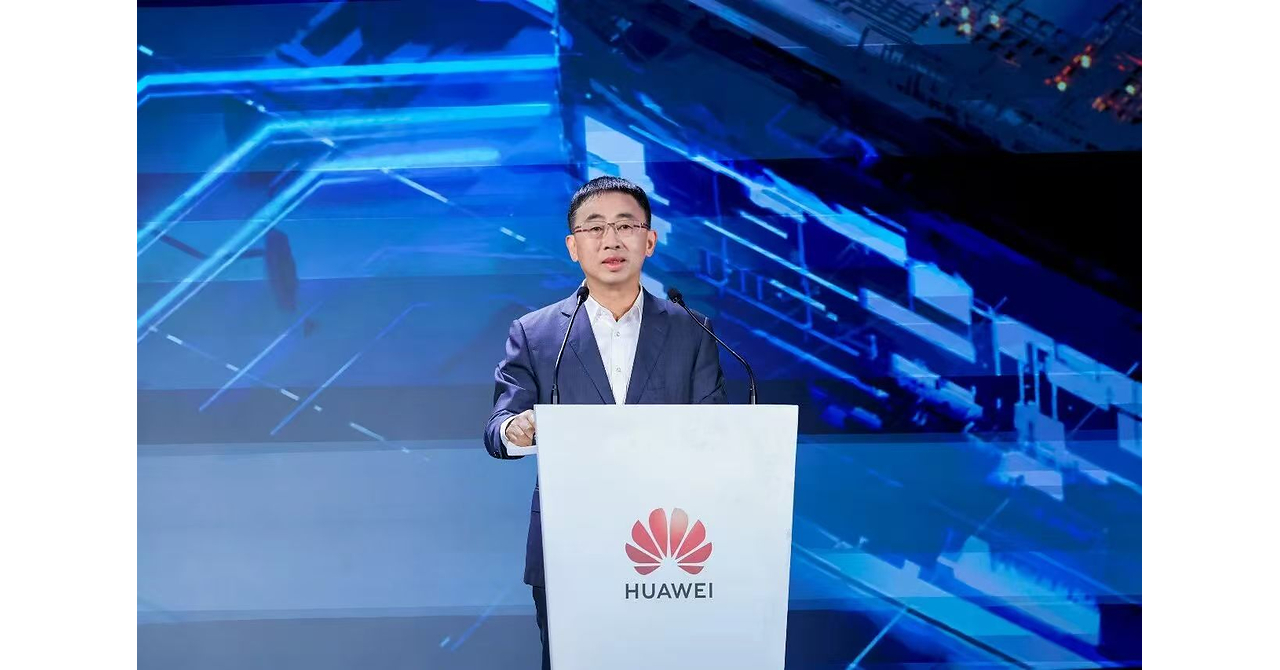
Huawei presentó en HUAWEI CONNECT 2026 una solución AIDC interactiva con la red eléctrica, diseñada para maximizar los tokens por vatio y reducir el coste por token en centros de datos de IA. La oferta integra UPS compatibles con la red, baterías inteligentes de litio, almacenamiento energético y refrigeración líquida impulsada por IA para absorber fluctuaciones de carga y facilitar mantenimiento predictivo. SenseTime indicó que su optimización integral de infraestructura elevó su métrica de tokens por vatio (TPW) en 80%, subrayando la creciente prioridad de eficiencia energética en clústeres de IA a escala de gigavatios.
Analysis
The investable implication is not a near-term revenue event for VNET, but a shift in the bottleneck for China AI capacity from servers toward power quality, cooling density, and grid interconnection. Suppliers with installed-base service revenue and validated high-density liquid-cooling deployments—Vertiv (VRT), Eaton (ETN), and Schneider Electric (SU.PA)—retain the cleaner monetization path; a Huawei-led integrated stack could pressure their China share but is unlikely to displace them in export-sensitive markets. The more important second-order effect is that grid-compatible storage and power-management hardware can shorten the time between secured site capacity and billable AI utilization.
For VNET, better load smoothing and modular deployment could raise usable MW and reduce curtailment, but the economic benefit depends on whether customers pay for guaranteed AI-ready power rather than treating this as table-stakes infrastructure. The risk is adverse: AI-oriented buildouts require large upfront power, cooling, and battery capex before utilization is proven, so EBITDA may improve while free cash flow and leverage deteriorate. The claimed efficiency gain should be treated as a vendor/customer case study, not a transferable underwriting input, until VNET discloses incremental MW commissioned, AI-rack utilization, realized pricing per kW, and maintenance capex.
Over the next 1-3 months, this is principally a procurement and capex-watch signal rather than a catalyst for VNET shares. Over 6-18 months, persistent AI power volatility favors integrated electrical architecture and liquid cooling over conventional white-space expansion; that supports VRT/ETN multiple durability if hyperscale order books convert. Contrarian view: the market may over-credit facility efficiency for AI economics—GPU availability, model utilization, and electricity tariffs can overwhelm modest PUE/TPW improvements—so infrastructure vendors are vulnerable if customer GPU deployment schedules slip.
AllMind Terminal
AI-powered research, real-time alerts, and portfolio analytics for institutional investors.
Request TrialMarket Sentiment
Overall Sentiment
mildly positive
Sentiment Score
0.38
Ticker Sentiment
Key Decisions for Investors
- No standalone VNET long on this announcement. Reassess only after the next two reporting periods show AI-related committed capacity converting into revenue, stable utilization, and no material increase in capex-to-revenue or net leverage; failure on any of these metrics is thesis-negative.
- Maintain a 6-12 month quality-basket bias toward long VRT and ETN versus short a broad data-center REIT proxy such as DLRE, sized modestly: the pair expresses higher-density power/cooling content while hedging some AI-capacity demand risk. Exit if hyperscaler capex guidance weakens materially or VRT/ETN backlog conversion slows for two consecutive quarters.
- Monitor Chinese grid-scale storage and power-electronics proxies, including CATL (300750.SZ) and Sungrow (300274.SZ), for confirmed data-center orders rather than headline-driven entry. A disclosed multi-site AIDC storage deployment with contracted returns would be a catalyst; absent that, renewable-grid exposure is too broad to attribute to AI demand.
- Use VNET’s next earnings as an alert event: a widening gap between adjusted EBITDA growth and free-cash-flow generation would support avoiding or shorting rallies, while disclosed AI pricing premiums and accelerating occupied-MW growth would falsify the bearish balance-sheet concern.
More News
- All Iranian airlines to be 'shut down' from Wednesday, Bessent tells CNBC
- Taiwan benchmark Taiex rises to record intraday high as tech stocks advance
- AMD joins the $1 trillion club as chip rally surges - our AI Strategy saw it early
- Jamie Dimon says hyperscaler AI spending could hit $1 trillion next year
- Factbox-Key issues for this week’s Trump-Xi summit in Washington
- Latest Oil Market News and Analysis for Sept. 22