
World Bank Lifts Growth Forecast for Africa Despite Challenges
Source: Bloomberg
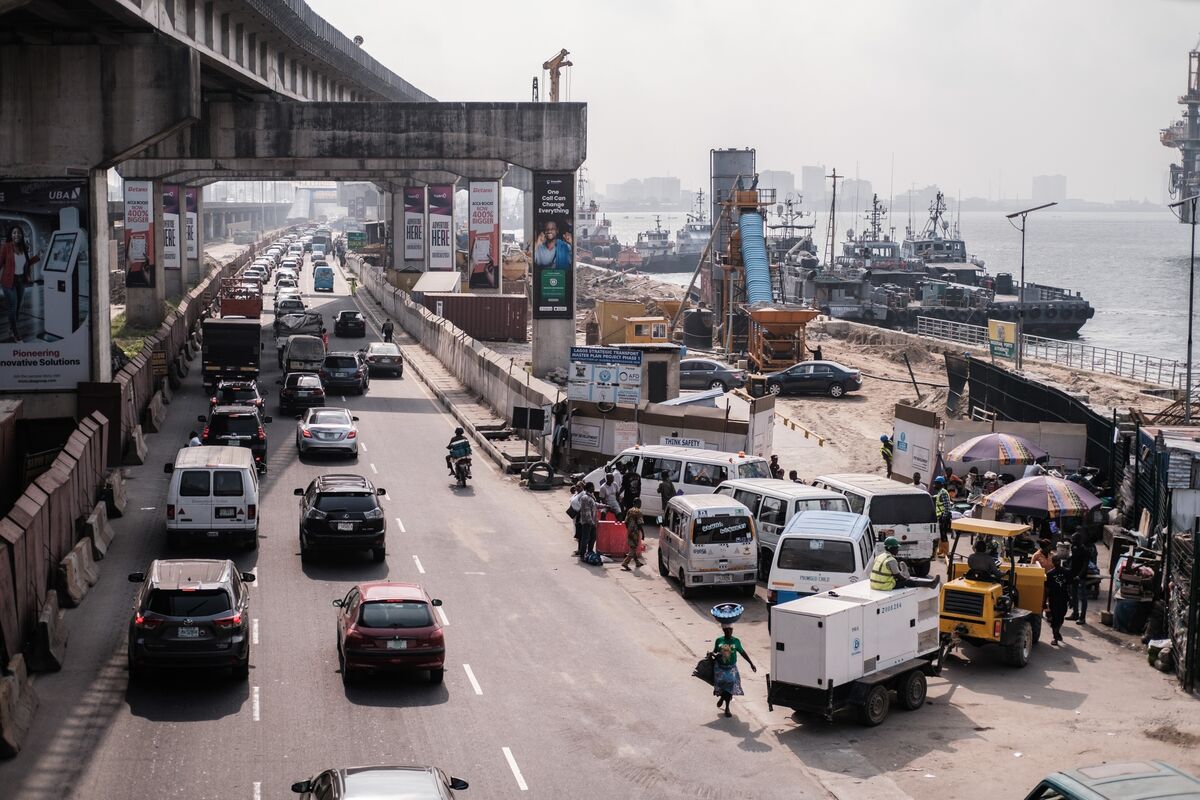
The World Bank projects sub-Saharan African growth of 4.3% in 2026, up from 4.1% last year and 0.3 percentage point above its April forecast. The lender said growth will accelerate slightly despite headwinds from the Iran war.
Analysis
The forecast upgrade is a weak signal for investable earnings, not evidence of a broad-based acceleration: aggregate growth can improve while higher energy and freight costs squeeze import-dependent economies and consumers. The Iran-war channel is therefore distributional. Hydrocarbon exporters may gain fiscal and external-balance support, while fuel-importing countries face inflation, currency pressure and less room for central-bank easing. That divergence could matter more for sovereign spreads and FX than the regional headline does for equity multiples.
Near term, the forecast revision may support sentiment toward African risk, but the conflict-driven energy shock can overwhelm it. Over the next 1–3 months, monitor oil prices, local-currency depreciation, sovereign spreads and country-level inflation/central-bank signals; these will test whether growth resilience translates into lower financing risk. Over 6–18 months, execution of fiscal reforms and investment—not the regional forecast alone—will determine whether stronger activity broadens beyond commodity-linked economies.
Contrarian point: the small upward revision may be read as a regional all-clear even though it does not resolve dispersion or financing constraints. Conversely, if oil prices ease and country data confirm resilient demand, markets may be underpricing the benefit to selected exporters. No broad directional trade is warranted on this forecast alone.
AllMind Terminal
AI-powered research, real-time alerts, and portfolio analytics for institutional investors.
Request TrialMarket Sentiment
Overall Sentiment
mildly positive
Sentiment Score
0.25
Key Decisions for Investors
- Avoid treating the regional growth revision as a standalone catalyst to buy Africa broadly. Keep VanEck Africa Index ETF (AFK) on watch rather than initiating a position; verify country weights, liquidity and the next earnings/growth data before acting.
- Use a relative-value lens: favor exposure to oil-exporting economies over fuel-importing peers only if country-level FX and sovereign-spread data confirm the terms-of-trade benefit is reaching public finances. The thesis weakens if oil retreats or exporter currencies and spreads fail to respond.
- For the next 1–3 months, track Brent, African sovereign spreads, FX and inflation surprises. A sustained energy-cost rise accompanied by currency weakness or tighter policy would falsify the benign regional-growth read and argue against adding broad EM/Africa risk.
More News
- India’s central bank hikes rates for the first time since 2023 as inflation creeps up
- Why Dangote’s Nigeria Refinery IPO Is Such a Big Deal for Africa
- US stock market hits all-time high as investors bet big on AI
- Oman evacuates injured crew from attacked tanker in Strait of Hormuz
- Oil rises as concerns over Houthi attacks on Saudi Arabia eclipse supply recovery
- Diesel Price Surge Hits Farmers, Raising Food Inflation Risk