
Hawaii Energy Connection Surpasses 1,000 FranklinWH Residential Energy Storage System Installations as State Weighs Paying Homeowners for Battery Power
Source: PR Newswire
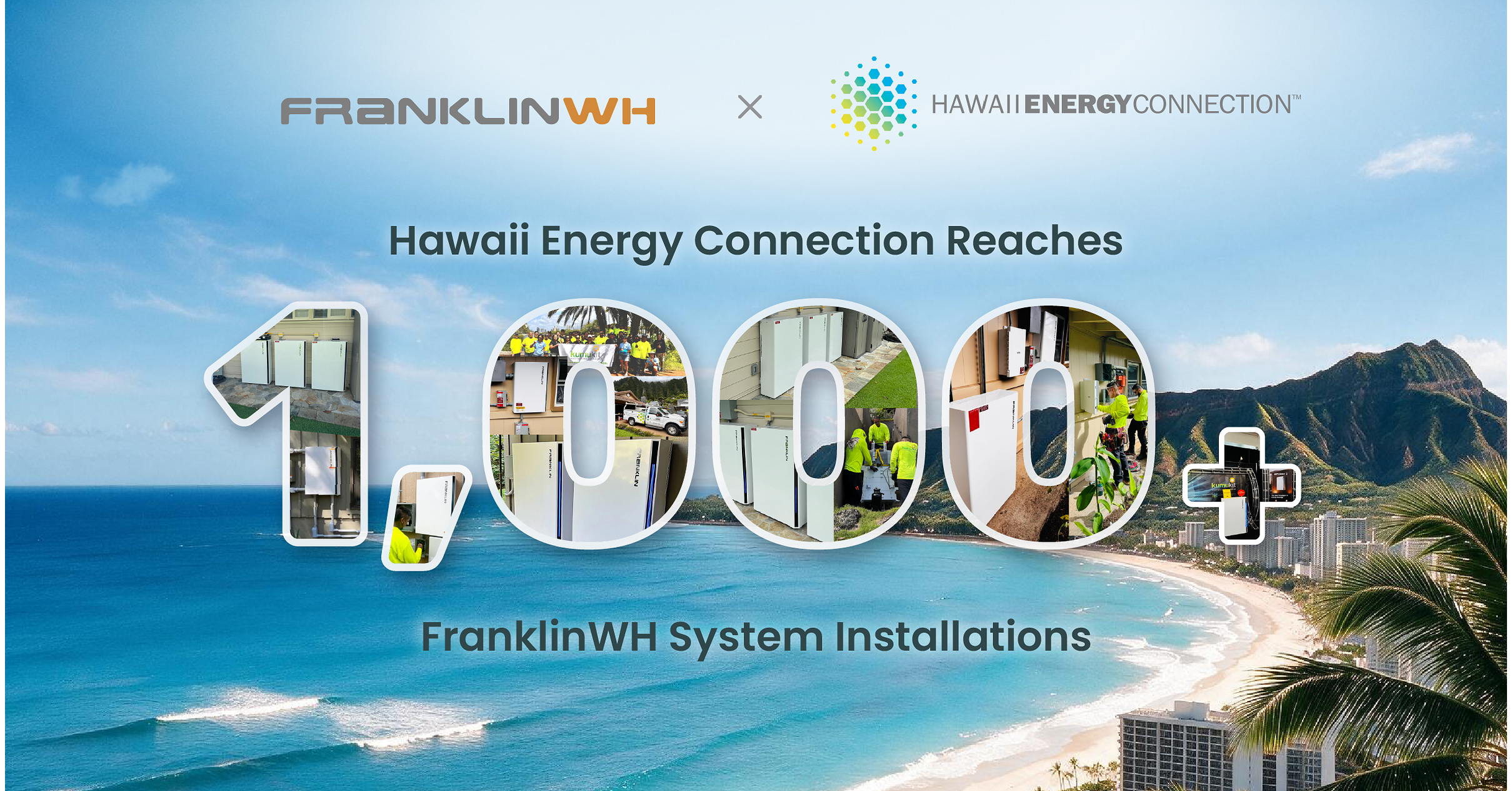
FranklinWH says Hawaii Energy Connection (KumuKit™) has completed its 1,000th residential storage installation, totaling 1,800 FranklinWH aPower battery units across 1,000+ homes. The milestone aligns with Oahu regulators evaluating a virtual power plant program that could compensate homeowners for grid power delivered by home batteries, potentially unlocking participation from the current ~<16% of battery capacity. With electricity costs among the highest in the U.S. and rising reliability concerns, the announcement signals growing adoption but remains contingent on regulatory approval.
Analysis
This is a proof-of-concept for monetizing behind-the-meter batteries, not a demand inflection large enough to move most public names on its own. The real winner is the software/aggregation layer: whoever controls dispatch rights and customer enrollment gets a recurring revenue stream with low capital intensity, while hardware OEMs only get a one-time pull-forward unless the program materially improves payback periods. For public equities, the clearest second-order beneficiary would be companies with large installed base and VPP capabilities; the weakest beneficiaries are standalone solar hardware vendors that do not capture the operating economics.
The key risk is that regulators often approve VPPs with low capacity payments and high compliance overhead, which can make the homeowner economics better but still too thin to drive a nationwide upgrade cycle. Time horizon matters: any stock reaction should be faded if it is based on Hawaii alone, because the state is too small to change consolidated earnings; the real catalyst path is 1-3 months if a pilot rulebook is released, and 6-18 months if California/Arizona/Puerto Rico copy the model. The thesis is falsified if the utility settles on token compensation, utility control is too restrictive, or interconnection delays prevent meaningful participation.
For FISI specifically, I see no first-order earnings linkage, so this is not a bank trade. The contrarian view is that the market may overprice the theme as 'battery demand' when the more important variable is grid-services monetization; if that monetization is weak, installed batteries remain backup appliances rather than assets. That argues for caution on any broad rally in residential storage names unless the final VPP tariff shows durable, investor-readable cash flow per household.
AllMind Terminal
AI-powered research, real-time alerts, and portfolio analytics for institutional investors.
Request TrialMarket Sentiment
Overall Sentiment
mildly positive
Sentiment Score
0.25
Key Decisions for Investors
- No direct position in FISI; treat this as a zero-signal event for a regional bank absent disclosed Hawaii energy lending exposure.
- Watchlist trade: buy the first post-headline dip in RUN only if Hawaii regulators publish a VPP framework with explicit recurring capacity payments; 1-3 month upside only if the program looks exportable beyond Hawaii.
- Fade any sharp rally in ENPH or SEDG if the move is purely headline-driven; Hawaii is too small to change near-term earnings, and hardware names do not capture the recurring dispatch economics.
- If a public aggregator/DER software name with VPP exposure becomes available or is already in your universe, prefer long the platform over the hardware OEM for a 6-18 month thesis on recurring grid-services revenue.
More News
- Iran says two tankers catch fire after hitting mines in Strait of Hormuz
- Why Marco Rubio’s visit to Mumbai has ruffled feathers in India
- US and Iran both claim control of Strait of Hormuz amid attacks on vessels
- AI stocks plunge. Inflation heats up. Where we're still finding opportunities
- Bending Spoons wants to revive software castoffs. Berkshire is backing the plan
- AI rapidly improving, could vastly boost U.S. GDP, Anthropic's Clark tells policymakers
From AllMind Research
- Anthropic IPO Preview: Valuation, Timing, and What to Watch
- Shein After the IPO: Venue, Valuation, and What Must Be Proved
- What AI Research Tools Should a Small Hedge Fund Buy First?
- Reading Conviction in the Tape: What Level 3 Order Book Data Really Tells Discretionary PMs
- AI Tools for CFA Charterholders: An Evidence Standard