
Pinea Pi Opens Pre-Orders: Defining the Edge AI Device for the AI-Native Generation
Source: PR Newswire
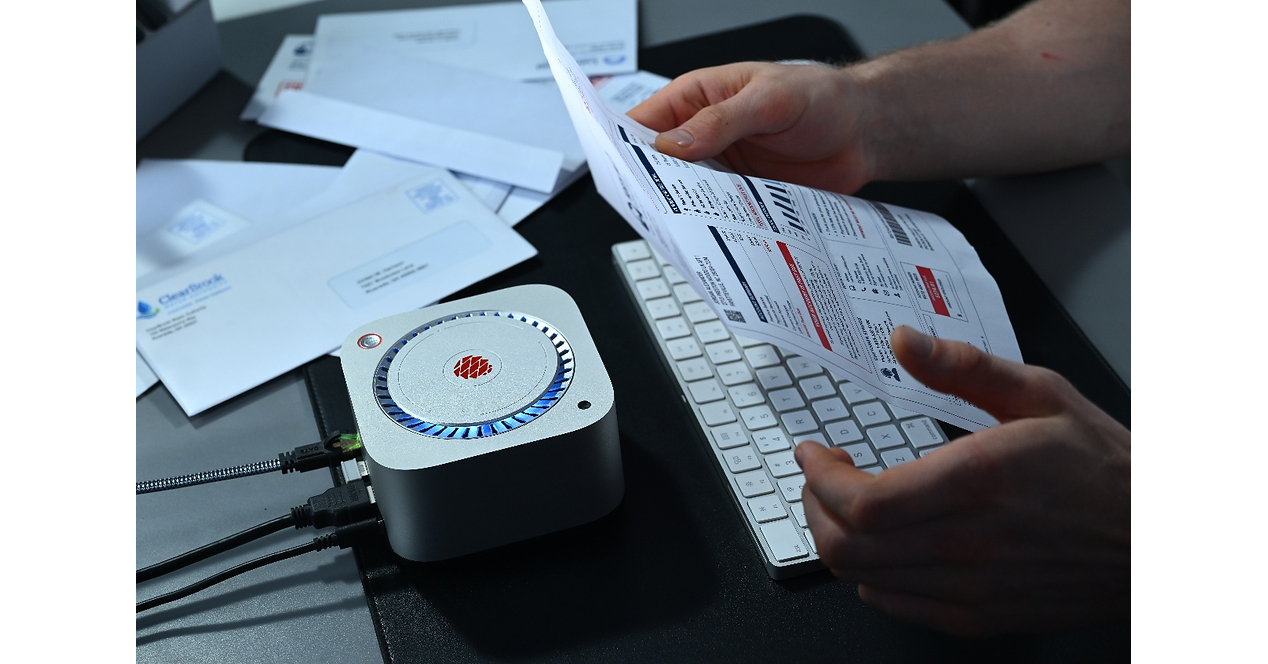
Pinea Pi opened pre-orders for its first offline, on-device “edge AI node,” launching on Kickstarter in late September through late October. Early-bird pricing is set at $1,999 for Lite and $2,999 for Pro, with a $30 deposit starting late August/early September. The pitch centers on eliminating cloud/API costs and keeping data local (no data leaving the device) to address privacy compliance and latency concerns.
Analysis
This is less a revenue event than an early signal that local inference is becoming a purchaseable product category. If that demand persists, the economic value shifts from cloud token consumption toward edge silicon, AI PCs, and model-compression tooling; that is constructive for QCOM, ARM, AMD, and potentially INTC more than for any pure software layer. The second-order winner is privacy-sensitive SMB software that can bundle local AI as a feature, because "offline" becomes a compliance story, not just a latency story.
The near-term risk is that this is a premium curiosity, not a scalable channel. At a $2k-$3k price point, adoption is likely capped to enthusiasts and a narrow set of solo operators, so the launch can overstate end-market size while telling us little about unit economics after support, returns, and channel costs. If reservation velocity is weak after the initial PR burst, the whole thesis fades in days to weeks; if it holds through the campaign, the signal matters for a 1-3 month read-through to edge-AI attach rates.
Contrarian view: the market may be overestimating how much privacy and offline capability displace cloud workflows. For most users, cloud models remain cheaper, faster to improve, and easier to integrate, so this device is more likely to validate a niche premium tier than ignite a broad migration. The real tradeable takeaway is not the startup itself, but whether this validates a broader on-device AI upgrade cycle for the PC/handset supply chain over 6-18 months; if not, the move is mostly narrative-driven and should fade.
AllMind Terminal
AI-powered research, real-time alerts, and portfolio analytics for institutional investors.
Request TrialMarket Sentiment
Overall Sentiment
mildly positive
Sentiment Score
0.25
Key Decisions for Investors
- No direct trade in the launch itself; treat this as a watch item and wait for campaign conversion data. Alert if first-week reservations are meaningfully above expectations, which would justify a 1-3 month edge-AI basket trade.
- If adoption data confirms demand, buy QCOM or ARM on pullbacks via modest call spreads for a 1-3 month horizon; thesis is that local-AI monetization accrues to edge silicon and AI PC attach, not to the device maker. Falsify if these names do not show improved design-win commentary on the next earnings call.
- Use a relative-value lens: long QCOM vs. a broad software basket if the market starts pricing more local inference adoption. The risk/reward is asymmetric only if edge AI starts showing up in OEM roadmaps; otherwise the pair should be flat and can be abandoned quickly.
- Set a downside watch on premium hardware enthusiasm: if reservations stall after the initial PR window, fade the theme and avoid chasing any "offline AI" narrative trade. The thesis is invalidated if campaign momentum decays before launch.
More News
- Nvidia GPUs are everywhere. Here are the ways companies are accessing them
- As companies pour billions into Earth-based AI infrastructure, Google is taking the data center race off-planet
- AI's Supercharging a Scam Economy Bigger Than the Cocaine Trade
- Verizon stock heads for worst day since 2002 as SpaceX U.S. network plans whack telcos
- Big Tech is betting $700 billion on AI. Healthcare will decide whether the bet pays off
- Tesla's Full Self-Driving is now called Assisted Driving in Europe