
ExxonMobil's Advantageous Upstream Assets to Fuel Long-Term Growth
Source: zacks.com
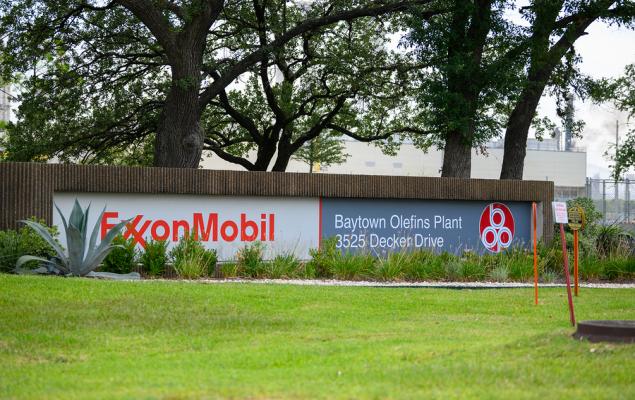
ExxonMobil is positioning for long-term upstream cash-flow growth through low-cost Guyana and Permian assets, supported by WTI crude near $90 per barrel. A fifth Guyana FPSO is scheduled to begin operations by end-2026, while a final investment decision on the Longtail project is expected soon; Permian drilling technology is also intended to improve recovery. XOM shares have gained 50.4% over the past year versus 44.8% for its industry, and 2026 consensus earnings estimates have risen over the past week, though its 9.08x trailing EV/EBITDA exceeds the industry's 5.80x average.
Analysis
This is not a new fundamental catalyst for XOM; the market already assigns it a quality premium for its long-duration, low-breakeven inventory and capital-return credibility. At roughly 9x trailing EV/EBITDA, incremental multiple expansion is unlikely without evidence that production growth is translating into per-share free-cash-flow growth after project spending and buybacks. The nearer-term risk is therefore asymmetric: a weaker crude tape or any schedule/cost slippage can compress XOM's premium faster than a routine estimate revision can expand it.
COP and EOG offer cleaner North American upstream beta and should outperform XOM if oil remains firm but investors rotate toward lower-valuation, faster cash-flow sensitivity. Conversely, XOM's integrated model is relatively defensive in a refining-margin recovery or a modest oil pullback, making a blanket long independent E&P/short XOM expression vulnerable to changing downstream economics. Over 6-18 months, Guyana execution could tighten the valuation gap only if startup timing, unit costs, and shareholder distributions exceed what is already embedded in consensus.
The non-obvious risk is concentration in a single geopolitical asset base: an adverse fiscal, permitting, or partner-development outcome would affect XOM's growth narrative disproportionately, while COP and EOG retain more diversified shale optionality. Watch quarterly upstream volume versus guidance, project-capex intensity, and buyback pace rather than headline production milestones. A sustained WTI move below $75/bbl, a cut to 2026 cash-flow guidance, or delayed project sanctioning would falsify the premium-quality thesis.
AllMind Terminal
AI-powered research, real-time alerts, and portfolio analytics for institutional investors.
Request TrialMarket Sentiment
Overall Sentiment
moderately positive
Sentiment Score
0.46
Ticker Sentiment
Key Decisions for Investors
- Do not add directional XOM exposure on this article alone; treat it as confirmation of an already well-understood thesis. Reassess after the next earnings release for per-share free-cash-flow growth and project-capex guidance rather than absolute production growth.
- For a 1-3 month relative-value expression, consider long COP / short XOM in equal beta-adjusted dollar amounts only if WTI holds above $80 and COP continues to trade at a material EV/EBITDA discount. Target mid-single-digit relative outperformance; stop if WTI falls below $75 or XOM raises capital-return guidance materially.
- For higher oil-beta exposure over 3-6 months, prefer EOG over XOM on pullbacks rather than chase XOM's premium valuation. The thesis requires oil-price stability and continued cost discipline; exit on a material deterioration in EOG well-productivity or reinvestment-rate guidance.
- Set an event alert around Guyana project updates and quarterly buyback pacing. A schedule delay, capex escalation, or slower-than-expected repurchase rate is the cleaner trigger to reduce XOM than a short-term move in spot crude.
More News
- Europe’s winter energy crunch may already be underway. Two U.S. stocks that may benefit
- Venture Global signs 20-year LNG supply deal with ConocoPhillips
- Goldman Sachs adds Amazon stock and four others to Director’s Cut list for October
- Dollar at 17-month high as global bond rout hits euro
- Trump says US may ask Europe to release diesel reserves
- Latin America most exposed to any US ban on diesel exports, Goldman Sachs says