
Otsuka ICU Medical LLC Issues Voluntary Nationwide Recall of 0.9% Sodium Chloride Injection, USP Due To a Product Mix-up with 10 mEq Potassium Chloride Injection
Source: PR Newswire
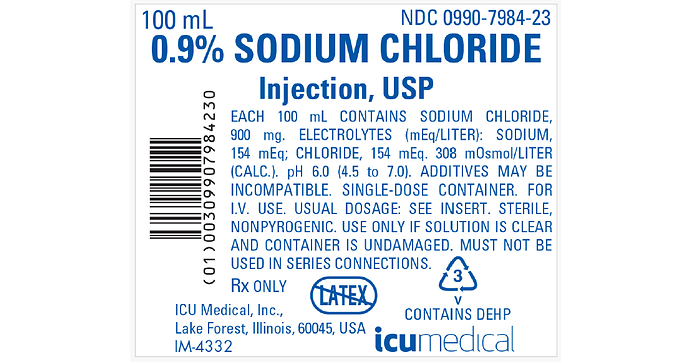
Otsuka ICU Medical voluntarily recalled one U.S. lot of 0.9% sodium chloride injection (lot 1042188; expiration October 31, 2027) after a customer found a 100 mL bag of highly concentrated 10 mEq potassium chloride inside sodium chloride overwrap labeling. Inadvertent administration could cause severe hyperkalemia-related complications, including cardiac dysrhythmias, cardiac arrest, and death, particularly in vulnerable patients. The lot was distributed from December 30, 2025 through June 22, 2026; no adverse events have been reported to date, and the FDA has been notified.
Analysis
The financial exposure is unlikely to be the recalled inventory itself; the investable issue is whether this becomes a hospital-level trust and quality-system event for ICUI's high-acuity infusion franchise. A packaging/control failure involving a high-alert injectable can trigger incremental distributor audits, hospital formulary reviews and remediation spending, while temporarily favoring alternative IV-fluid suppliers such as BAX and Fresenius Kabi (private). The key second-order risk is operational: any broader inspection of adjacent lots or manufacturing lines could constrain already low-margin IV-solutions throughput and dilute segment margins through expedited freight, credits and replacement supply.
Near term, the absence of reported injuries limits base-case liability, and the market should not extrapolate a single-lot action into a franchise impairment without evidence of FDA escalation. Over the next 1-3 months, monitor whether the FDA assigns a Class I designation, whether ICUI expands the recall beyond the identified lot, and whether hospitals report adverse events; any of these would materially raise legal-reserve and reputational-risk assumptions. For the next earnings call, the decisive datapoints are recall-related charges, IV-solutions organic growth, gross-margin guidance and management's description of corrective-action scope.
Contrarian view: the initial negative read may be excessive if traceability and the inner-bag labeling prevent administration errors and the corrective action remains confined. ICUI's valuation impact should be modest absent a broader quality-system finding; this is not yet a clean short catalyst because public recalls often create a transient headline discount before quantifiable financial damage emerges. The appropriate posture is to treat FDA classification and recall expansion—not the announcement alone—as the trigger for directional exposure.
AllMind Terminal
AI-powered research, real-time alerts, and portfolio analytics for institutional investors.
Request TrialMarket Sentiment
Overall Sentiment
strongly negative
Sentiment Score
-0.62
Ticker Sentiment
Key Decisions for Investors
- Do not initiate a standalone ICUI short on this notice alone; set an event alert for FDA Class I classification, expansion to additional lots/SKUs, or a disclosed adverse event. Those developments would justify reassessing for a 1-3 month downside trade.
- For existing ICUI longs, reduce tactical exposure or buy 1-3 month downside protection ahead of the next earnings call if implied volatility remains below prior regulatory-event levels; reassess after management quantifies credits, remediation and production impact.
- Use BAX as the liquid public read-through watchlist beneficiary rather than a new aggressive long: enter only if channel checks show incremental IV-fluid orders or ICUI confirms supply disruption. Thesis is invalidated if the action remains isolated with no customer substitution.
- At earnings, monitor ICUI IV-solutions gross-margin guidance and recall reserve disclosure versus consensus. A guidance cut or margin deterioration beyond recall charges would indicate manufacturing disruption and support an ICUI underweight; unchanged guidance with a contained charge would favor covering any hedge.
More News
- UN mission finds evidence of U.S. war crimes in Iran; Washington rejects report
- This AI-picked stock jumps 18% on Amazon’s $8 billion power deal
- US to Sell F-35s to Saudi Arabia in $24.3 Billion Deal
- California AG Bonta on Paramount-Warner Bros., Meta and AI
- Crusoe raises $3.9B to build massive data centers and small modular “AI factories”
- Jensen Huang says Nvidia will sell twice as many chips next year
From AllMind Research
- Anthropic IPO Preview: Valuation, Timing, and What to Watch
- Shein After the IPO: Venue, Valuation, and What Must Be Proved
- What AI Research Tools Should a Small Hedge Fund Buy First?
- What a Concept From Nature Tells Us About How C-Suite Executives Actually Think About AI
- How to Track Earnings Call Sentiment Across Companies