
Stowers scientist selected for $28.6 million research effort to predict protein changes behind neurodegenerative disease
Source: PR Newswire
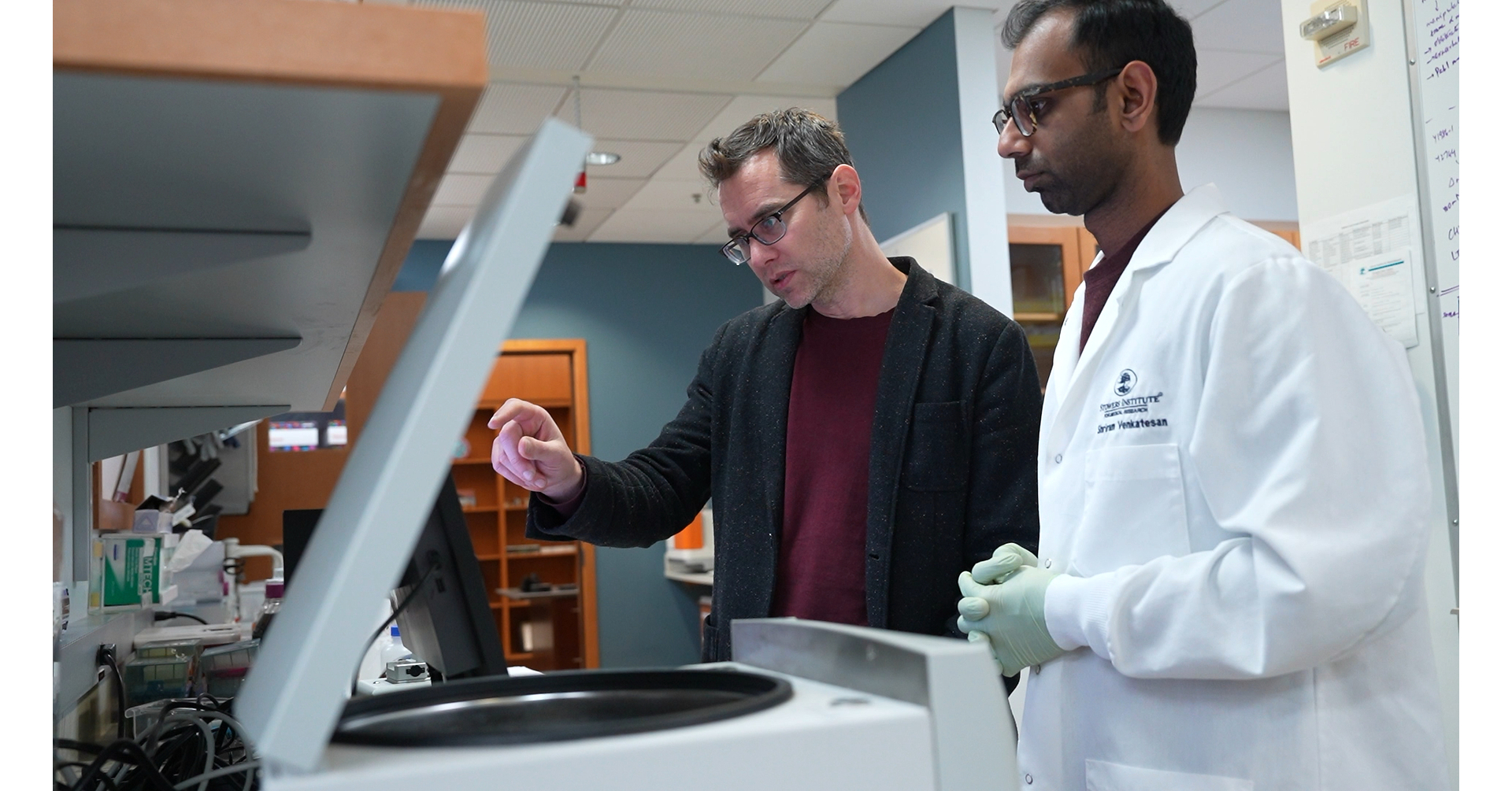
ARPA-H awarded up to $28.6 million for the multi-institutional NATIVE-ID project; the Stowers Institute’s Halfmann lab will receive approximately $4.1 million over two years. The team plans to use experiments covering 50,000 proteins and more than 1 million samples to generate over 10 billion protein-aggregation measurements for AI models, initially focused on frontotemporal lobar degeneration. The work could support earlier detection and therapeutic research, but the award funds an initial research phase rather than validated treatments.
Analysis
The investable signal is a research-infrastructure option, not a near-term drug catalyst. The central bottleneck is whether large-scale measurements of disordered-protein behavior in yeast can produce predictions that remain useful in human neurons; scale alone does not solve that translation problem. If the human-cell validation works, the nearer commercial pathway may be better target selection, patient stratification, or trial design—not a new therapy—and that could benefit multiple developers rather than create a single winner. The award itself is unlikely to move public-company earnings: no listed company is identified as a direct recipient, and the project’s research funding should not be treated as commercial revenue.
Timing: little basis for a near-term price reaction. Over the next 1–3 months, watch for clarity on data access, IP rights, and model-sharing arrangements; these determine whether outside drug developers can use the output. Over 6–18 months, the key read-through is Phase 1 evidence that model predictions reproduce in human neurons and identify experimentally tractable intervention points. The contrarian risk is that investors overvalue “AI + biology” while underweighting the gap between predicting aggregation and safely changing it in patients. Even successful biology may not yield a proprietary therapeutic asset or near-term clinical proof.
AllMind Terminal
AI-powered research, real-time alerts, and portfolio analytics for institutional investors.
Request TrialMarket Sentiment
Overall Sentiment
mildly positive
Sentiment Score
0.35
Key Decisions for Investors
- No direct trade on this announcement. Do not infer earnings upside for public AI-biotech or neurodegeneration companies without evidence they can access the dataset, models, or resulting IP.
- Add a watch item for public drug developers working on neurodegeneration and computational biology: reassess only when the team reports human-neuron validation, external data access, or a defined therapeutic/diagnostic program.
- For any future bullish read-through, require evidence that predictions replicate across human genetic backgrounds and identify an intervention that changes disease-relevant biology; yeast-only results or measurement volume would not clear that bar.
- Falsify the translational thesis if Phase 1 outputs fail to reproduce in human neurons or if access/IP restrictions prevent external developers from using the findings. Until those details emerge, treat the announcement as scientifically notable but commercially non-actionable.
More News
- Verizon stock heads for worst day since 2002 as SpaceX U.S. network plans whack telcos
- Elon Musk intensifies attack on Ambani over Starlink India launch delay
- What's behind the recovery rally in tech stocks — plus, Elon Musk's very good week
- Wall Street Week | Michigan Manufacturing, AI Debt Investments, Baby Bonds, Canadian Coal Fight
- SpaceX’s Wireless Threat Rises With Spectrum Deal
- OpenAI's revenue scare, Delta earnings, what investors think of a Starbucks-Chipotle deal and more in Morning Squawk
From AllMind Research
- Anthropic IPO Preview: Valuation, Timing, and What to Watch
- Shein After the IPO: Venue, Valuation, and What Must Be Proved
- What AI Research Tools Should a Small Hedge Fund Buy First?
- What a Concept From Nature Tells Us About How C-Suite Executives Actually Think About AI
- How to Track Earnings Call Sentiment Across Companies