
The PenFed Foundation for Military Heroes Announces Veteran Entrepreneur Accelerator Program September 2026 Cohort
Source: PR Newswire
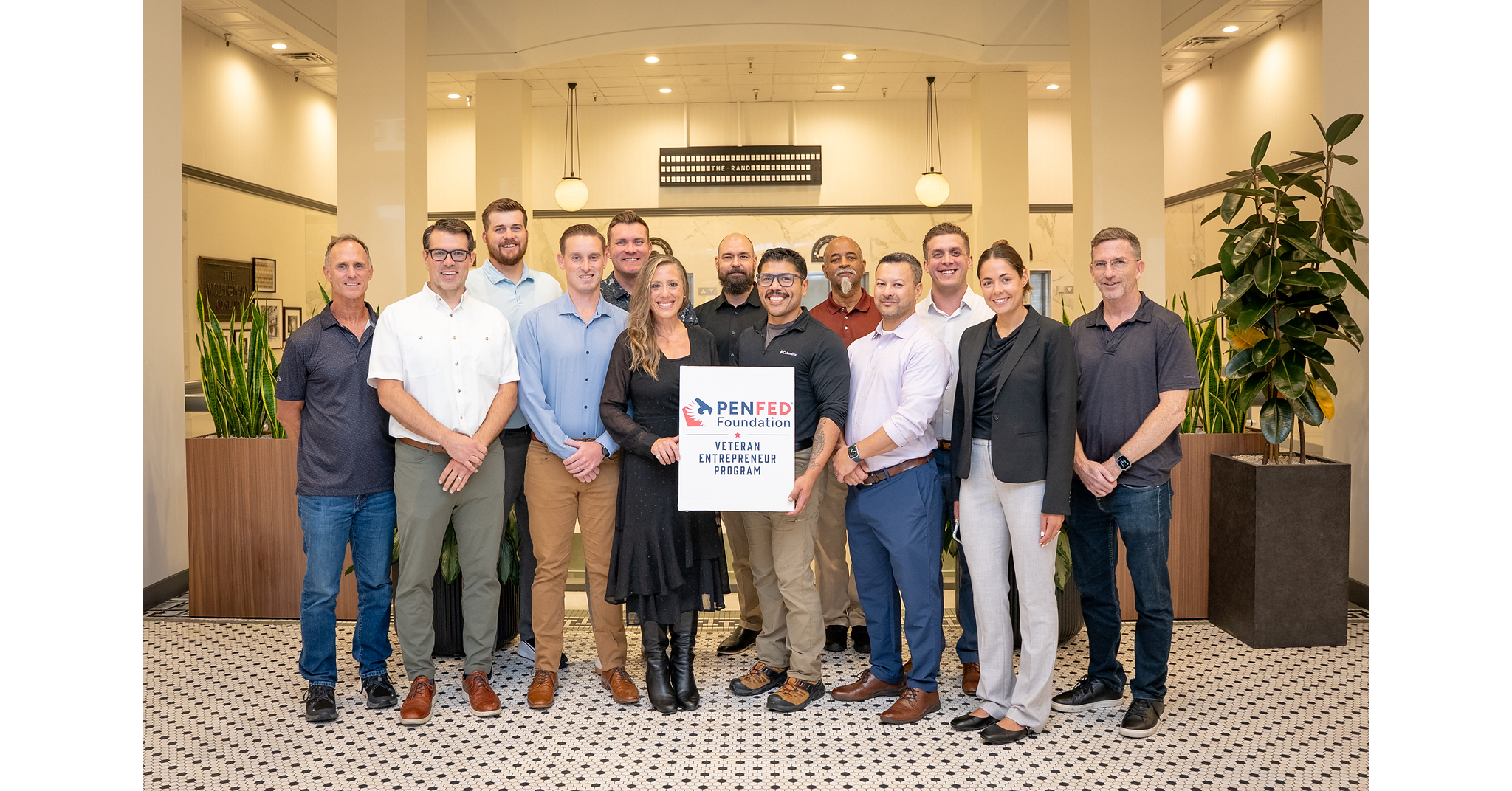
PenFed Foundation launched its September 2026 Veteran Entrepreneur Program cohort, providing four days of in-person programming and six weeks of virtual mentorship to 12 veteran- and military-spouse-led businesses at no cost and without taking equity. The cohort spans AI, healthcare, robotics, drones, IP technology and consumer products, with several companies citing early traction, including CuraTech's five systems in production and three signed LOIs ahead of a planned Q1 2027 launch. The announcement is a positive early-stage entrepreneurship development update but is unlikely to materially affect public markets.
Analysis
This is not a public-markets catalyst: the program provides neither financing terms nor evidence of commercial traction sufficient to alter earnings estimates for listed AI, healthcare, defense, or consumer companies. The practical near-term signal is confined to private-company sourcing; participation can improve founder networks and investor readiness, but it does not validate product-market fit, unit economics, regulatory clearance, or procurement access.
The more investable second-order theme is vertical-AI fragmentation. Tools aimed at dental revenue cycle, chronic-care workflow, government-affairs automation, and IP commercialization are likely to pressure point-solution vendors before they threaten scaled incumbents, because distribution, data integrations, compliance, and customer acquisition remain the binding constraints. Incumbents with embedded workflows—such as VEEV in life-sciences content, DOCS in clinical documentation, and dental-practice software ecosystems—retain advantages unless private entrants demonstrate measurable retention and payback periods.
Over 6-18 months, the relevant watch items are whether these startups convert pilots into recurring contracts, especially in regulated healthcare and government-adjacent markets where sales cycles can exceed 9-18 months. A broader implication is modestly positive for cloud and model-inference demand, but the cohort is far too small to justify a sector allocation change; claims around AI automation should be treated as lead-generation narratives until independently verified through customer deployments and gross-margin data.
AllMind Terminal
AI-powered research, real-time alerts, and portfolio analytics for institutional investors.
Request TrialMarket Sentiment
Overall Sentiment
mildly positive
Sentiment Score
0.28
Key Decisions for Investors
- No directional public-equity trade recommended; expected market impact is de minimis and no listed issuer has a direct earnings linkage.
- Maintain a private-markets watchlist around dental workflow automation and chronic-care monitoring; require evidence of at least 10-20 paying sites, net revenue retention, HIPAA/security posture, and implementation time before treating these as credible competitive threats to established healthcare-software vendors.
- For public AI exposure, prefer diversified infrastructure and workflow incumbents over speculative vertical-AI read-throughs; reassess only if private funding rounds, enterprise contract disclosures, or major channel partnerships establish repeatable distribution.
- Set an alert for FDA-clearance, reimbursement, or material provider-system contracts in rehabilitation/chronic-care robotics. Those events—not accelerator participation—would be the first plausible catalysts for a tradable healthcare-automation theme.
More News
- Taiwan benchmark Taiex rises to record intraday high as tech stocks advance
- AMD joins the $1 trillion club as chip rally surges - our AI Strategy saw it early
- Jamie Dimon says hyperscaler AI spending could hit $1 trillion next year
- Factbox-Key issues for this week’s Trump-Xi summit in Washington
- Here's who we know is going to the Trump-Xi dinner so far
- +17% in a single session: This AI-picked stock catches a data-center breakout
From AllMind Research
- Anthropic IPO Preview: Valuation, Timing, and What to Watch
- Shein After the IPO: Venue, Valuation, and What Must Be Proved
- What AI Research Tools Should a Small Hedge Fund Buy First?
- Bitcoin's 52% Crash Proves It's a Tech Stock: Here's What That Means for Portfolio Construction
- What Is an AI Investment Research Platform?