
Summer's Not Clocking Out Yet: Warmer Fall Forecast Could Extend Pest Activity Across the U.S.
Source: PR Newswire
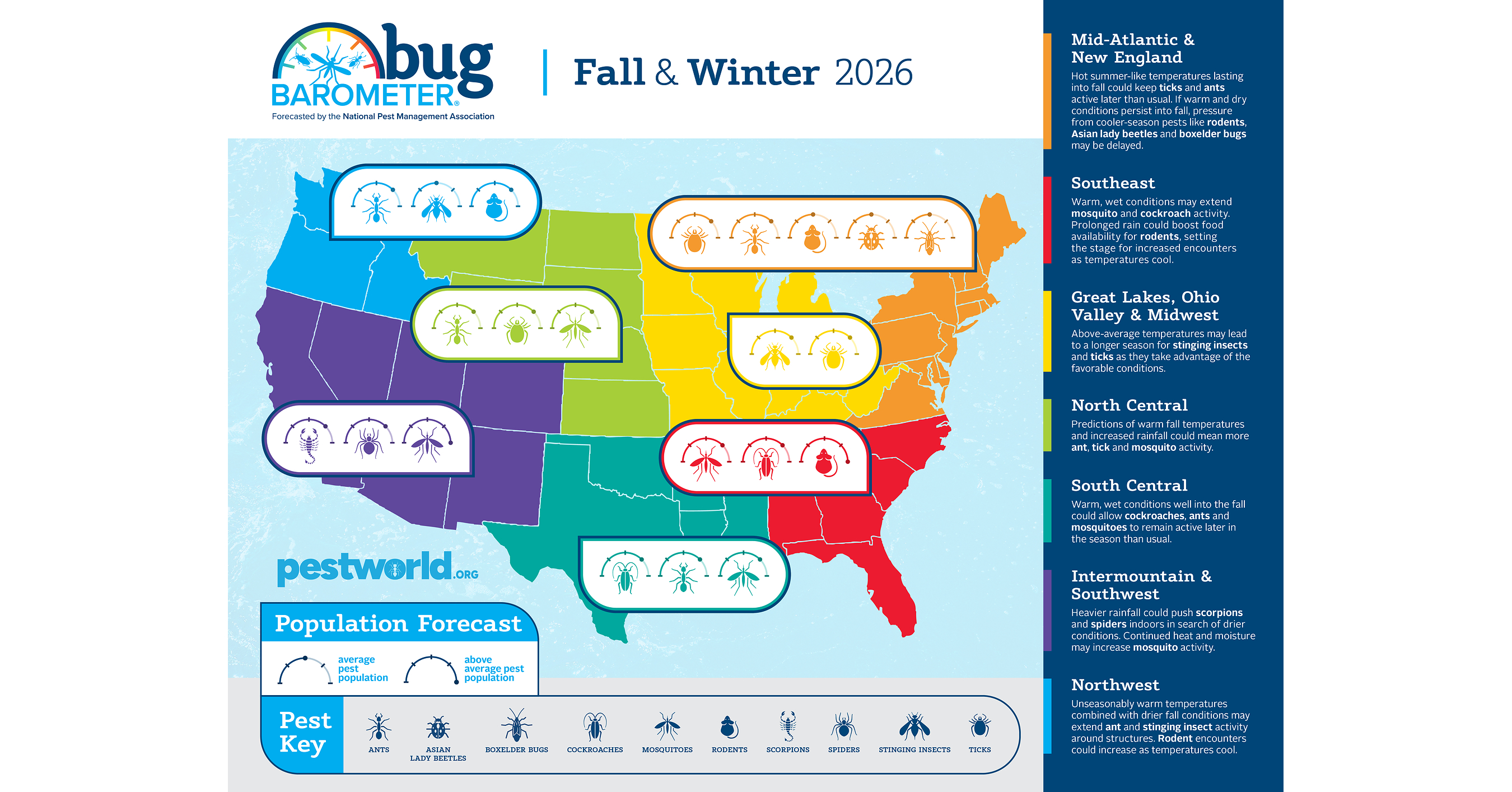
NPMA’s Fall & Winter 2026 Bug Barometer forecasts warmer-than-average fall temperatures across much of the U.S., likely extending activity periods for ants, mosquitoes, and ticks into later months. It also highlights region-specific risks (e.g., warm/wet Southeast extending mosquito and cockroach activity; heavier Southwest rainfall pushing scorpions and spiders indoors). The news is advisory in nature, with no explicit financial metrics or direct market impact.
Analysis
This is a low-conviction seasonal tailwind, not a regime change. The only durable monetization is in recurring pest-control services and a modest lift in DIY consumables; both are typically already built into summer/fall cadence, so the market likely overstates the immediate earnings impact. The cleaner read is on professional operators with dense route economics and subscription-like revenue, where an extended warm season can improve technician utilization and reduce weather-related service interruptions.
Second-order, the bigger beneficiary may be home-improvement and maintenance spend rather than “pest” exposure per se: sealing gaps, screens, caulk, weatherstripping, and moisture-control products can see a small basket uplift if households respond early. That favors retailers and brands with broad maintenance aisles more than niche pest SKUs. Conversely, broad consumer discretionary names should not be hurt meaningfully; the effect is too small and too localized to move aggregate spending.
The main risk is timing: a first hard freeze can collapse the thesis within 1-3 weeks in colder regions, and a wet-to-dry weather shift changes pest composition rather than total demand. The move is more relevant over 1-3 months for pest-control billing, with limited 6-18 month structural read-through unless warmer winters become persistent enough to lift baseline service frequency. This is best treated as a watchlist catalyst into late-Q3 and Q4 commentary, not a standalone macro call.
Contrarian view: consensus may be underestimating the value of professional remediation versus DIY when infestations linger into fall, which can slightly improve mix for full-service providers. But the broader street likely already prices “seasonality”; what could be missed is a mild margin tailwind from better routing density if route stops rise without a commensurate jump in customer acquisition costs.
AllMind Terminal
AI-powered research, real-time alerts, and portfolio analytics for institutional investors.
Request TrialMarket Sentiment
Overall Sentiment
neutral
Sentiment Score
-0.05
Key Decisions for Investors
- No broad index trade; the signal is too small and too weather-dependent. Treat as a monitoring item for late-Q3 / early-Q4 commentary rather than a macro position.
- Small tactical long on ROL or RTO into the next 4-8 weeks only if regional weather stays warm through first frost; thesis is improved route density and higher service urgency, with downside if temperatures normalize early.
- Pairs idea: long ROL / short a broader consumer discretionary ETF if you want a very modest weather-sensitive maintenance tilt; this is only attractive if DIY and service demand data start inflecting, otherwise skip.
- Watch-home-improvement basket beneficiaries HD and LOW for a minor seasonal uplift in sealants/weatherproofing and pest-prevention accessories; only act if weekly POS or management commentary confirms it.
- Set a falsifier: an early sustained cold snap or frost across the Midwest/Northeast would likely unwind the seasonal demand thesis within days and argue against any pest-services long.
More News
- Hurricane Isaias disrupts U.S. oil production in Gulf of Mexico, threatens refineries
- Isaias weakens to Category 1 hurricane after Florida landfall, NHC says
- Hurricane Isaias Shuts Almost Three-Quarters of Gulf Oil Output
- Global PC shipments crater 20% as rising prices hammer demand
- Rising fuel costs slashed Delta’s profit outlook despite strong demand
- AI agents like Muse can shop for you. Here's what that means for retail stocks