
Data Center Backlash, Fortescue Warning, Rio Tinto’s China Deal
Source: Bloomberg
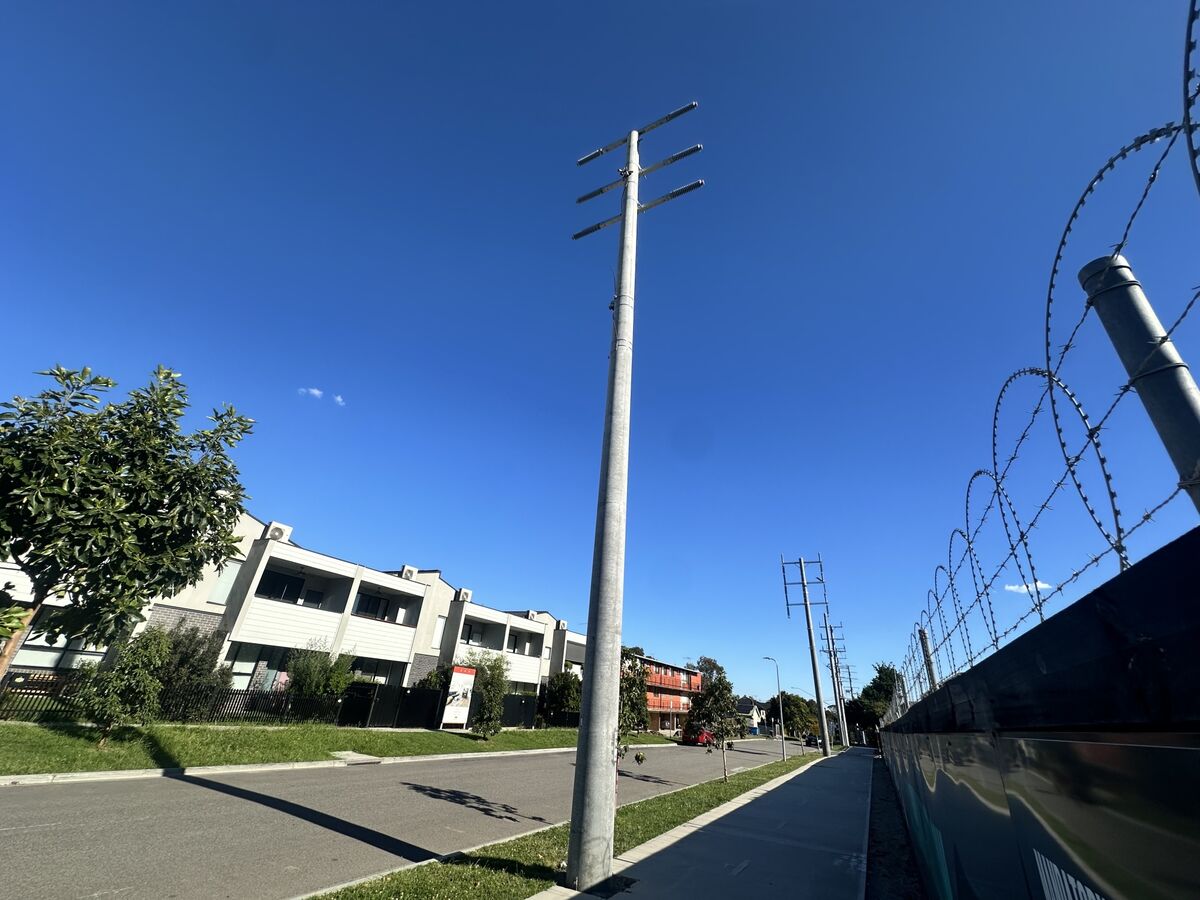
Nextdc said delays in securing power for its M3 facility in Melbourne could materially hurt earnings, triggering its biggest stock selloff since listing in 2010. The incident raises questions about whether power constraints could affect other Australian data centers and the country’s roughly $70 billion investment ambition; the excerpt provides no broader impact figures.
Analysis
The market is shifting from valuing announced megawatts to valuing deliverable, energized capacity. That changes the relevant unit economics: a site without timely grid access can carry land, construction and financing costs while deferring customer revenue; customers may also postpone deployments rather than pay for capacity they cannot use. The impairment risk therefore sits across project pipelines, not just at the affected facility. Developers with secured power and usable capacity could gain negotiating leverage, while utilities and grid-equipment providers may benefit from investment demand—but connection queues and permitting can delay that upside too.
For the next 1–3 months, watch whether Nextdc quantifies the earnings impact and whether other Australian operators disclose connection milestones, customer activation dates or capex deferrals. A single project delay is not evidence that Australia’s entire data-center buildout is impaired. Over 6–18 months, persistent grid bottlenecks could favor phased projects near available capacity and penalize developers whose valuations depend on converting announced pipelines into operating revenue. The contrarian risk is that the selloff overgeneralizes one facility-specific issue; contracts, alternative supply arrangements or a revised energization schedule could limit the damage. The key missing data are the duration and cost of the delay, affected capacity, contractual protections and customers’ ability to shift deployments.
AllMind Terminal
AI-powered research, real-time alerts, and portfolio analytics for institutional investors.
Request TrialMarket Sentiment
Overall Sentiment
mildly negative
Sentiment Score
-0.30
Key Decisions for Investors
- Avoid treating announced data-center capacity as equivalent to revenue-ready capacity. Before adding to Nextdc or peers, require project-level evidence of power connection dates, customer activation and the earnings sensitivity to slippage.
- Set a relative-value watch: favor operators with verifiably energized capacity over developers valued mainly on future pipeline, rather than shorting the sector broadly. Reassess if Nextdc provides a credible revised timeline and quantifies limited earnings exposure.
- Over the next 1–3 months, monitor connection approvals, grid-operator updates and any peer disclosure of delays or capex deferrals. A cluster of slippages would strengthen the broader bottleneck thesis; isolated delays would weaken it.
- Do not buy power-supply or grid-equipment beneficiaries solely on this signal: verify that incremental investment is funded, approved and deliverable, and distinguish long-run demand from near-term revenue conversion.
More News
- OpenAI nears up to $30 billion funding round at $1.25 trillion valuation led by UAE investors
- Nasdaq 100 Drops as Oil Rise Fuels Risk-Off Mood
- AI debt and French bonds face a stress test — why it may not be over
- 10-year Treasury yield tumbles below 5% to lowest level in nearly a month
- Latest Oil Market News and Analysis for Oct. 23
- Hedge Funds Bet Against Stocks as AI Selloff Deepens
From AllMind Research
- Anthropic IPO Preview: Valuation, Timing, and What to Watch
- Shein After the IPO: Venue, Valuation, and What Must Be Proved
- What AI Research Tools Should a Small Hedge Fund Buy First?
- What Exactly Does Post-Training in LLMs and Finance-Focused AI Actually Mean for Asset Managers?
- What Is a Financial Ontology?