
Zendure presenta Agentic HEMS en IFA 2026: "El centro de energía doméstica de la era de la IA"
Source: PR Newswire
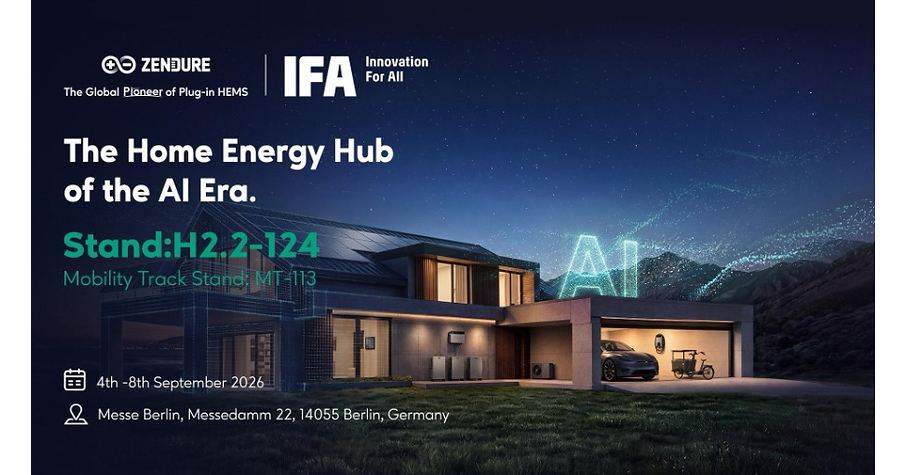
Zendure presentó en IFA 2026 Agentic HEMS, un sistema de gestión energética doméstica basado en IA que predice, planifica y actúa de forma autónoma usando su modelo patentado ZenPulse, agentes ZENKI™ y la plataforma abierta Zen+OS. La propuesta se apoya en pronósticos de generación FV, precios dinámicos, cargas y clima, y en una capa de integración que admite >90% de cargas comunes y conectividad con 870+ proveedores en Europa (150M usuarios), además de soporte para 5.000+ bombas de calor. El enfoque busca reducir costes moviendo consumo a periodos de menor precio y minimizar dependencia de la red mediante automatización (incluida su tarifa dinámica ZenWave™), aunque no se informan métricas financieras inmediatas.
Analysis
This is less a single-company event than a signal that residential energy management is shifting from device-level automation to orchestration of an entire household load stack. The incremental winners are the firms that can monetize data, control, and recurring software economics across batteries, EV charging, heat pumps, and dynamic tariffs; the losers are commoditized hardware vendors whose differentiation can be copied once interoperability becomes the buying criterion. Open APIs are a double-edged sword: they can speed adoption, but they also lower switching costs and push pricing power away from hardware and toward the control layer.
The first-order market impact is probably small, but the second-order effect over 6-18 months could be meaningful if these systems reduce payback periods enough to lift attach rates in Europe. That would support residential storage, smart charging, and demand-response ecosystems, while pressuring utilities with high exposure to peak retail margins and those that rely on household volumetric consumption. A parallel risk is that broader adoption of autonomous load shifting flattens intraday demand spikes, which could also reduce the value of backup-only batteries and make pure hardware more interchangeable.
The contrarian point is that “AI” is not the product; bill savings and installation friction are. If tariff volatility normalizes or consumers need more hardware than advertised to see a compelling payback, adoption could disappoint even if the software performs well. Near term this is mostly a sentiment read-through; the real catalyst will be whether public comps can show higher storage attach, better ARPU, or lower churn in the next 1-2 earnings cycles.
AllMind Terminal
AI-powered research, real-time alerts, and portfolio analytics for institutional investors.
Request TrialMarket Sentiment
Overall Sentiment
mildly positive
Sentiment Score
0.18
Key Decisions for Investors
- No direct trade in Zendure; treat this as a sector signal and watch ENPH, SEDG, and TSLA Energy commentary into the next earnings cycle. Falsify the thesis if residential storage attach rates or software revenue do not inflect within 1-2 quarters.
- Pair trade: long ENPH / short SEDG over 1-3 months. The market should reward ecosystem control and software attach more than standalone hardware exposure; risk/reward is attractive if residential demand stabilizes, but cover the short if SEDG margin guidance improves materially.
- Small tactical long TSLA on any post-event weakness, 1-3 month horizon, as a read-through to home-energy-plus-EV integration. This is a low-conviction levered expression; exit if energy segment commentary stays non-committal or if TSLA energy bookings decelerate.
- Set an alert on European residential power-price volatility and dynamic-tariff adoption. If spreads compress, the payback math for autonomous HEMS weakens quickly and the trade should be reduced; if spreads widen again, the setup improves for storage and smart-charging names.
- Consider a basket long of distributed-energy software/controls versus utilities only if upcoming data shows demand-response monetization. Without evidence of recurring software economics, avoid forcing a position.
More News
- Iran says two tankers catch fire after hitting mines in Strait of Hormuz
- US and Iran both claim control of Strait of Hormuz amid attacks on vessels
- AI stocks plunge. Inflation heats up. Where we're still finding opportunities
- Bending Spoons wants to revive software castoffs. Berkshire is backing the plan
- AI rapidly improving, could vastly boost U.S. GDP, Anthropic's Clark tells policymakers
- ‘How many canaries have we killed in the coal mine?’ — Wall Street debates if the latest AI bubble warnings are another head fake or the real thing