
Huawei onthult innovatieve meeslepende telepresence-oplossing voor meeslepende ervaringen en intelligente diensten
Source: PR Newswire
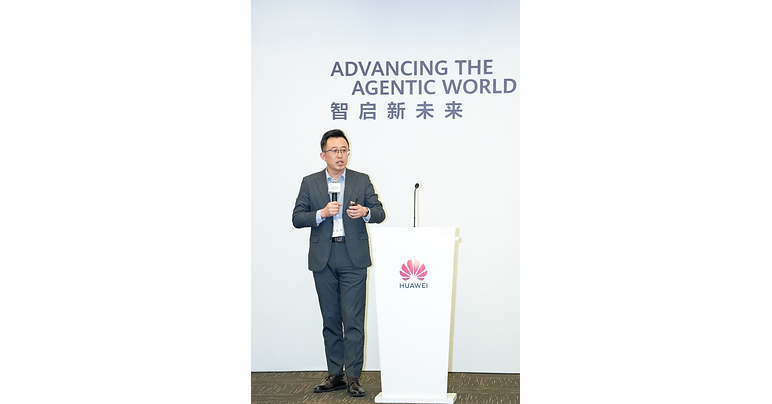
Huawei unveiled an immersive telepresence system at HUAWEI CONNECT 2026, featuring its CloudLink Camera 610 AI panoramic camera, AI-driven noise reduction, spatial audio and modular IdeaPresence displays supporting 1.07 billion colors. The company also opened SDKs for AI, media processing, whiteboards and audio/video data to expand its OpenHarmony collaboration ecosystem across enterprise meetings and smart classrooms. The announcement highlights Huawei's push to translate AI-enabled collaboration tools into productivity applications, though it includes no financial targets or sales outlook.
Analysis
This is strategically more relevant to Huawei’s enterprise-stack ambition than to near-term listed-equity earnings. The product bundle pushes collaboration hardware toward a proprietary endpoint: camera, display, audio, room-control software and AI services become a single installed base. That raises switching costs in regulated Chinese enterprises and education, but the addressable revenue pool remains small relative to Huawei’s ICT infrastructure businesses; a press-release launch alone is not an investable demand signal.
The second-order pressure falls on standalone videoconferencing and collaboration vendors whose differentiation is increasingly software-only. Cisco (CSCO) and Logitech (LOGI) face limited direct global exposure, but could see incremental pricing pressure in China and emerging markets where Huawei can bundle endpoints with networking, cloud and service contracts. Poly/HP (HPQ) is similarly exposed at the hardware layer, while Zoom (ZM) and Microsoft (MSFT) are more insulated because workflow integration and installed enterprise software remain their primary moat.
Over 1-3 months, monitor whether Huawei publishes named enterprise wins, channel deployments, or recurring AI-service pricing; without these, this is likely marketing rather than a revenue catalyst. Over 6-18 months, the material implication is potential fragmentation of collaboration standards and a larger China-specific ecosystem around OpenHarmony, which would make Western vendors’ China revenue structurally lower quality. The thesis is falsified if deployments continue to require third-party cloud meeting platforms or if customer adoption remains confined to Huawei-affiliated public-sector accounts.
AllMind Terminal
AI-powered research, real-time alerts, and portfolio analytics for institutional investors.
Request TrialMarket Sentiment
Overall Sentiment
mildly positive
Sentiment Score
0.38
Key Decisions for Investors
- No directional trade on the launch itself; treat it as a watch item until independently verifiable customer orders, pricing, and deployment volumes emerge over the next two quarters.
- For portfolios with existing CSCO or LOGI exposure, flag China/EM collaboration-endpoint revenue and gross-margin commentary at the next 1-2 earnings cycles; a guidance downgrade tied to competitive pricing would support reducing exposure rather than initiating a broad short.
- Maintain a relative-quality bias toward MSFT over ZM in collaboration software for the next 6-18 months: endpoint commoditization favors vendors embedded in identity, productivity and security workflows. Reassess if Teams seat growth materially decelerates or enterprise AI attach rates disappoint.
- Monitor OpenHarmony enterprise SDK adoption and China procurement policy. Confirmed mandates or large education/public-sector contracts would strengthen the case for a selective short basket of China-exposed conferencing hardware suppliers, but current evidence is insufficient to recommend one.
More News
- Trump & Xi to Meet Amidst Friction on Wars, Tech, Trade
- Here are the 3 big things we're watching in the stock market this week
- Tech leads shares higher in Asia, oil eases
- Yuan hits fresh multi-year peak as PBOC eases curb ahead of Trump-Xi summit
- China slows humanoid robot IPO rush as hype outruns reality
- The economy has undergone a structural transformation that ended the low-cost era. ‘The regime change in inflation and interest rates is the outcome’
From AllMind Research
- Anthropic IPO Preview: Valuation, Timing, and What to Watch
- Shein After the IPO: Venue, Valuation, and What Must Be Proved
- What AI Research Tools Should a Small Hedge Fund Buy First?
- How to Search Earnings Call Transcripts With AI
- What a Concept From Nature Tells Us About How C-Suite Executives Actually Think About AI