
Micron: Sept. 30 Could Reveal How Big Its Next Buyback Really Is
Source: seekingalpha.com
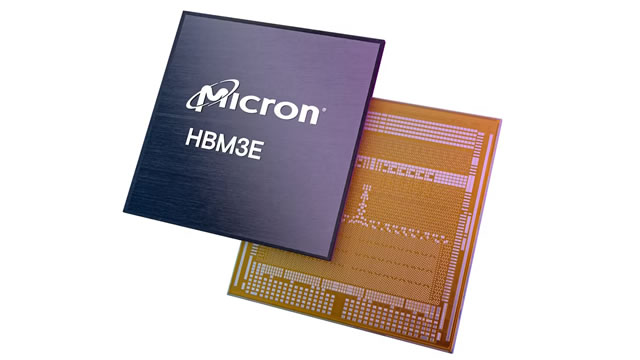
Micron is characterized as a Strong Buy on robust earnings, disciplined capital allocation and new capacity entering a tight memory-supply market. Fiscal Q4 revenue guidance is aided by a 14th week, while the normalized revenue run-rate and a single-digit earnings multiple are cited as evidence of undervaluation. The scale of the next repurchase authorization will be a key signal of management's confidence; $2.16B remains under the current buyback program.
Analysis
The near-term setup is favorable, but the key tradable distinction is between reported growth and normalized demand: an extra fiscal week can pull revenue recognition forward without changing the underlying exit rate. MU’s multiple can expand only if management demonstrates that high-bandwidth memory and data-center DRAM mix are offsetting the historically more volatile PC/mobile memory base; otherwise, investors will treat the next strong print as peak-cycle earnings. The buyback announcement is therefore more important as a capital-allocation signal than as mechanical EPS support: a large authorization alongside restrained capex would imply management sees supply discipline as durable through the next 12-18 months.
Second-order beneficiaries are memory equipment suppliers—LRCX and AMAT—if new capacity converts into sustained wafer-fab spending, though that is a less clean read-through if MU prioritizes technology migration over greenfield volume. The principal risk is that industry supply discipline breaks as Korean competitors monetize elevated pricing with faster capacity additions; memory pricing can reverse before reported revenue does, producing abrupt multiple compression. Over the next 1-3 months, consensus estimate revisions and commentary on bit supply growth matter more than the headline revenue beat; over 6-18 months, the thesis depends on HBM qualification durability and whether capex remains below demand growth.
Consensus may be underweighting the possibility that buybacks substitute for incremental capacity investment precisely when the market is rewarding AI-memory scarcity. That is bullish for near-term FCF and valuation, but it raises medium-term share-loss risk if SK Hynix or Samsung closes qualification gaps with major accelerator customers. A strong MU report without a corresponding upward revision to normalized gross-margin or FY capex assumptions would be a signal to fade the post-earnings move rather than chase it.
AllMind Terminal
AI-powered research, real-time alerts, and portfolio analytics for institutional investors.
Request TrialMarket Sentiment
Overall Sentiment
moderately positive
Sentiment Score
0.62
Ticker Sentiment
Key Decisions for Investors
- Maintain or initiate a tactical long MU into the next earnings/capital-return update, sized for a 1-3 month catalyst window; take profits if the stock rallies on the extra-week revenue effect without upward revisions to normalized gross-margin or forward EPS estimates.
- Use a pair trade of long MU / short SOXX for 1-3 months if management signals a materially expanded repurchase authorization and disciplined capex. This isolates company-specific FCF and capital-return upside from broad semiconductor-beta risk; exit if MU guides bit supply growth materially above end-demand growth.
- Do not add aggressively above a post-results breakout unless management quantifies sustained HBM/data-center mix gains and confirms customer qualification progress. A revenue beat alone is insufficient because the reported comparison is calendar-distorted.
- Monitor LRCX and AMAT as conditional follow-through longs rather than immediate buys: add only if MU’s capex outlook indicates incremental capacity spending rather than primarily node-transition investment. A weak equipment-order implication would favor MU over the equipment complex.
- Set a downside risk trigger around any evidence of accelerated Korean memory supply additions, falling contract-price indicators, or a reduction in MU’s gross-margin outlook; those would invalidate the supply-discipline premise and warrant closing tactical MU exposure.
More News
- Micron Turned $10,000 Into About $130,000 in 5 Years. Most of It Came in the Past 12 Months.
- The HBM Bottleneck: 3 Tech Companies Have Locked Up 85% of the Supply of AI's Scarcest Asset
- Micron Is Poised to Surge After Its Fiscal Year Ends
- Breakfast News: Week in Review
- BYD, CATL, Xiaomi executives may join Xi’s US visit, sources say
- Exclusive-China’s CXMT eyes flash-memory push amid global shortage; firm to take on Samsung, YMTC