
3 Top Refining & Marketing Picks on Strong Profit Margins
Source: zacks.com
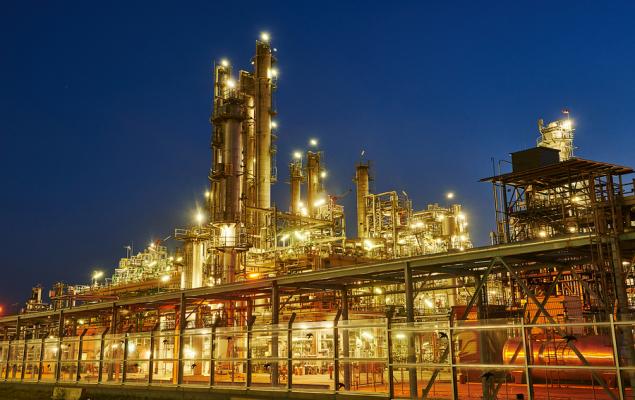
The Zacks Oil and Gas - Refining & Marketing industry holds rank #6 of 247, with 2026 and 2027 earnings estimates up 253.5% and 208.2%, respectively, over the past year. The industry gained 133% over the past year, versus 39.9% for the energy sector and 11% for the S&P 500; its trailing EV/EBITDA is 6.38X. The article highlights Marathon Petroleum, PBF Energy and Phillips 66, citing strong refining margins, favorable earnings outlooks and potential capacity for shareholder returns.
Analysis
The key risk is earnings duration, not whether current refining economics are strong. Estimate upgrades and unusually large EPS-growth forecasts can reflect a low comparison base; if product cracks normalize, reported earnings may fall faster than those forecasts imply. The industry’s valuation discount is not a clean margin of safety: refining EBITDA is cyclical, so a low trailing multiple can be a peak-earnings denominator effect. After a sharp sector rerating, upside requires margins to persist or capital returns to exceed what prices already imply.
Within the group, PSX’s marketing, transportation and chemicals exposure should provide more insulation from a refining-margin reversal than a more concentrated refiner such as PBF. That is relative resilience, not immunity: outages can hurt the affected operator even as lost industry supply supports competitors’ margins. MPC’s MPLX linkage offers a distinct midstream earnings stream, but verify the current contribution and capital-return outlook before treating it as a hedge to refining.
Near term, monitor regional crack spreads, product inventories, refinery utilization and outage disclosures—not just crude prices. Over 1–3 months, weaker spreads or downward guidance revisions would challenge the estimate-revision trade; over 6–18 months, the structural question is whether refining capacity discipline and diversified cash flows offset fuel-demand transition and renewable-fuel economics. The contrarian risk is that investors extrapolate favorable margins and buybacks after the rally, while the next incremental data merely confirms what is priced. Evidence of sustained cracks and cash returns would falsify that caution.
AllMind Terminal
AI-powered research, real-time alerts, and portfolio analytics for institutional investors.
Request TrialMarket Sentiment
Overall Sentiment
moderately positive
Sentiment Score
0.55
Ticker Sentiment
Key Decisions for Investors
- Avoid chasing broad refining beta after the sharp rerating. For an event-driven relative-value expression, consider a dollar-neutral long PSX / short PBF position if product cracks begin to roll over: PSX’s broader operating mix may cushion compression, while PBF has greater direct exposure to refining conditions. Keep it modest; PSX can still fall with the group. Reassess on earnings guidance and crack-spread direction.
- Treat MPC as a conditional hold/add on weakness rather than a fresh momentum buy. Verify MPLX distributions, MPC’s refining cash generation and planned shareholder returns; thesis weakens if margin normalization drives lower cash returns or refinery reliability deteriorates.
- Set a sector risk trigger: reduce exposure if regional gasoline or diesel cracks materially weaken alongside rising inventories, or if MPC, PBF or PSX cut operating or earnings guidance. Sustained cracks and confirmed cash returns would argue against the compression thesis.
- Do not infer cheapness from the industry’s trailing EV/EBITDA alone. Compare normalized mid-cycle earnings and company-specific leverage, maintenance needs and return-of-capital plans before adding outright exposure.
More News
- Trump says Iran war will end 'when I want it to' as costs reportedly balloon to $47 billion
- SK Hynix third-quarter profit sharply beats estimates on AI memory boost
- SK Hynix Posts Record Profit Amid AI Rush
- Anthropic's IPO could be 'speculative fiction' or a 'generational moment' — investors are split
- Iran’s calculations as US escalation looms: Trust, midterms, Hormuz
- Anthropic IPO Seeks Investors, With Risks of Catastrophe, Rogue AI