
Meissner Introduces the Single-Use Automated Aliquoting System (AAS)
Source: PR Newswire
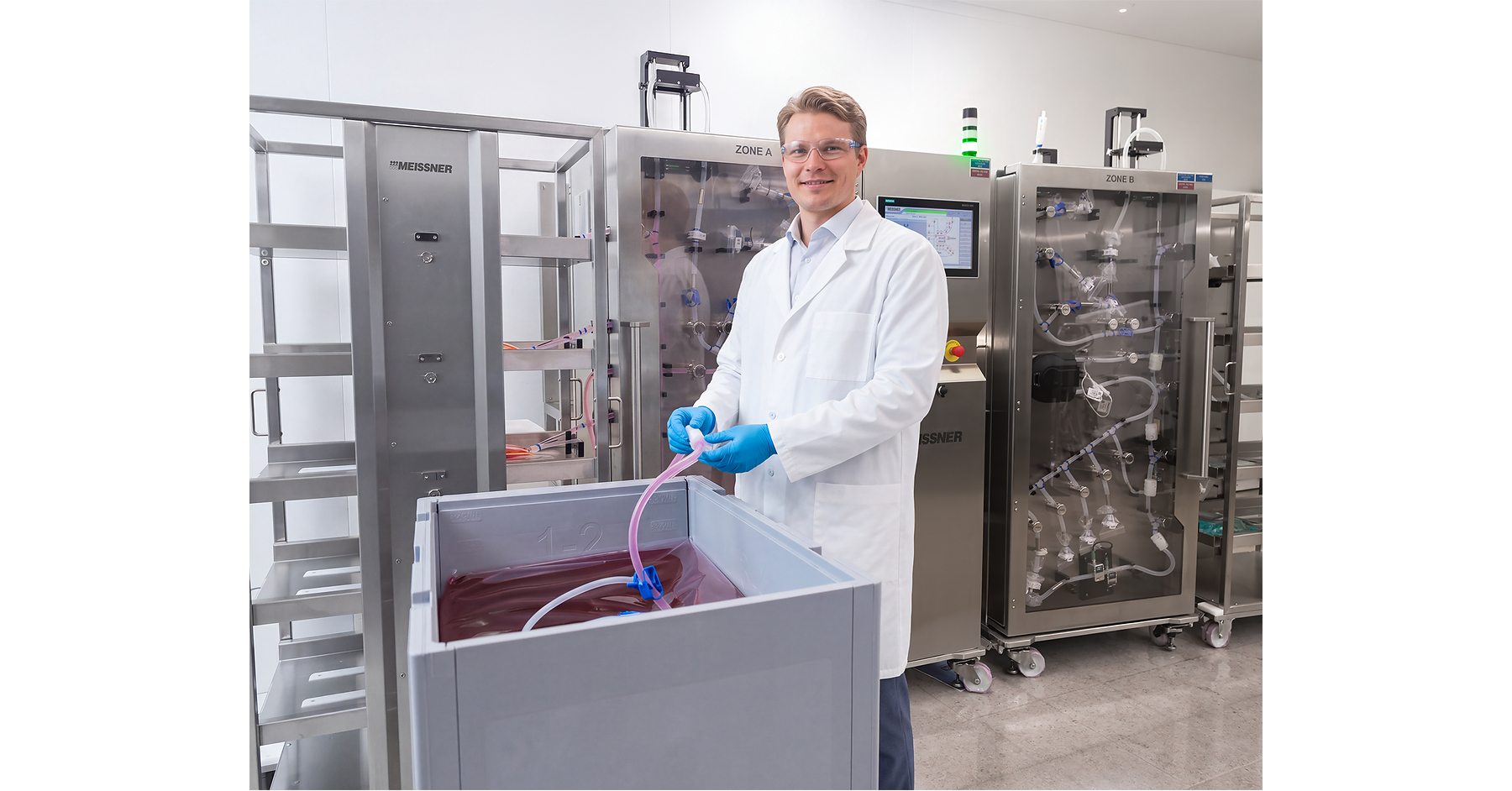
Meissner introduced its Automated Aliquoting System (AAS), a recipe-driven platform for filling and transferring process solutions into single-use biocontainers ranging from 1 to 20 liters. The company says the system standardizes filling, creates 21 CFR Part 11-compliant electronic records and audit trails in real time, and reduces direct human intervention in classified areas. The product announcement includes no pricing, sales targets, or financial outlook.
Analysis
This is a product-level signal, not yet evidence of material revenue or a change in bioprocessing economics. The investable question is whether automated aliquoting becomes a validated, repeatable control point across customer sites—or remains a niche skid whose qualification and integration costs outweigh labor and quality benefits. The press release’s claims about consistency, changeovers and compliance are vendor claims; adoption, uptime, throughput and customer validation remain unverified.
If adopted, the system could shift value toward suppliers able to bundle automation with compatible single-use assemblies, service and validation support. That may matter more than the skid sale itself: once a workflow is qualified, switching components or recipes can create revalidation burden. Conversely, the stated reduction in classified-area intervention could help customers reduce operator dependence and contamination exposure, but it does not eliminate other contamination pathways or establish lower cost per batch. Potential competitors and adjacent platforms to monitor include Sartorius, Cytiva, Thermo Fisher Scientific and Merck KGaA; the announcement alone does not establish direct product equivalence or competitive displacement.
Near term, no clear security-level catalyst is demonstrated. Over 1–3 months, customer deployments, repeat orders, compatibility breadth and service economics would indicate whether this is commercially meaningful. Over 6–18 months, broader automation adoption could favor integrated workflow suppliers, while raising validation and interoperability demands. The contrarian point: automation features are easy to announce; validated adoption and consumables pull-through are the harder, more valuable proof points.
AllMind Terminal
AI-powered research, real-time alerts, and portfolio analytics for institutional investors.
Request TrialMarket Sentiment
Overall Sentiment
mildly positive
Sentiment Score
0.30
Key Decisions for Investors
- No trade on the launch alone; avoid treating a single vendor announcement as evidence of sector-wide demand or competitor share loss.
- Put Meissner and relevant bioprocess suppliers—including Sartorius, Cytiva, Thermo Fisher Scientific and Merck KGaA—on a watchlist for disclosed customer deployments, orders, installed base, recurring consumables attachment and evidence of repeat use.
- Reassess the sector thesis only if adoption data show measurable labor/changeover or quality benefits and customers validate those gains; verify qualification timelines, integration costs and compatibility before underwriting recurring revenue.
- Falsification/watch items: limited customer uptake, lengthy validation, poor uptime, narrow component compatibility, or no evidence that customers expand beyond pilots. These would suggest the product is incremental rather than a catalyst for supplier economics.
More News
- BlackRock, GIC among investors chasing Indian telecom major Jio's IPO as anchor bids top $26 billion
- Nscale, Anthropic Eye $45 Billion Cloud Deal as AI Trade Rebounds
- Elice shares plunge 28% on debut as investor doubts over AI trade deepen
- Gartner analyst behind tech rout: AI returns are not yet large enough to justify neocloud build-out
- Alibaba Backs Chinese Robovan Maker in $400 Million Fundraising
- ’Panic’ selling hits Indonesian markets on MSCI expulsion threat
From AllMind Research
- Anthropic IPO Preview: Valuation, Timing, and What to Watch
- Shein After the IPO: Venue, Valuation, and What Must Be Proved
- What AI Research Tools Should a Small Hedge Fund Buy First?
- AI in Asset Management: 2026 Statistics That Hold Up
- What is Broker Research and RMS Systems (And How to Actually Use Them)