
August jobs report could show a summer hiring slump. Haitian refugees are a wild card.
Source: MarketWatch
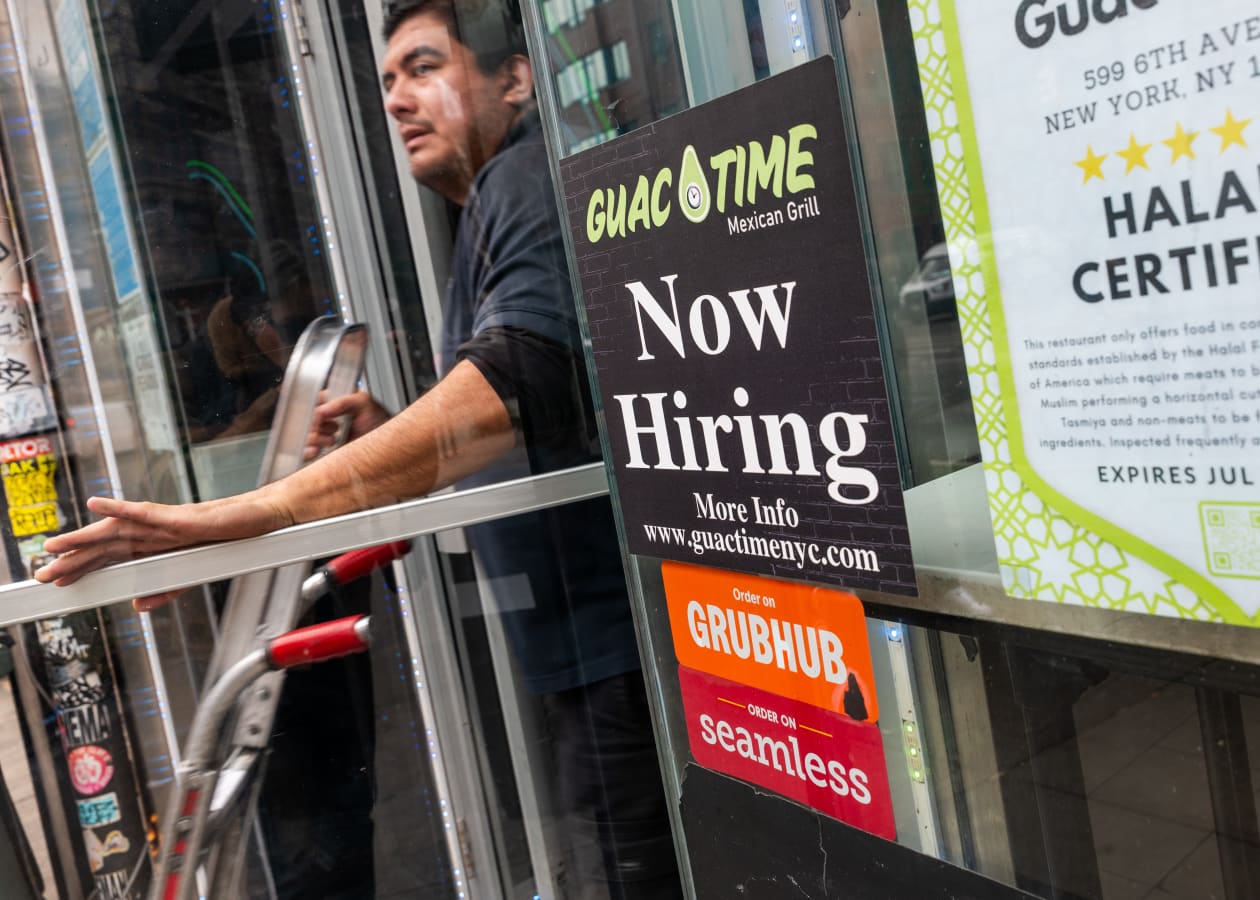
Ahead of Friday’s August jobs report, Wall Street expects only a small increase in new jobs, raising the risk of another summer hiring slump (potentially the third year in a row). A key wild card is the loss of temporary protective status for hundreds of thousands of Haitian immigrants, which could affect labor-market readings and complicate interpretation of the employment data.
Analysis
The market is likely to over-focus on the headline job count and under-focus on the composition: if payroll softness is driven by labor-supply distortion rather than true demand decay, the initial bond rally can fade fast. That matters because the Fed responds to inflation persistence, not just job creation; a weaker print paired with sticky wages or shorter hours is not a clean “dovish” signal. In that setup, the first 24-48 hours favor duration and high-multiple defensives, but the 1-3 month risk is a reversal if participation, wages, or revisions reassert a still-tight labor market.
Second-order winners are rate-sensitive assets: TLT, utilities (XLU), and REITs (XLRE) should outperform if the market reads the report as slowing demand. Losers are small caps (IWM), cyclicals, and consumer-discretionary names with operating leverage to wage and demand swings; banks via slower loan growth are a quieter loser, while labor-intensive businesses in restaurants, construction, and logistics face margin pressure if labor supply tightens and wage inflation re-accelerates. That makes the most interesting hidden beneficiary not a macro sector, but labor-substitution exposure: staffing and automation-linked names should see relative support if employers respond by buying efficiency rather than rehiring.
The contrarian view is that consensus may be too eager to call this a recession signal. A weaker print caused by immigration-related labor withdrawal can reduce payrolls without reducing household spending, which would keep inflation sticky enough to cap the upside in bonds. Falsifiers: a jump in unemployment, falling average hourly earnings, and rising continuing claims would validate the bearish growth thesis; absent that, the first move in TLT may be a trade, not a regime change.
AllMind Terminal
AI-powered research, real-time alerts, and portfolio analytics for institutional investors.
Request TrialMarket Sentiment
Overall Sentiment
mildly negative
Sentiment Score
-0.18
Key Decisions for Investors
- Tactically buy TLT calls or a 2-4 week call spread into a weak payrolls release; take profits quickly if the 10Y yield fails to break its prior week’s low or if wage growth stays firm.
- Pair trade: long XLU / short IWM for 1-3 months to express lower-growth, lower-rate sensitivity with less direct earnings risk than outright bond duration.
- Avoid adding to consumer-discretionary beta (XLY/XRT) until the next payrolls and wage prints confirm demand destruction rather than labor-supply noise.
- If the report comes in weak but wages remain hot, fade the duration rally via short TLT or TLT puts; that outcome would imply higher-for-longer is still intact.
- Watch staffing/automation exposure as a secondary trade alert: if labor supply tightens further, relative strength in labor-saving names should persist versus labor-intensive service stocks.
More News
- Fed's Kashkari reportedly says inflation is still too high across the U.S. economy
- Bessent meets China Vice Premier He Lifeng ahead of Trump-Xi summit
- U.S. urges Americans to reconsider Middle East travel as Iran tensions rise
- Qatar Says LNG Damage May Take Years to Repair
- The economy has undergone a structural transformation that ended the low-cost era. ‘The regime change in inflation and interest rates is the outcome’
- Why have US prosecutors labelled China’s Huawei a criminal enterprise?
From AllMind Research
- Anthropic IPO Preview: Valuation, Timing, and What to Watch
- Shein After the IPO: Venue, Valuation, and What Must Be Proved
- What AI Research Tools Should a Small Hedge Fund Buy First?
- How to Search Earnings Call Transcripts With AI
- What a Concept From Nature Tells Us About How C-Suite Executives Actually Think About AI