
Next Africa: Cash Giveaway Tests Alternative to Traditional Aid
Source: Bloomberg
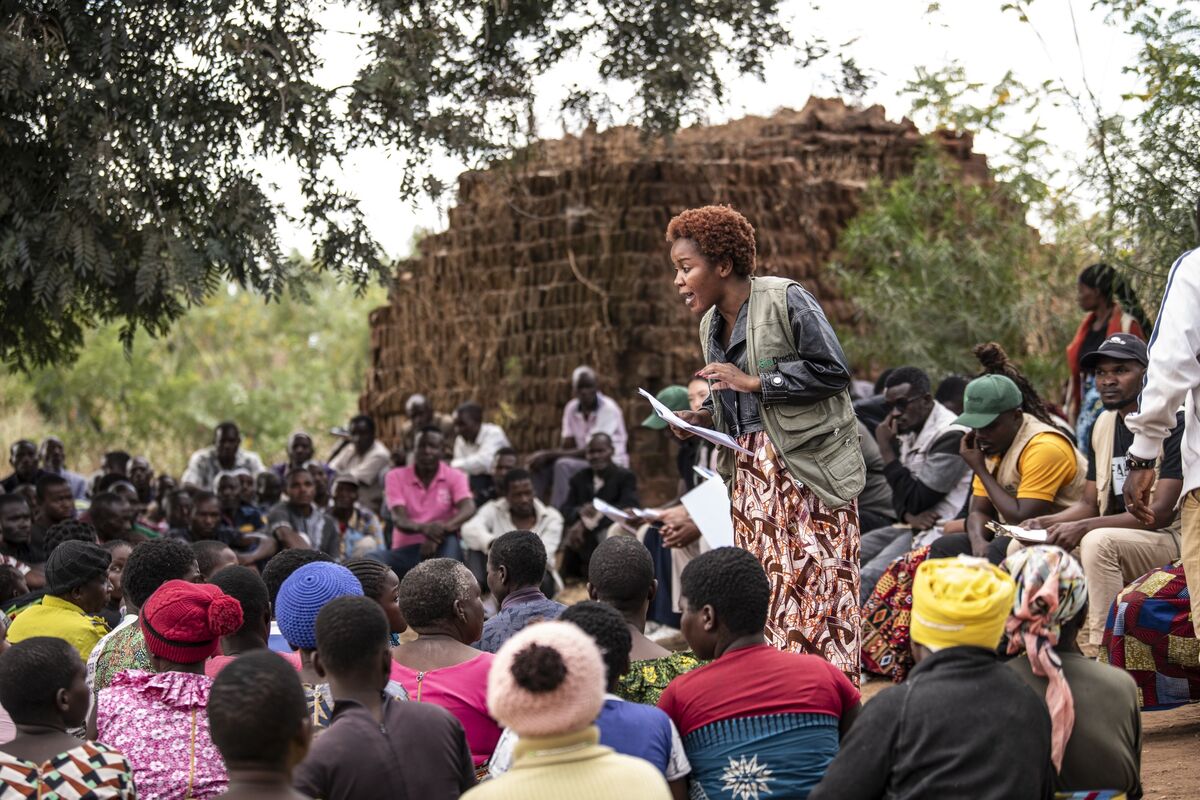
Malawi has received roughly $20B in external aid over the past two decades, yet poverty rates have not improved. A new “cash giveaway” program is distributing support to as many as 230,000 Malawians as an alternative to traditional aid grants, highlighting the limited effectiveness of prior assistance.
Analysis
The investable signal here is not Malawi-specific; it is the ongoing migration from leakage-prone aid delivery toward direct-to-consumer transfer rails. In markets with weak administrative capacity, the first beneficiaries are usually payment intermediaries, mobile-money networks, and data-rich consumer lenders, while the losers are program administrators and any vendors built around grant capture rather than end-user reach. The second-order effect is that cash transfers create a cleaner dataset on household spending, which over time can improve underwriting for FMCG distributors, agri-input sellers, and microcredit providers that can actually monetize last-mile demand.
Near term, the macro effect is mostly consumption smoothing, not growth acceleration. If transfers are funded externally, the risk is that they lift imported consumption before local supply can respond, which can leak into food inflation and FX pressure rather than durable poverty reduction. The market should be skeptical of any narrative that a smaller, more targeted transfer automatically becomes a structural growth engine; the binding constraint is productivity and supply-side capacity, not just household liquidity.
Over 1-3 months, the catalyst path is mostly policy imitation: other frontier governments may cite this as a template to justify subsidy reform or conditional cash pilots, especially where fuel/food subsidies are politically expensive. Over 6-18 months, the real test is whether transfers are paired with payments infrastructure and recipient verification; if not, the program becomes a short-lived demand pulse. Contrarian view: the consensus may underappreciate that cash aid can be inflationary in very shallow economies, making it less about equity and more about who controls distribution channels.
There is no clean public-market trade in the article itself, so this is better treated as an alert on EM payments and consumer-credit rails rather than a directional macro position. The thesis is falsified if transfer pilots fail to scale, if donor funding is cut, or if local inflation/FX deteriorate enough to force a policy reversal.
AllMind Terminal
AI-powered research, real-time alerts, and portfolio analytics for institutional investors.
Request TrialMarket Sentiment
Overall Sentiment
mildly negative
Sentiment Score
-0.25
Key Decisions for Investors
- No standalone directional trade in Malawi; treat this as a watch item on frontier EM payments rails and local consumer-credit enablers over the next 1-3 quarters.
- Build an alert list around Africa mobile-money/payment proxies (e.g., MTN, Vodacom, Airtel Africa) for any evidence that direct-transfer programs are expanding recipient volume or transaction frequency.
- Watch frontier sovereigns with large subsidy burdens: if cash-transfer pilots gain credibility, it strengthens the medium-term case for subsidy reform, but only if fiscal savings are real and inflation remains contained.
- If you want a tradable expression, prefer a basket long of EM payments/data infrastructure versus broad frontier consumer exposure only after confirming sustained transfer scale and stable FX/reserve trends.
- Falsification triggers: rising food inflation, reserve drawdown, donor pullback, or program audit evidence showing weak recipient targeting and limited household spending durability.
More News
- Middle East war, high debt levels to dominate IMF-World Bank meetings in Bangkok
- India’s Rupee Defense Raises Question of How Far RBI Will Go
- CBO chief warns it’s ‘probably not plausible’ that a strong economy alone can steady U.S. debt as 5%-6% growth is needed—more than Bessent’s 3% view
- Has Yemen returned to ‘full-scale war’?
- The world needs Ukraine’s grain. Its farmers are running out of reasons to plant
- India unveils tough curbs on dollar demand to defend rupee