
Europe Seeks Role at Table as Stubb, Støre Hold Call with Putin
Source: Bloomberg
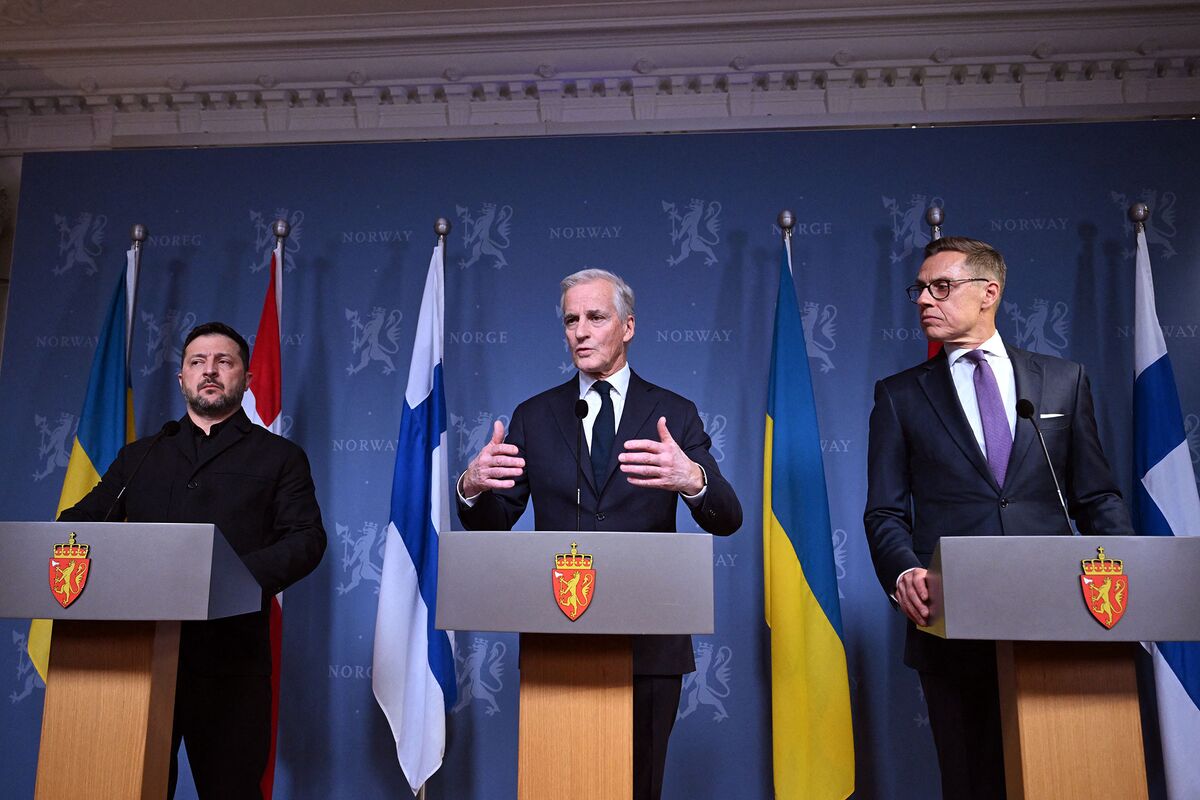
Finnish President Alexander Stubb and Norwegian Prime Minister Jonas Gahr Støre spoke with Vladimir Putin, marking the first confirmed interaction between two European leaders and the Russian president since French President Emmanuel Macron’s call with Putin in July 2025. Ukrainian President Volodymyr Zelenskyy was debriefed after the call; the article excerpt gives no details on its substance or outcome.
Analysis
The investable signal is not the contact itself but whether it creates a credible route to ceasefire terms that Europe can support and enforce. A coordinated process could compress Europe’s geopolitical risk premium, helping exposed European cyclicals and easing pressure on energy markets. A process that sidelines EU institutions or yields no verifiable concessions could instead raise uncertainty: investors would have to price both continued conflict and greater disagreement over sanctions, security guarantees, and defense commitments.
Over days, treat the headlines as noise unless they change energy prices or market pricing of conflict risk. Over 1–3 months, watch for a defined negotiating format, Ukrainian participation, and concrete movement on ceasefire conditions or sanctions. Over 6–18 months, defense demand depends more on procurement and budget commitments than on diplomatic contact; a thaw alone is not evidence of order cancellations.
The contrarian risk is assuming diplomacy automatically means de-escalation. A failed or fragmented initiative could reverse any relief in European gas and risk assets, while defense equities may prove less sensitive to headlines than to actual budget decisions. No company-level earnings or valuation conclusion is supported by the information provided.
AllMind Terminal
AI-powered research, real-time alerts, and portfolio analytics for institutional investors.
Request TrialMarket Sentiment
Overall Sentiment
neutral
Sentiment Score
0.00
Key Decisions for Investors
- No directional trade on the call alone. Keep European equity and energy exposure sized for a two-way headline risk; avoid treating diplomatic engagement as confirmation of a settlement.
- Set an alert for sustained moves in benchmark European gas prices and broad European equity volatility. A relief move is more credible if accompanied by concrete negotiating terms; a sharp reversal without terms argues against chasing it.
- Monitor European defense equities against broad European cyclicals over the next 1–3 months. Consider adding defense exposure on headline-driven weakness only if procurement plans and budget commitments remain intact; reassess if governments announce material spending changes.
- Falsify the de-escalation thesis if talks exclude Ukraine, produce no verifiable ceasefire steps, or are followed by renewed escalation or tougher sanctions. Verify the negotiating framework and any policy changes before positioning for a structural reduction in Europe’s risk premium.
More News
- Trump says Iran war will end 'when I want it to' as costs reportedly balloon to $47 billion
- Iran’s calculations as US escalation looms: Trust, midterms, Hormuz
- US-Friendly Nations Slash Treasury Purchases by 60%, Led by Asia
- Oil prices rise after attack on Saudi Arabian refinery reignites supply concerns
- Oil rebounds as Houthi attacks on Saudi Arabia overshadow diplomatic efforts
- Latest Oil Market News and Analysis for Oct. 28