
Nelson-Jameson Expands Culture Storage, Logistics Capabilities at California Facility
Source: PR Newswire
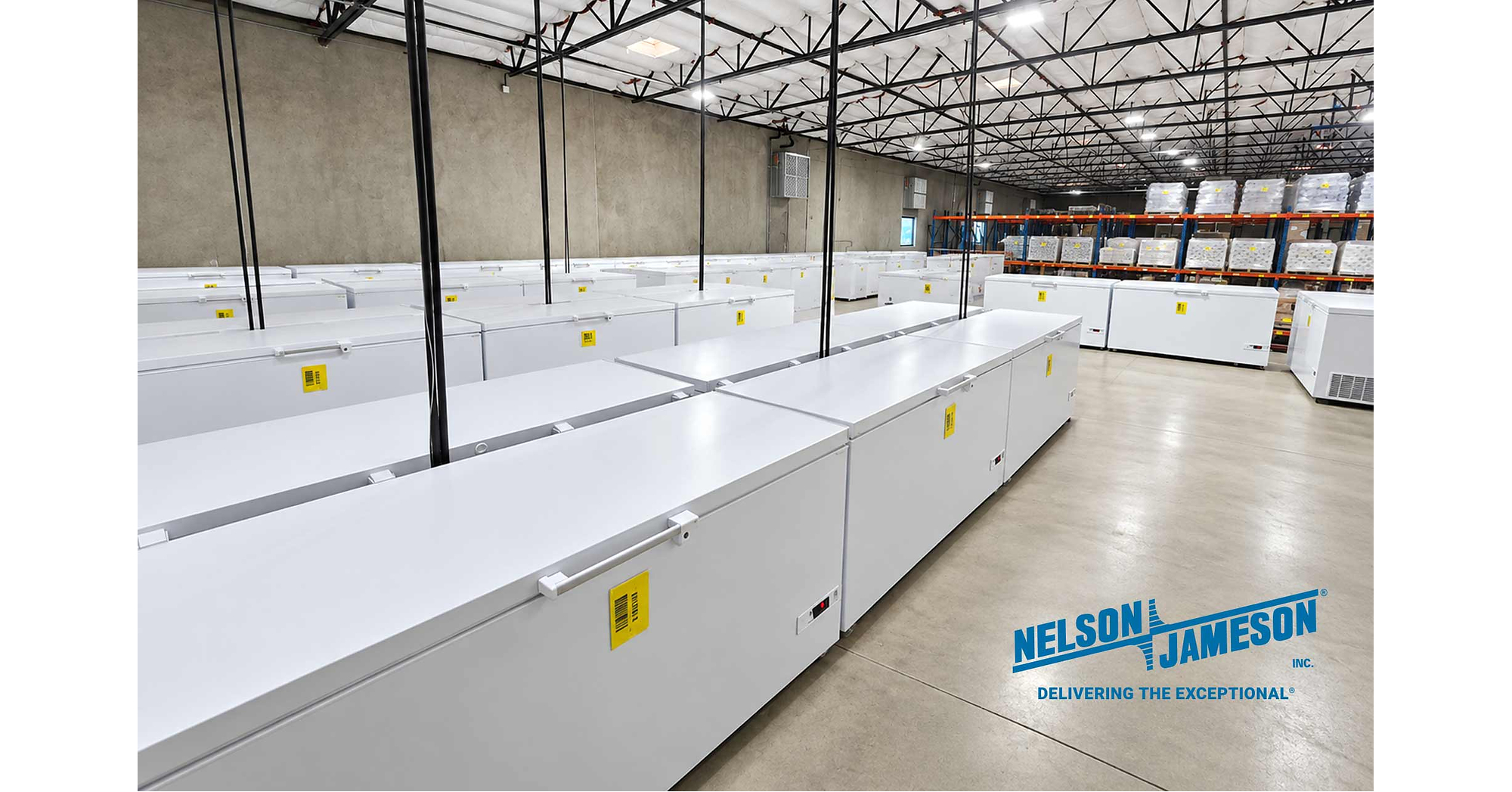
Nelson-Jameson expanded ultra-low-temperature culture storage and logistics capacity at its Turlock, California distribution center, with storage maintained at -60°C (-76°F). The localized West Coast network is intended to reduce transit times, spoilage, third-party carrier reliance and dry-ice consumption for dairy processors. The privately held distributor plans a further culture-storage addition in Jerome, Idaho to serve Idaho, Utah and the Pacific Northwest.
Analysis
The relevant public-market read-through is modestly positive for dsm-firmenich (DSFIR), but the direct revenue impact is unlikely to be material. The more important signal is that a distributor is committing capital to preserve high-value, temperature-sensitive inputs closer to dairy processors, reducing service failures that can disrupt production runs and make customers less willing to switch culture suppliers. This can incrementally reinforce DSFIR's specialty-ingredients pricing power and customer stickiness in North American dairy, where product qualification cycles are longer than for commodity ingredients.
Near term, this is not an earnings catalyst: the distributor's investment is private, capacity and contract terms are undisclosed, and there is no evidence of incremental end-market demand. Over 6-18 months, a broader regional cold-chain buildout could improve DSFIR's mix toward premium cultures and reduce spoilage/expediting costs across its channel, but benefits may be competed away if other culture suppliers gain equivalent local distribution. Watch US cheese and fresh-dairy production trends, DSFIR's Taste, Texture & Health organic-growth commentary, and any evidence that channel inventory is rising faster than processor utilization.
Contrarian view: localized inventory can represent resilience rather than demand growth. If West Coast dairy margins weaken from milk-price volatility or export pressure, processors may destock despite better availability; in that scenario, distributors bear working-capital risk and suppliers see no corresponding volume uplift. The announcement is therefore a qualitative channel-strength datapoint, not a basis for changing a fundamental earnings model.
AllMind Terminal
AI-powered research, real-time alerts, and portfolio analytics for institutional investors.
Request TrialMarket Sentiment
Overall Sentiment
mildly positive
Sentiment Score
0.35
Ticker Sentiment
Key Decisions for Investors
- No standalone trade on this development; retain DSFIR only within an existing specialty-ingredients thesis, as the disclosed project is immaterial relative to group earnings.
- Set a 1-3 month monitoring trigger around DSFIR divisional volume/mix disclosures: upgrade the North American dairy-cultures view only if management identifies improving regional availability alongside accelerating Taste, Texture & Health organic growth rather than inventory-led sales.
- For a 6-18 month relative-value expression, evaluate long DSFIR versus a broad European chemicals proxy (SX4P) only if premium-ingredient volume growth reaccelerates while peer chemicals remain exposed to cyclical industrial demand; invalidate if DSFIR cuts divisional guidance or reports customer destocking.
- Monitor milk-feed margins, US cheese output, and dairy export demand as falsification variables. A sustained processor-margin squeeze or declining cheese production would outweigh any logistics-driven service improvement and argues against adding DSFIR exposure.
More News
- Trump launches midterms campaign blitz amid record low approval ratings
- Broadcom to lend Anthropic up to $42 billion to lease its chips, filing says
- $8.2B acquisition validates AI-picked chip stock: +20% since June
- Nike Warns Sales Slump Will Worsen This Fiscal Year
- Nuveen CEO on Schroders Deal, Plans for Combined Company
- New Mexico wants Meta to pay up to $40 billion in penalties after data privacy trial
From AllMind Research
- Anthropic IPO Preview: Valuation, Timing, and What to Watch
- Shein After the IPO: Venue, Valuation, and What Must Be Proved
- What AI Research Tools Should a Small Hedge Fund Buy First?
- The $4.7 Trillion Bet: When Does AI Capex Become AI Revenue?
- Equity Research Automation Statistics: A 2026 Evidence Check