
Hanwha Power obtient la certification de l'ABS pour la conception de principe d'un navire de ravitaillement en GNL d'une capacité de 22 000 m³
Source: PR Newswire
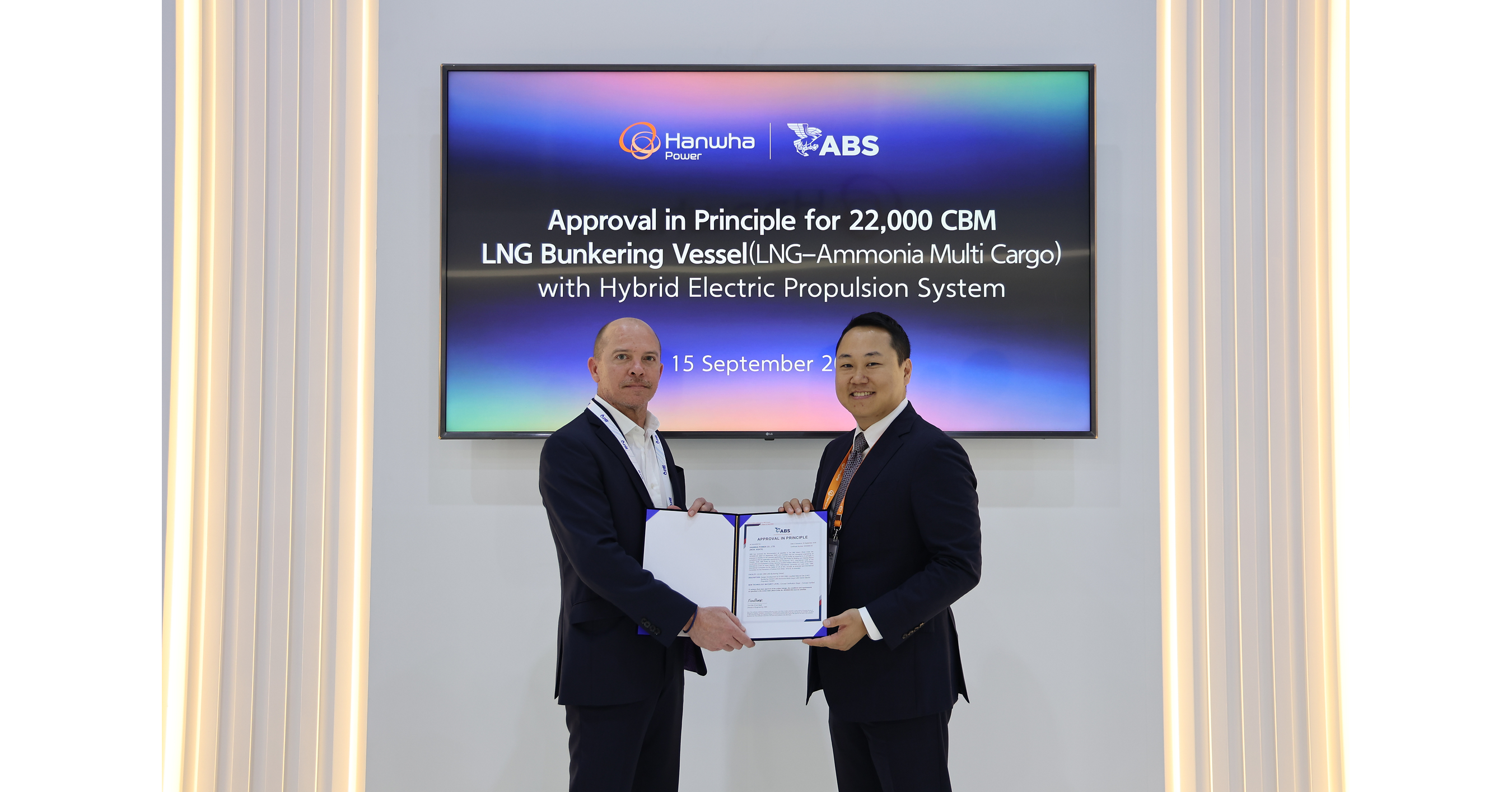
Hanwha Power received ABS approval in principle for a preliminary design of a 22,000 m³ LNG bunkering vessel, completing its medium- and large-capacity LNG bunkering portfolio spanning 7,500-22,000 m³. The vessel is designed to carry both LNG and ammonia and combines high-manganese-steel cargo containment with hybrid-electric propulsion, shore power and energy storage to reduce coastal and port emissions. The certification supports Hanwha's integrated marine engineering offering, though it does not represent a confirmed vessel order or disclosed financial contribution.
Analysis
This is strategically positive for Hanwha Ocean (042660 KS) because a group-level turnkey fuel-system offering can shift competition from hull price toward lifecycle integration, where bundled equipment, controls and service carry higher margins. The relevant commercial test is not certification but whether the design converts into contracted newbuilds alongside port-bunkering commitments; without those, the addressable market remains a pipeline narrative rather than backlog. Near term, listed pure-play read-through is limited because Hanwha Power is not separately investable and vessel orders have long lead times.
The non-obvious constraint is fuel-network utilization. Larger dual-fuel bunkering vessels only earn attractive returns if LNG volumes are consistently deployed, while ammonia optionality has little present value until safety rules, engine availability and port handling standards converge. This creates a potential winner-take-most dynamic for integrated Korean suppliers, but also exposes the concept to stranded-specification risk if methanol gains share in regional shipping corridors. Over 6-18 months, orders by major port operators or shipping lines would support margin and multiple expansion for 042660 KS; a weak conversion rate would favor incumbent lower-cost shipyard competitors rather than technology leaders.
Consensus should discount the announcement more heavily than a conventional order win: classification approval removes an engineering hurdle but does not establish customer economics, financing availability, or fuel demand. The more actionable signal is a cluster of vessel orders, port agreements, and aftermarket-service contracts, which would validate that Hanwha can monetize integration rather than merely offer it.
AllMind Terminal
AI-powered research, real-time alerts, and portfolio analytics for institutional investors.
Request TrialMarket Sentiment
Overall Sentiment
moderately positive
Sentiment Score
0.48
Key Decisions for Investors
- Maintain a watch-list long in Hanwha Ocean (042660 KS), not an immediate position. Initiate only after a firm bunkering-vessel order or disclosed backlog conversion; target a 6-12 month rerating on higher-value equipment content, with thesis invalidated if order intake remains absent through the next two reporting periods.
- If orders emerge, express the integration thesis as long 042660 KS / short Samsung Heavy Industries (010140 KS) or HD Hyundai Heavy Industries (329180 KS), sized modestly. The pair isolates premium integrated-system capture from broad Korean shipbuilding-cycle exposure; exit if Hanwha's order economics or margin guidance fail to exceed peers.
- Monitor LNG bunker-volume growth, ammonia port-safety approvals, and announced long-term supply agreements over the next 3-9 months. Treat a material slowdown in LNG-fueled vessel deliveries or broad adoption of methanol-centric infrastructure as a falsifier for the design's utilization assumptions.
- Avoid extrapolating this into a broad renewable-energy trade: the economic value is tied to marine fuel logistics and shipyard backlog conversion, not directly to power-sector decarbonization spending.
More News
- Japan’s corporate leaders sound alarm over weak yen — even dollar-earners are voicing concerns
- US official says upcoming spectrum auctions could generate more than $100 billion
- 'Science fiction': Transport companies — the backbone of economy — are sounding alarm on fuel prices
- Investors react to Fed hike and market sell-off: Brace for 'higher for longer' rates
- Oil Extends Slump as Saudi Arabia Moves to Restore Key Pipeline
- AI Buildout Hits Inflation as Fed Hikes Rates