
Anitoa Announces Secure Cloud Connectivity for its Portable qPCR Instruments, Unlocking Advanced Biosurveillance and AI Integration
Source: PR Newswire
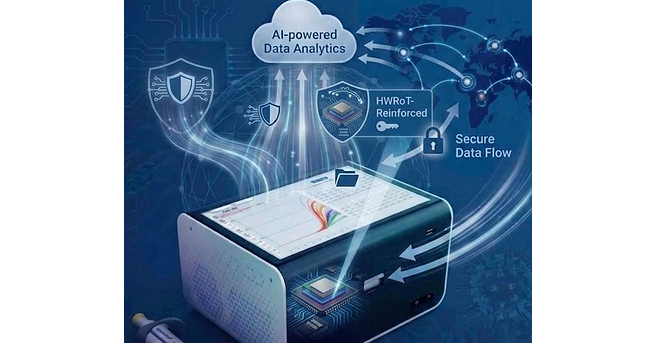
Anitoa Systems added secure cloud connectivity and embedded hardware root-of-trust encryption to its portable qPCR instruments, enabling remote workflow management, centralized data collection and real-time monitoring. The architecture supports AI-enabled analytics and multi-site biosurveillance for identifying emerging pathogen trends, while protecting diagnostic data from collection through cloud transmission. The product enhancement expands the potential use of Anitoa's low-power, calibration-free molecular-testing platform, though the announcement provides no financial metrics, customer commitments or revenue outlook.
Analysis
This is not presently a tradable public-equity catalyst: the announcement comes from a private early-stage vendor, contains no installed-base, pricing, regulatory-clearance, recurring-revenue, or customer-adoption evidence, and carries low read-through to listed diagnostics companies. The more relevant implication is that connectivity is becoming table stakes in decentralized molecular testing, raising the product-development and cybersecurity burden for incumbents such as Danaher (DHR), QIAGEN (QGEN), Bio-Rad (BIO), Thermo Fisher (TMO), and Roche (ROG SW).
Near term, the likely effect is competitive rather than financial. Cloud workflows can improve instrument utilization and support higher-margin software/service attachment, but healthcare procurement cycles require interoperability, cybersecurity review, data-governance approvals, and assay validation; that makes meaningful displacement a 12-24 month issue, not a quarterly earnings risk. Smaller hardware vendors may face the greatest margin pressure because secure cloud infrastructure, monitoring, and compliance support are recurring costs that cannot easily be absorbed by one-time instrument sales.
The contrarian view is that connectivity can be a liability before it is a differentiator. A security incident, unclear patient-data ownership, or inability to integrate with laboratory-information systems would slow deployment and reinforce the advantage of large incumbents with existing service organizations and installed bases. The thesis would become more material only if public-health agencies or large health systems begin specifying real-time data aggregation as a procurement requirement, creating a measurable attach-rate and replacement-cycle catalyst.
AllMind Terminal
AI-powered research, real-time alerts, and portfolio analytics for institutional investors.
Request TrialMarket Sentiment
Overall Sentiment
moderately positive
Sentiment Score
0.42
Key Decisions for Investors
- No new position based on this release; treat it as a low-impact private-company product announcement until independently verified customer wins, regulatory status, instrument volume, and software pricing emerge.
- Maintain a 6-12 month watch on DHR and QGEN for decentralized-testing software attach rates, public-health surveillance contracts, and commentary on interoperability/security spending; a material increase in recurring software revenue would support multiple resilience despite slower consumables growth.
- Prefer large installed-base incumbents DHR or TMO over smaller diagnostics hardware exposure if cloud-enabled point-of-care adoption accelerates: their service infrastructure and compliance capabilities are more likely to monetize mandatory workflow integration. Reassess if smaller vendors demonstrate validated deployments at scale or if incumbents report pricing pressure in portable molecular platforms.
- Set an alert for U.S. CDC, BARDA, WHO, or major-state procurement language requiring federated real-time diagnostic reporting. Such a requirement would be a 6-18 month catalyst for connected-testing platforms, but absent contract awards it is not sufficient to underwrite a sector trade.
More News
- Next week brings major risks for the stock market, just as the AI trade keeps faltering
- AI Doubts Spread Cracks in Equities, Credit Markets: Evening Briefing Americas
- Stocks Fall as Oil Rally Keeps a Lid on Treasuries
- Looters hit 3,000 French businesses. Within hours, the haul was trending on Vinted under the riot’s date
- Kinder Morgan, Energy Transfer and Williams could benefit from cheap natural gas
- CrowdStrike CEO's alarming prediction — plus, the sell-off spreads beyond tech
From AllMind Research
- Anthropic IPO Preview: Valuation, Timing, and What to Watch
- Shein After the IPO: Venue, Valuation, and What Must Be Proved
- What AI Research Tools Should a Small Hedge Fund Buy First?
- How to Search Earnings Call Transcripts With AI
- What a Concept From Nature Tells Us About How C-Suite Executives Actually Think About AI