
LG Display launches 24.5-inch 720Hz Gaming OLED Panel
Source: PR Newswire
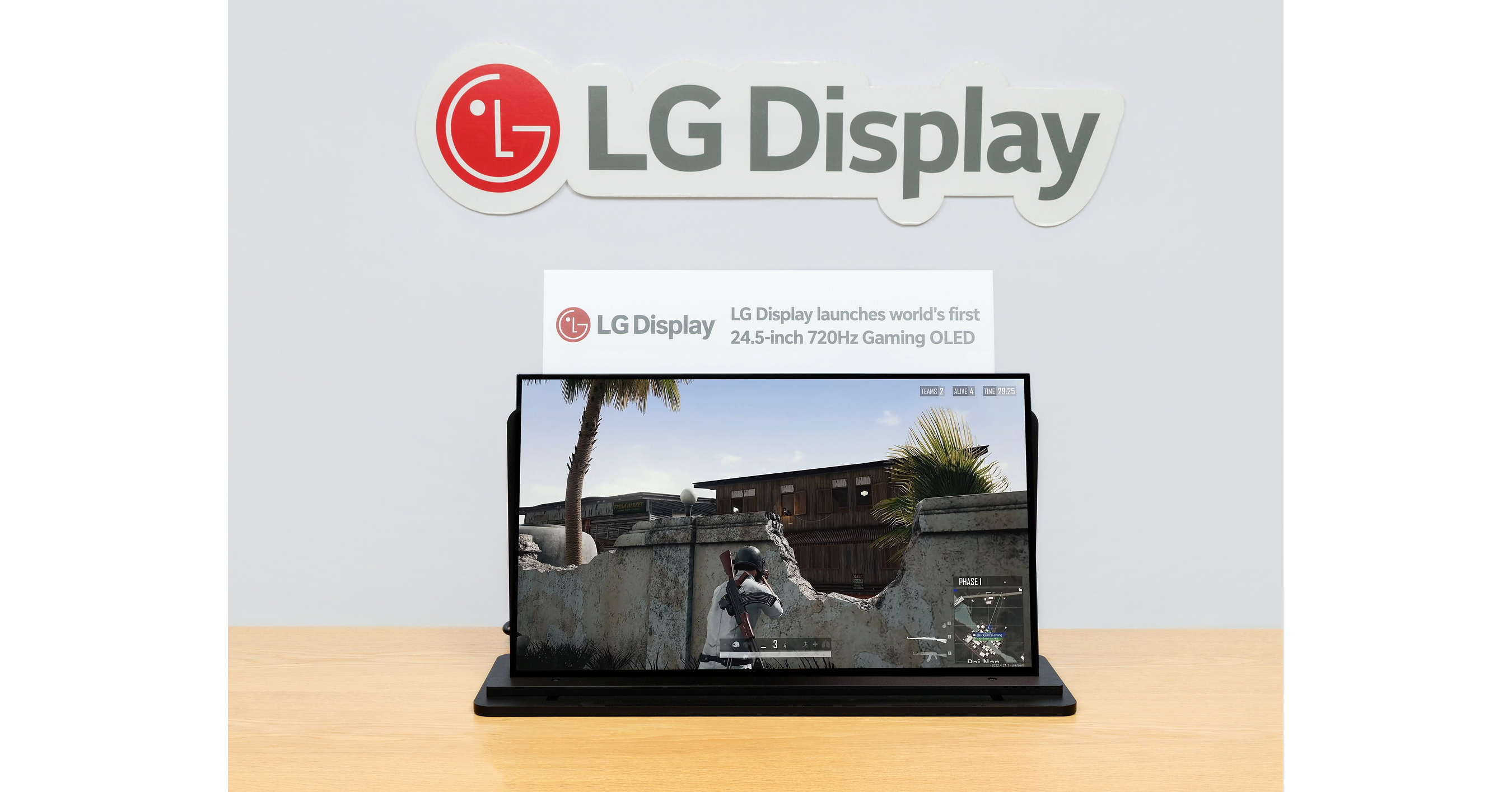
LG Display launched mass production of a 24.5-inch 720Hz OLED gaming panel, claiming the highest refresh rate among gaming OLEDs and a 0.02ms response time. The panel has been adopted in ASUS's ROG Swift OLED PG259QWS Ace, which will serve as the official monitor for PGL CS2 Major Singapore 2026. LG Display is targeting broader OLED adoption in esports monitors and is applying AI transformation across gaming-display development.
Analysis
The commercial significance for LPL is less the initial unit volume than validation of a premium OLED-monitor category where panel ASPs and mix can improve faster than the broader IT-display cycle. Esports adoption creates a credible reference-customer effect for OEM design wins, but the 24.5-inch FHD niche is unlikely to move consolidated earnings over the next two quarters; monitor panels remain materially smaller than TV and automotive display profit pools. The key diligence item is whether LPL can monetize the specification premium without unusually high yield losses or warranty provisions at 720Hz.
The likely near-term beneficiary is ASUS's ROG franchise, which can use tournament association to defend premium pricing against LCD-based esports monitors. Second-order pressure falls on AUO (2409 TT), Innolux (3481 TT), and BOE (000725 CH), whose high-refresh LCD offerings risk further price compression at the enthusiast end; however, LCD remains advantaged on cost, brightness, and availability, limiting rapid substitution. Samsung Display is the more consequential competitive threat: if it matches the format with QD-OLED and secures multiple OEM sockets, LPL's technology lead may translate into little incremental share.
Consensus should not extrapolate a flagship launch into a gaming-OLED demand inflection. Competitive players value latency and motion performance, but the addressable installed base also requires GPUs capable of sustaining exceptionally high frame rates; this constrains adoption to affluent PC users and makes the total market sensitive to Nvidia/AMD GPU upgrade cycles. Over 6-18 months, the more investable signal would be repeat orders across several OEMs and evidence that high-refresh OLED improves factory utilization rather than merely reallocating existing monitor capacity.
AllMind Terminal
AI-powered research, real-time alerts, and portfolio analytics for institutional investors.
Request TrialMarket Sentiment
Overall Sentiment
moderately positive
Sentiment Score
0.48
Ticker Sentiment
Key Decisions for Investors
- No immediate directional LPL trade on the announcement alone; treat it as a 1-3 month order-book watch item. Upgrade only if management identifies incremental gaming-monitor revenue, OLED monitor utilization improvement, or multiple OEM design wins at the next earnings call.
- For a liquid relative-value expression, monitor long LPL versus a basket proxy of AUO (2409 TT) and Innolux (3481 TT) over 6-12 months if premium OLED monitor sell-through accelerates. Thesis fails if OLED monitor ASPs decline faster than LCD pricing or LPL reports yield-related margin dilution.
- Watch ASUS (2357 TT) channel pricing and shipment commentary through the holiday season and major esports events; sustained sell-through at a premium would support a broader OLED-monitor component cycle. If discounting begins within one product cycle, it would indicate the specification is marketing-led rather than demand-elasticity-changing.
- Set a risk alert around Samsung Display/OEM 720Hz QD-OLED announcements: a comparable panel supplied to Dell, MSI, or Samsung Electronics would erode LPL's scarcity premium and argues against paying a technology-lead multiple for LPL.
More News
- Taiwan benchmark Taiex rises to record intraday high as tech stocks advance
- AMD joins the $1 trillion club as chip rally surges - our AI Strategy saw it early
- Jamie Dimon says hyperscaler AI spending could hit $1 trillion next year
- Factbox-Key issues for this week’s Trump-Xi summit in Washington
- Paramount agrees invest $1.5 billion in domestic movies and create a board for editorial independence at CNN, CBS as part of deal for Warner Bros.
- World Leaders Converge on United Nations General Assembly
From AllMind Research
- Anthropic IPO Preview: Valuation, Timing, and What to Watch
- Shein After the IPO: Venue, Valuation, and What Must Be Proved
- What AI Research Tools Should a Small Hedge Fund Buy First?
- AllMind Discusses Ontario's AI Economy with Minister Stephen Crawford and Supply Ontario CEO James Wallace
- AI Research Tools for SEDAR+, UK and ASX Filings