
Ostomy Care is a Delicate Balance. Report Shows Medicare Changes Could be a Tipping Point
Source: PRWeb
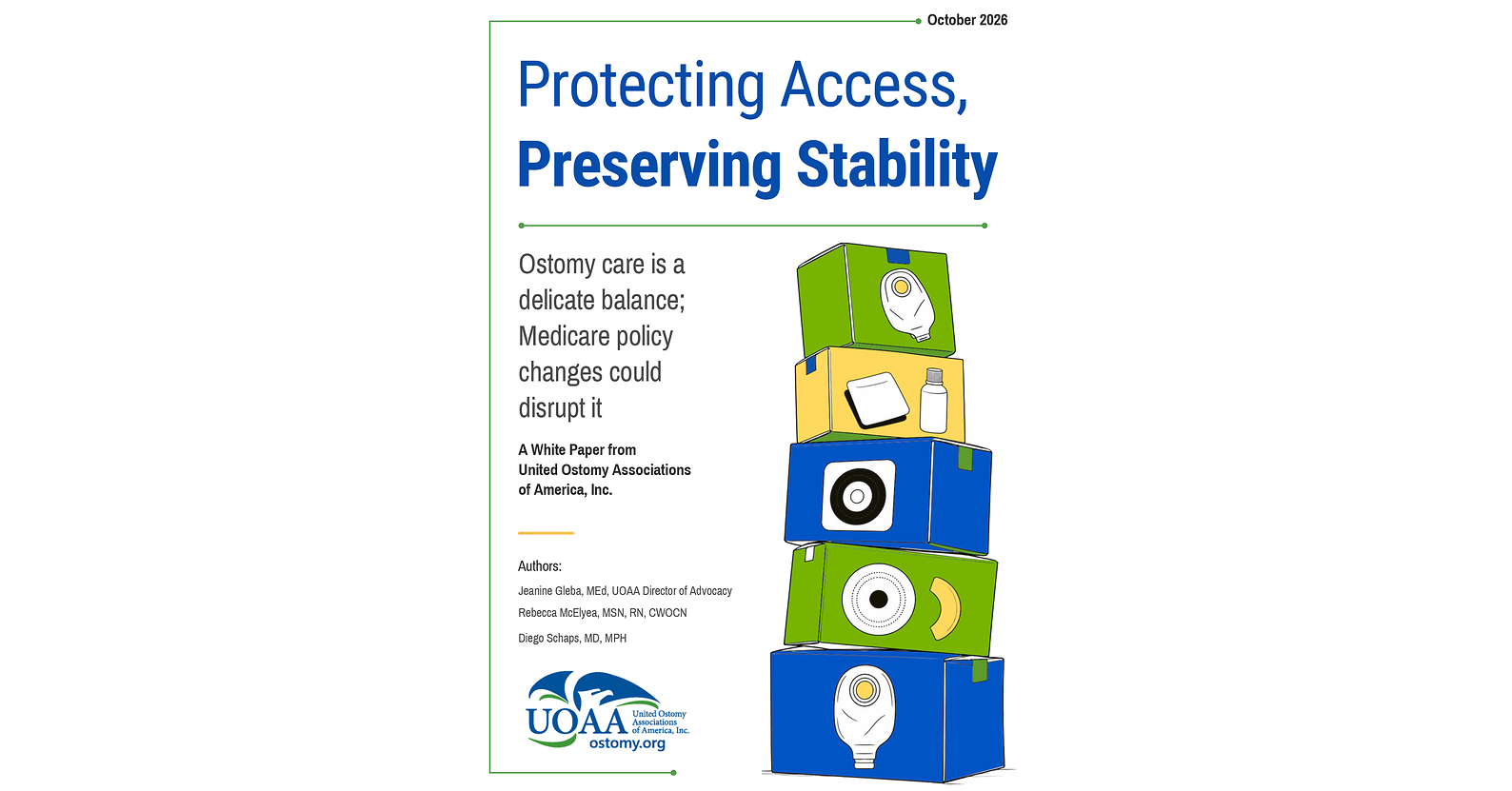
A UOAA-Duke survey of 2,504 respondents found that 77% of Original Medicare beneficiaries with ostomies had used their current pouching system for at least one year, while 93.7% of respondents who tried alternative products said they did not work well. CMS’s 2028 competitive-bidding plan would award six nationwide contracts, compared with more than 800 suppliers currently serving the community, raising concerns about product access and continuity of care. UOAA supports H.R. 10787, which would exclude ostomy supplies from competitive bidding for five years and establish a technical expert panel; the survey describes a potential risk, not an outcome of the 2028 program.
Analysis
The investment signal is policy optionality, not a near-term earnings event: implementation is scheduled for 2028, and the Access to Medical Supplies Act would defer the program for five years rather than establish a permanent exemption. The survey is an advocacy-sponsored baseline, useful for framing congressional pressure but not independent evidence of future utilization or supplier economics. The key transmission channel is channel concentration. If six contracts materially reduce the number of suppliers, nonselected distributors could lose Medicare ostomy volume, while selected suppliers may gain scale but face service, inventory, and product-availability demands that could offset price advantages. Ostomy manufacturers such as Coloplast and Convatec could face weaker access or pressure to prioritize products that fit contract suppliers’ economics; the effect is conditional and likely small relative to their broader businesses. Patient complications could also raise downstream care costs, but the article provides no basis to quantify that exposure or assume Medicare will bear it directly. Near-term catalysts are congressional co-sponsorship and CMS implementation details; the 2028 award structure is the more consequential catalyst. A contrarian point: fewer suppliers need not mean reduced clinical access if contracts preserve product breadth, quantities, and fulfillment standards. The headline risk is therefore more compelling than an established revenue impairment.
AllMind Terminal
AI-powered research, real-time alerts, and portfolio analytics for institutional investors.
Request TrialMarket Sentiment
Overall Sentiment
mildly negative
Sentiment Score
-0.30
Key Decisions for Investors
- No immediate sector trade: the two-year lead time, uncertain bill prospects, and unquantified company exposure make this a monitoring item rather than a short thesis.
- Track H.R. 10787 committee progress and CMS contract specifications, especially product-level coverage, substitution rules, exceptions, and delivery/service requirements; these determine whether the policy is a genuine channel shock.
- For Coloplast and Convatec, verify Medicare ostomy revenue exposure and distribution arrangements before changing estimates. A confirmed loss of product access or material channel volume would strengthen a negative view; preserved breadth and continuity would weaken it.
- Potential relative-value watch: if contract awards exclude meaningful incumbent suppliers, assess exposed ostomy-focused distributors against diversified healthcare distributors only after identifying their actual Medicare ostomy revenue and award status.
More News
- NextDC shares surge 43% after Goodman, Digital Realty stake purchases
- Voters rebuff data centers in every ballot measure except one during the 2026 midterms
- China Blocks SoftBank Acquisition of ABB Robot Unit, FT Says
- After the midterms, a bigger clash over data centers could be coming
- Softbank’s $5.4 bln takeover of ABB robotics unit blocked by China- FT
- After the midterms, Big Tech’s AI data center problem is only getting bigger