
Norwegian Cruise Targets Earlier Bookings: Can It Ease Yield Pressure?
Source: zacks.com
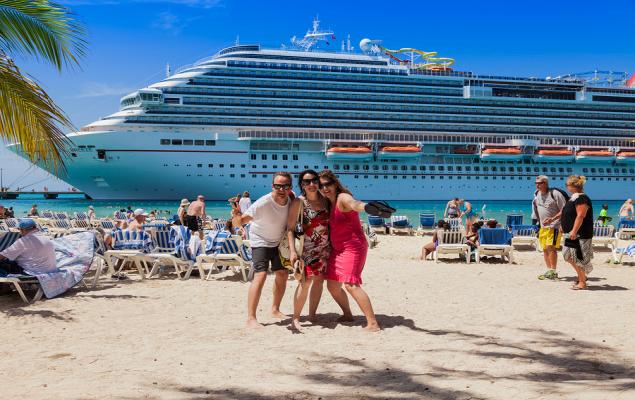
Norwegian Cruise Line expects constant-currency net yields to fall about 5% in 2026, after a 2.6% year-over-year decline in Q2, with projected declines of 8.9% in Q3 and 6.5% in Q4. The company is lowering fares earlier in the booking cycle to improve advance reservations and reduce reliance on last-minute discounting, but expects first-half 2027 yields to remain under pressure before a potential second-half recovery. In contrast, Royal Caribbean and Carnival report record pricing and stronger advance-booking trends, underscoring Norwegian's relative demand and revenue-management challenges.
Analysis
NCLH's pricing reset is not simply a demand-generation initiative; it is an admission that its inventory mix and booking curve have become structurally less valuable than peers'. Earlier discounting pulls revenue forward but risks anchoring consumer expectations at lower price points, while a weaker advance book leaves less opportunity to monetize onboard spend, upgrades and last-minute cabin scarcity. With high fixed vessel and interest costs, a mid-single-digit yield decline can produce disproportionate EBITDA and free-cash-flow downside versus RCL and CCL, whose fuller books preserve pricing optionality.
The competitive spillover is asymmetric. RCL and CCL can maintain rate discipline because their forward occupancy reduces the need to match NCLH promotions; if they do selectively match, NCLH's recovery becomes materially harder. Lower early fares may also attract incremental first-time cruisers, but that demand is likely more price sensitive and therefore less durable in a softer consumer environment. Airfare normalization for Europe is the key near-term exogenous upside variable, although it would benefit all three operators and may reinforce the leaders' advantage rather than close NCLH's gap.
Over the next 1-3 months, booking-curve commentary and Q3/Q4 yield revisions matter more than headline occupancy: NCLH needs evidence that early bookings rise without further reductions in net revenue per passenger cruise day. The 6-18 month bull case requires its revised revenue-management process to restore late-cycle pricing power; until then, the market should discount a turnaround whose financial proof is back-end loaded. Contrarian upside exists if lower opening fares materially reduce costly close-in discounting and improve load factors faster than expected, but this is not yet independently demonstrated.
The cleaner expression is relative, not an outright sector short: RCL and CCL retain pricing power and operating leverage, while NCLH faces a longer earnings-reset duration. Falsification for the bearish relative thesis would be two consecutive quarters of NCLH booking growth accompanied by stable-to-improving yield guidance, or a meaningful deleveraging acceleration that offsets the multiple penalty.
AllMind Terminal
AI-powered research, real-time alerts, and portfolio analytics for institutional investors.
Request TrialMarket Sentiment
Overall Sentiment
moderately negative
Sentiment Score
-0.42
Ticker Sentiment
Key Decisions for Investors
- Initiate a 3-6 month pair: long RCL / short NCLH, dollar neutral. Target 10-15% relative outperformance as forward booking quality drives estimate dispersion; stop if NCLH raises full-year yield guidance or reports two quarters of improving advance-booking metrics without incremental discounting.
- Prefer CCL over NCLH for long-only cruise exposure through 2027 booking updates. CCL's fuller forward book creates greater protection against a consumer slowdown; reassess if onboard spending or European demand softens enough to force broad promotional activity.
- Do not buy NCLH turnaround exposure ahead of the next earnings release solely on discounted fares. Create an alert for a sequential improvement in net yield guidance and evidence that early bookings reduce, rather than merely shift, close-in promotions; absent that data, downside to consensus EBITDA estimates remains the dominant risk.
- For a defined-risk tactical view, consider buying RCL 6-month calls financed with NCLH put spreads only after post-earnings volatility resets. The trade benefits from continued valuation separation, but cap exposure because a broad airfare decline or resilient discretionary spending could lift the entire cruise complex.
More News
- Anthropic warns government attitudes may hurt customer ties, IPO prospectus shows: Reuters
- Broadcom, Amazon Test Limits of Investor Demand for AI Buildout
- Stocks remain under the thrall of higher yields and higher oil. Here's what's ahead
- Your health insurance premiums may take a big jump in 2027 — here's why
- September Jobs Miss Shocks Markets
- Nasdaq Index: Record High as Weak Payrolls Cut Rate-Hike Bets and Yields Fall
From AllMind Research
- Anthropic IPO Preview: Valuation, Timing, and What to Watch
- Shein After the IPO: Venue, Valuation, and What Must Be Proved
- What AI Research Tools Should a Small Hedge Fund Buy First?
- How to Evaluate Consensus Estimates Platforms With AI
- Weekly Update: Adding Live MBO Level 3 Data - Liquidity Heatmap, OFI Charts, and More