
Zhou Jianjun von Huawei: Entwicklung einer netzinteraktiven AIDC-Lösung zur Maximierung der Token pro Watt
Source: PR Newswire
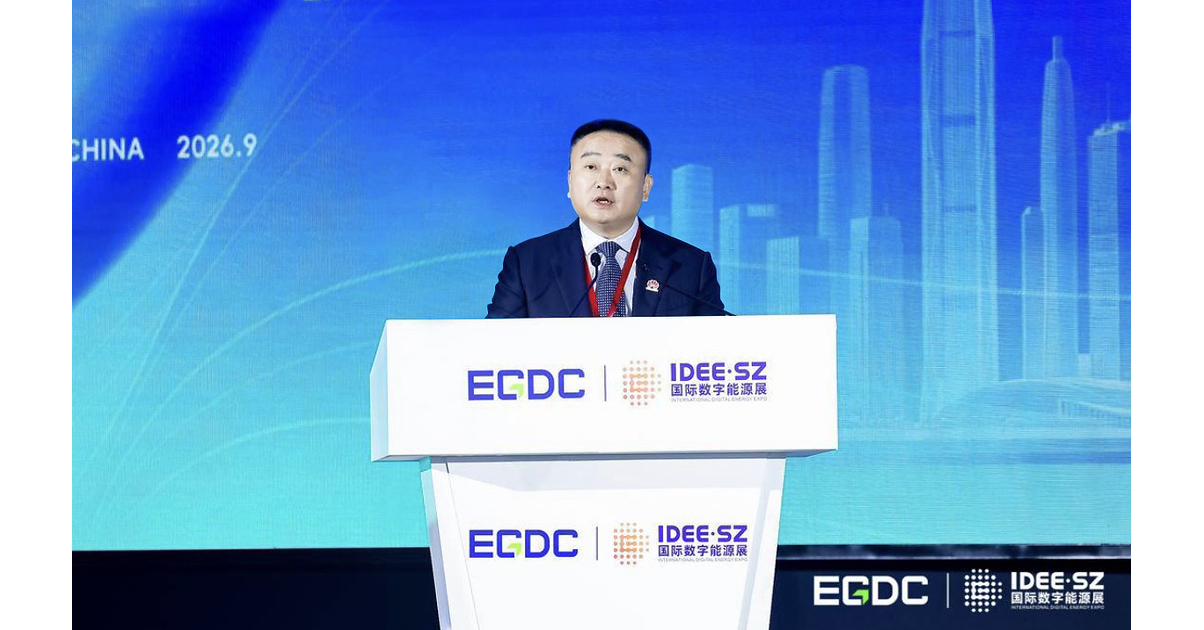
Huawei unveiled a grid-interactive AI data-center (AIDC) solution designed to maximize tokens per watt as AI campuses scale from megawatt installations toward hundreds of megawatts and gigawatt-scale capacity. The end-to-end "3+1" architecture combines grid-forming power electronics and energy storage, solid-state-transformer energy routing, MW-scale AI liquid cooling, and modular prefabrication to support high-density computing while stabilizing weaker, renewable-heavy power grids. The announcement is a strategic product and infrastructure positioning update, but provides no financial targets, customer orders, or deployment volumes.
Analysis
The investable implication is not Huawei-specific but a further shift in AI infrastructure spend from GPUs toward the power-and-thermal balance of plant. As rack densities rise, electrical distribution, UPS, switchgear, liquid cooling and storage become gating items; this favors Vertiv (VRT), Eaton (ETN), Hubbell (HUBB), Schneider Electric (SBGSY) and ABB (ABBNY) more than server OEMs. Grid-interactive designs can also reduce the effective cost of incremental AI capacity where interconnection queues or demand charges—not chip availability—are the binding constraint, supporting a 6-18 month premium for suppliers with certified high-voltage and liquid-cooling deployment capacity.
Near-term, this is insufficient on its own to alter estimates: the economic value depends on independently demonstrated reductions in PUE, downtime and time-to-energization, rather than vendor token-per-watt claims. The more material 1-3 month catalyst is hyperscaler commentary on power availability, deferred campus commissioning, or incremental capex allocated to electrical infrastructure; each would reinforce a mix upgrade at VRT/ETN. The contrarian risk is that grid-support requirements become a project-cost burden, delaying deployments and compressing data-center returns; that outcome would hurt cooling/power vendors with elevated AI expectations before it hurts GPU demand.
Huawei’s positioning may intensify price competition in non-US markets for integrated power, storage and cooling packages, creating selective risk for European suppliers exposed to China, the Middle East and emerging markets. Conversely, US export/security restrictions and local-content procurement leave VRT, ETN and HUBB structurally better placed in North American AI campuses, where utility interconnection constraints are most monetizable. A sustained fall in power-equipment lead times or evidence that hyperscalers can avoid storage and grid-forming investments would falsify the infrastructure bottleneck thesis.
AllMind Terminal
AI-powered research, real-time alerts, and portfolio analytics for institutional investors.
Request TrialMarket Sentiment
Overall Sentiment
moderately positive
Sentiment Score
0.42
Key Decisions for Investors
- Maintain a 6-12 month long VRT / short SMCI pair: VRT captures incremental spend required to energize dense racks, while SMCI remains more exposed to server pricing and GPU-platform transition risk. Target 15-20% relative upside; exit if VRT reports cooling/power backlog deceleration for two consecutive quarters or lead times normalize sharply.
- Accumulate ETN on AI-infrastructure pullbacks over the next 1-3 months rather than chase product-launch headlines. The attractive catalyst is order growth in electrical Americas and backlog conversion; risk is multiple compression if data-center orders fail to offset broader industrial softness. Use a 10-12% downside stop from entry.
- Watch HUBB and PWR for utility interconnection announcements tied to large data-center campuses; initiate only after disclosed transmission, substation or grid-upgrade awards. This is an alert rather than a recommendation because project economics and timing are not yet independently measurable.
- Avoid treating this as a direct Huawei revenue signal: Huawei is not publicly listed, and unverified efficiency claims do not justify a broad long in AI hardware. Prefer listed power-management suppliers with reported backlog, service revenue and North American deployment exposure.
More News
- Bank of Japan raises interest rates to 31-year high, flags concerns over inflation
- Italy to deploy warships to protect shipping through Bab al-Mandeb
- Oil prices fall as Saudi supply hopes outweigh fresh Houthi strikes
- Oil prices fall for 3rd day as supply concerns ease, diplomacy in focus
- Oil Traders Stymied by Iran War Stalemate: Evening Briefing Americas
- Saudi Pivots Oil Routes After Pipeline Attack