
China’s Aluminum Output Hits Record as Government Limit Looms
Source: Bloomberg
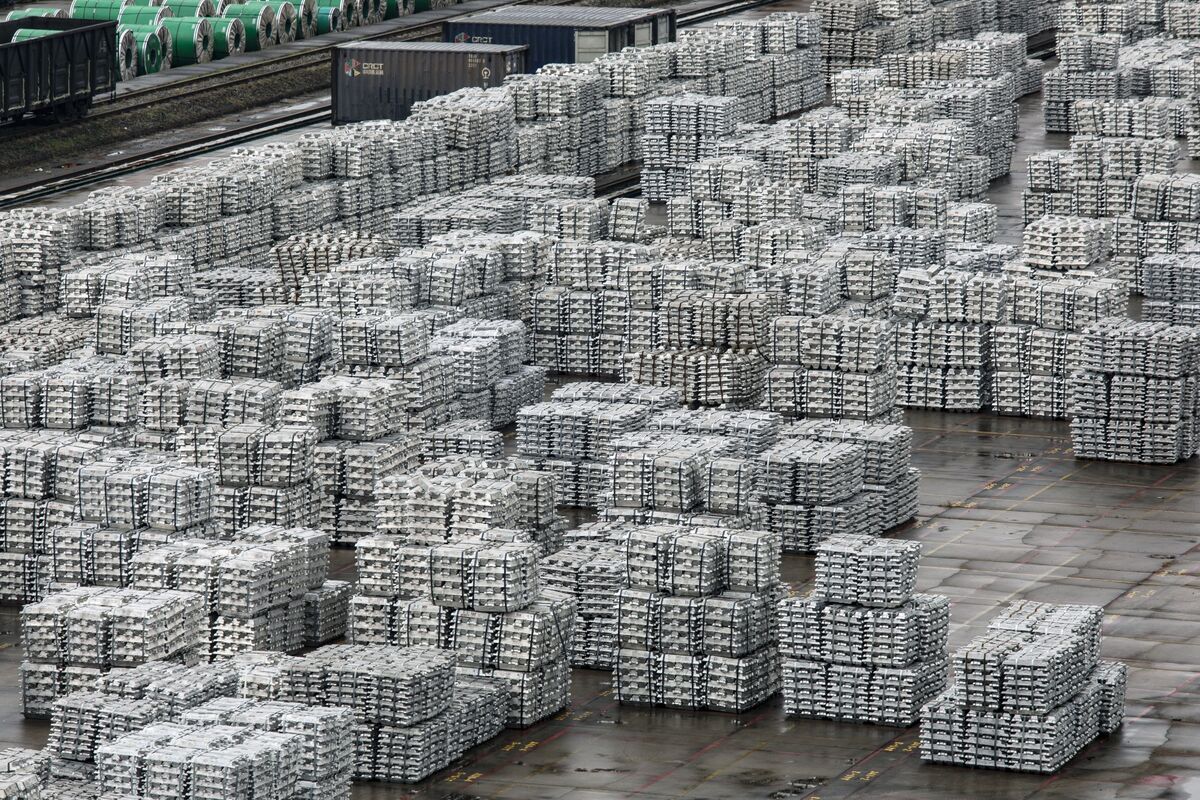
China's aluminum output rose 4.7% year-on-year to just under 4 million tons in August, a record monthly level, as smelters responded to a global shortage linked to the Middle East war. Year-to-date production exceeded 31 million tons, putting China on track to surpass its roughly 45 million-ton annual capacity cap. Higher Chinese supply could ease the global aluminum deficit, but a potential government response to enforce the limit creates regulatory risk for the sector.
Analysis
The key market implication is that incremental Chinese supply likely caps LME aluminum upside even if regional physical tightness persists. This is negative for high-cost, unhedged ex-China smelters such as CENX, whose earnings are most sensitive to benchmark metal prices and power costs; it is less negative for AA, where alumina integration and North American regional premia can cushion a weaker LME tape. A widening gap between LME prices and the U.S. Midwest premium would favor domestic metal exposure over globally priced primary-aluminum exposure.
Over the next 1-3 months, the critical variable is whether additional Chinese units translate into exports rather than domestic inventory accumulation. Export leakage would pressure billet, extrusion and rolled-product markets, increasing the probability of trade actions against Chinese semis; that is a potential positive for U.S. downstream producers but a negative for global aluminum conversion margins. Conversely, if regional disruptions keep physical premiums elevated while LME remains range-bound, producers with contracted regional premiums should outperform pure commodity-beta names.
The structural bull case should not be dismissed: once Chinese operating capacity is effectively constrained, future global demand growth must be met by higher-cost ex-China supply. That creates upside convexity for aluminum after inventories tighten, but it is a 6-18 month thesis rather than a reason to chase near-term price strength. The bearish supply thesis is falsified by sustained LME backwardation, declining exchange inventories, and a durable rise in alumina costs, which would indicate that available Chinese metal is not reaching the marginal global market.
AllMind Terminal
AI-powered research, real-time alerts, and portfolio analytics for institutional investors.
Request TrialMarket Sentiment
Overall Sentiment
mildly positive
Sentiment Score
0.25
Key Decisions for Investors
- Maintain a near-term underweight in CENX versus AA over the next 1-3 months: CENX has greater downside sensitivity if LME aluminum softens, while AA has relatively better protection from alumina exposure and North American premiums. Reassess if LME cash-to-three-month spreads move into sustained backwardation or if CENX secures materially improved power economics.
- Use a relative-value watch: long AA / short a basket of globally exposed aluminum and mining beta (RIO or NHYDY) only if U.S. Midwest premium expands while LME aluminum fails to break higher. The trade expresses regional-premium resilience rather than outright aluminum direction; exit if Midwest premium contracts or AA guides to lower alumina margins.
- Do not add outright long aluminum exposure solely on geopolitical tightness. Set an alert for a combination of falling visible inventories, LME backwardation and higher alumina prices; that would signal that supply growth is being absorbed and would support a 6-12 month long in AA or NHYDY.
- Monitor U.S. and EU trade-policy escalation toward Chinese aluminum semis over the next 3-6 months. A formal investigation or tariff action would be a catalyst for U.S.-focused downstream aluminum names, but until product-level import data confirm displacement, treat this as an event-driven watch item rather than a funded position.
More News
- Wealthy Chinese, tech talent confront tighter borders as Beijing widens exit controls
- Oil extends gains following Houthi strikes on Saudi Arabia
- Weapon shortfalls, 'hundreds' of buildings and aircraft damaged, $33.4 billion spent: the U.S. government tallies costs of the Iran war
- Oil and Treasury yields haven’t moved this closely in seven years. That’s bad news for markets
- Saudi Arabia built the East-West pipeline in the 1980s in case Iran closed Hormuz. Tehran-backed militias still blasted it, sending oil prices up
- US 10-Year Breaches 5% Yield Mark: Evening Briefing Americas