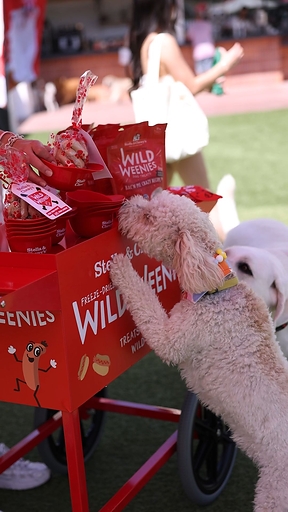
Stella & Chewy's launched its first major West Coast activation, the Most Valuable Pup (MVP) Experience at DOG PPL in Santa Monica, drawing 369 dog parents for a Dodgers vs. Yankees watch party. The brand used on-site MVP trading cards, dog treat carts, and retail tie-ins (including freeze-dried Meal Mixers and Breakfast Sprinkles) to reinforce its premium freeze-dried raw positioning. The article frames the event as evidence of continued momentum alongside recent retail expansion into Publix, Sprouts, and Target, though it provides no financial figures or earnings impact.
The economically relevant signal is not the event itself; it is the continued push of premium pet nutrition into broader retail doors. That usually helps retailers with high-income foot traffic and basket expansion more than it helps the brand in the first 1-2 quarters, because incremental sell-through tends to be uneven until repeat purchase data proves the SKU set. For public comps, TGT is the cleaner beneficiary if premium pet can lift attachment rates in an otherwise soft discretionary mix; CHWY benefits only if the category’s premiumization increases online replenishment frequency and reduces promo intensity, which is harder to prove from a single activation.
The bigger second-order effect is competitive pressure on mid-tier kibble and private label, not on the obvious pet names. If affluent pet owners keep trading up, the risk is margin dilution for value-oriented brands and specialty channels that rely on exclusive assortment; if the channel mix shifts toward mass retail, specialty differentiation erodes. But this is still a small-capacity thesis until scanner data shows the premium raw segment taking share across geographies, not just generating local brand theater.
Consensus may be over-reading brand marketing as a demand inflection. The right test is 1-3 months of retailer scan data and management commentary on repeat rates, not social engagement metrics. A reversal would come quickly if consumer trade-down reasserts itself or if premium pet food growth slows as households absorb higher grocery and vet costs; over 6-18 months, the structural bull case only works if raw/natural pet food keeps outgrowing total pet spend by several hundred basis points.
AI-powered research, real-time alerts, and portfolio analytics for institutional investors.
Request TrialOverall Sentiment
mildly positive
Sentiment Score
0.12
Ticker Sentiment
