
Redox Expands Patented Nitrogen Technology with RDX-Flex™
Source: PR Newswire
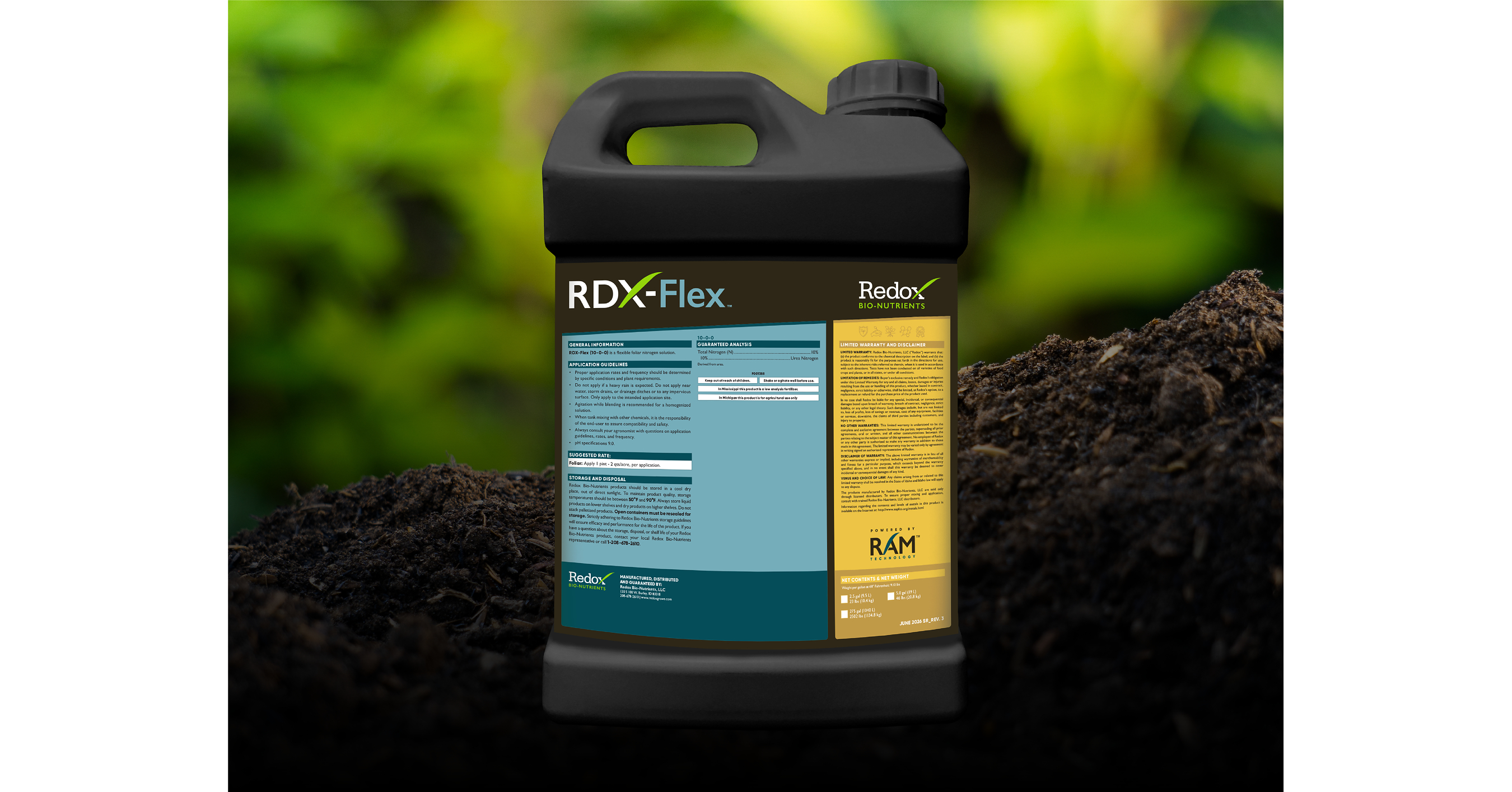
Redox Bio-Nutrients launched RDX-Flex, a 10% urea-nitrogen foliar formulation using its patented botanical-extract technology to support nitrogen assimilation, crop yield and quality. The product complements soil-applied RDX-N by enabling later-season foliar application and is available immediately through the company. The announcement is a modestly positive product-expansion update, with limited broad market relevance.
Analysis
This is not independently sufficient to alter earnings expectations for any listed agricultural-input company. The relevant mechanism is incremental competition in specialty biologicals/foliar nutrition, where adoption depends on replicated yield-response data, distributor incentives, and compatibility with growers’ existing spray passes—not product availability. A low-dose foliar product can be economically attractive if it lifts nitrogen-use efficiency without adding a dedicated field pass, but the addressable revenue pool remains niche until multi-season trial data demonstrate a repeatable return versus conventional urea, micronutrients, and competing biostimulants.
The near-term read-through is modestly negative for private-label specialty-nutrition distributors and smaller biological peers, rather than for CF, MOS, NTR, or FMC. Large fertilizer producers’ realized pricing is driven principally by global nitrogen balances and natural-gas costs; a foliar efficiency additive would need broad acreage penetration over several years before reducing physical nitrogen demand enough to matter. Conversely, successful efficiency products could modestly support crop-input spend per acre even during weak grain-price cycles, shifting wallet share from bulk nutrients toward higher-margin specialty formulations.
Over 1-3 months, watch for third-party field-trial disclosures, expansion into major row-crop geographies, and evidence of distributor stocking rather than promotional availability. The thesis fails if trial results do not show yield/quality gains net of product and application costs, or if the product requires incremental passes that erase grower ROI. Over 6-18 months, elevated nitrogen prices or tighter nutrient-runoff regulation would be the clearest adoption catalysts; low urea prices and depressed farm income would suppress uptake.
AllMind Terminal
AI-powered research, real-time alerts, and portfolio analytics for institutional investors.
Request TrialMarket Sentiment
Overall Sentiment
mildly positive
Sentiment Score
0.30
Key Decisions for Investors
- No directional trade in listed fertilizer equities from this release; maintain existing CF/MOS/NTR views based on nitrogen pricing, natural gas, crop margins, and inventory cycles rather than specialty-product headlines.
- Create an adoption alert: reassess specialty-nutrition competitive exposure only after independently replicated row-crop trials show a net per-acre ROI and named distributor/channel expansion during the next two planting seasons.
- If urea prices rise materially or nutrient-efficiency regulation tightens, screen higher-margin crop-input platforms such as NTR and FMC for a specialty-input mix tailwind; do not underwrite this specific product without sales or acreage data.
- For a contrarian fertilizer view, avoid assuming nitrogen-efficiency products are demand-destructive to CF or NTR in the next 12 months: acreage and yield optimization can keep total nutrient spend resilient even if application rates per acre improve.
More News
- Wall Street’s Nasdaq hits all-time high as AI frenzy gathers pace
- Oil falls on increased Gulf supply and hopes for US-Iran talks
- Data-Center Bet Makes ESDS One of India’s Best New Listings
- Asia stocks ride tech wave higher, oil stays subdued
- Latest Oil Market News and Analysis for Sept. 23
- Bank of America says Brent crude oil could top $150 a barrel if Iran war disruptions persist
From AllMind Research
- Anthropic IPO Preview: Valuation, Timing, and What to Watch
- Shein After the IPO: Venue, Valuation, and What Must Be Proved
- What AI Research Tools Should a Small Hedge Fund Buy First?
- AI for Sell-Side Models, Estimates, and Internal Data
- How to Write an Investment Memo with AI: A Decision-Record Template