
Costco: Great Quarter, But The Valuation Still Prices In Excellence
Source: seekingalpha.com
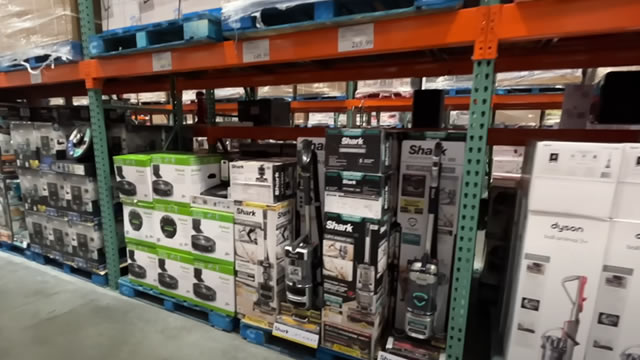
Costco delivered strong Q4 results, supported by broad-based sales growth, robust membership-fee income, and continued digital and international expansion. Its membership model, rapid inventory turnover, and pricing power support a premium valuation, but shares trade at roughly 40x forward earnings, leaving limited margin of safety for new investors.
Analysis
COST's key incremental sensitivity is not quarterly merchandise sales but renewal-rate durability and membership-fee yield: fee income carries materially higher incremental margins than the retail business, so modest member-base growth can sustain EPS even if discretionary categories slow. Digital and international scale also improve purchasing leverage, which can widen the price gap versus Walmart (WMT), Target (TGT), and traditional grocers without requiring gross-margin expansion. The second-order risk is that this reinforces Costco's traffic advantage at the expense of branded consumer-product vendors, which may face tougher price negotiations and higher promotional support requirements.
The valuation leaves little room for execution merely remaining excellent. At roughly 40x forward earnings, a 10-15% multiple de-rating would outweigh a typical low-to-mid-single-digit earnings beat; this is most likely if comparable-sales growth normalizes, renewal rates soften, or wage/shrink pressure limits operating leverage over the next 1-3 quarters. The critical distinction is whether membership-fee growth remains ahead of operating-expense growth—if not, the premium multiple becomes difficult to defend even with positive sales.
Consensus likely overstates the defensive quality of the equity relative to the business. Costco may hold up better than broad retail in a consumer slowdown, but a premium staple-like multiple makes it exposed to rate-driven duration compression and any evidence that affluent consumers are trading down less than expected. Over 6-18 months, international unit economics and recurring membership income can support compounding; near term, however, risk/reward favors waiting for a valuation reset rather than chasing operational momentum.
AllMind Terminal
AI-powered research, real-time alerts, and portfolio analytics for institutional investors.
Request TrialMarket Sentiment
Overall Sentiment
mildly positive
Sentiment Score
0.30
Ticker Sentiment
Key Decisions for Investors
- Do not add directional COST exposure at current valuation; place a buy watch at a 10-15% pullback or after a forward-earnings reset that brings the multiple closer to the low-30x range. Upside requires sustained membership-fee and renewal-rate acceleration, not another routine sales beat.
- For a 1-3 month relative-value expression, consider long WMT / short COST in equal dollar amounts if COST fails to outperform following its next monthly sales release. WMT offers lower valuation risk and greater grocery/omnichannel defensiveness; cover the short if Costco reports accelerating renewal metrics or materially lifts membership-fee guidance.
- Existing COST holders should consider trimming into strength and using a 5-8% downside collar around the next earnings cycle. The thesis is falsified by evidence of sustained high-single-digit membership-fee growth, stable expense leverage, and forward EPS revisions sufficient to offset the premium-multiple risk.
- Monitor renewal rates, membership-fee income growth versus SG&A growth, and international comparable-sales trends monthly. A deceleration in any two of these measures is the signal to increase the relative short, while a fee increase or demonstrable international margin inflection would negate it.
More News
- Costco just reported strong earnings. Goldman Sachs sees a sharp move higher for the stock
- Costco Beat on Earnings. About $0.15 a Share of It Was a One-Time Tariff Refund.
- Costco receives $184M in tariff refunds, says most will go toward lower prices
- Costco tops Wall Street estimates as digital sales surge
- Memory Inflation Is Hitting Costco's Electronics Business, and It Triggered a $152 Million Charge
- JPMorgan cuts Costco stock price target on valuation reset
From AllMind Research
- Anthropic IPO Preview: Valuation, Timing, and What to Watch
- Shein After the IPO: Venue, Valuation, and What Must Be Proved
- What AI Research Tools Should a Small Hedge Fund Buy First?
- State of M&A and Private Markets, June 2026: A $4.9 Trillion Rebound, Underwritten on Money That Never Got Cheaper
- Run Cost-Controlled Financial Research in AllMind Agent Studio