
What is the Auto Lab at Allstate Claims University? How Allstate trains auto claims adjusters on modern vehicle damage
Source: PR Newswire
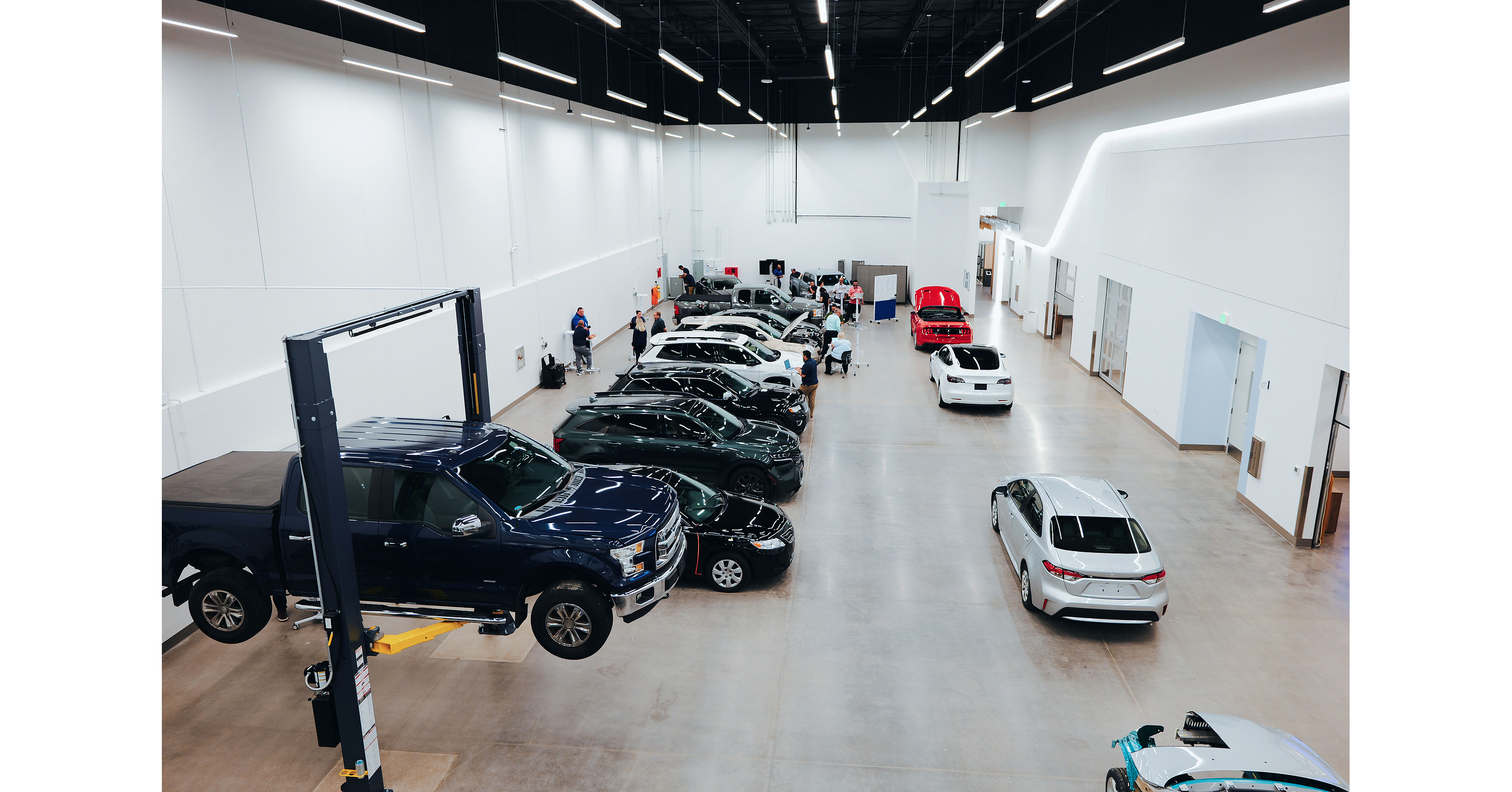
Allstate opened a hands-on Auto Lab within its 33,000-square-foot Claims University in Dallas, using 22 vehicles and four motorcycles to train claims adjusters on damage assessment and repair technologies. Designed with insights from more than 3.5 million auto claims, the facility includes electric and hybrid vehicles, diagnostic tools, a vehicle lift and repair demonstrations to support more informed assessments and clearer customer guidance.
Analysis
This is an operational-quality signal, not a near-term earnings catalyst. The economic sign is ambiguous: adjusters who identify hidden structural, EV or ADAS damage earlier may reduce missed payments, repeat inspections and claim friction, supporting retention. But more complete inspections can also surface repair work that raises paid severity and supplement costs. Any net benefit depends on whether better appraisal accuracy reduces leakage and cycle time enough to offset higher repair estimates; the release provides no outcome data to establish that.
For Allstate, the facility’s likely financial significance is small unless training translates into measurable changes in claim handling at scale. The broader second-order risk is cost inflation across auto insurers as vehicle complexity makes damage assessment and calibration more demanding, while repair facilities and diagnostic-tool providers may capture more spend. Competitors such as Progressive can adopt similar training or technology, limiting any durable advantage for Allstate.
Over days, expect little fundamental repricing from this company announcement. Over 1–3 months, watch Allstate’s auto severity, claims-adjustment expense, cycle time and customer-retention commentary; compare trends with peers before attributing changes to training. Over 6–18 months, the relevant question is whether EV/ADAS complexity increases loss costs faster than insurers can improve pricing and claims controls. Contrarian read: better customer guidance is a positive narrative, but could coincide with higher recognized repair costs. Thesis weakens if Allstate reports improved claim efficiency without adverse severity, and is falsified as an investment edge if no operating metrics show a difference or peers achieve comparable results.
AllMind Terminal
AI-powered research, real-time alerts, and portfolio analytics for institutional investors.
Request TrialMarket Sentiment
Overall Sentiment
mildly positive
Sentiment Score
0.10
Ticker Sentiment
Key Decisions for Investors
- No trade on the announcement alone; its financial impact is unquantified and likely too small to move consolidated results near term.
- Set an alert for Allstate auto severity, claims-adjustment expense, cycle time and retention in upcoming results. A durable improvement in efficiency without faster severity growth would support a modest positive read; rising severity without offsetting efficiency would negate it.
- Track peer commentary, especially Progressive, for evidence that EV/ADAS assessment costs are industry-wide rather than a differentiator for Allstate. Avoid treating the training investment itself as proof of lower claims costs.
More News
- GIC Private Ltd, Medline 10% owner, sells over $721m in shares
- A 32% beat, a +6% jump: the IT solutions name our models picked in July
- Nvidia Is on the Verge of a $6 Trillion Market Value
- Controversial $110 billion mega-merger of Paramount and Warner Bros. finally closes
- What Marvell's rosy long-term guidance means for our AI chip stocks
- Analysis-Vietnam’s banks tap investors for $7 billion as economy runs red hot
From AllMind Research
- Anthropic IPO Preview: Valuation, Timing, and What to Watch
- Shein After the IPO: Venue, Valuation, and What Must Be Proved
- What AI Research Tools Should a Small Hedge Fund Buy First?
- State of M&A and Private Markets, June 2026: A $4.9 Trillion Rebound, Underwritten on Money That Never Got Cheaper
- Run Cost-Controlled Financial Research in AllMind Agent Studio