
Oceano Wines Inaugurates New Era for Premium Non-Alcoholic Wine with Single-Vineyard Releases
Source: PRWeb
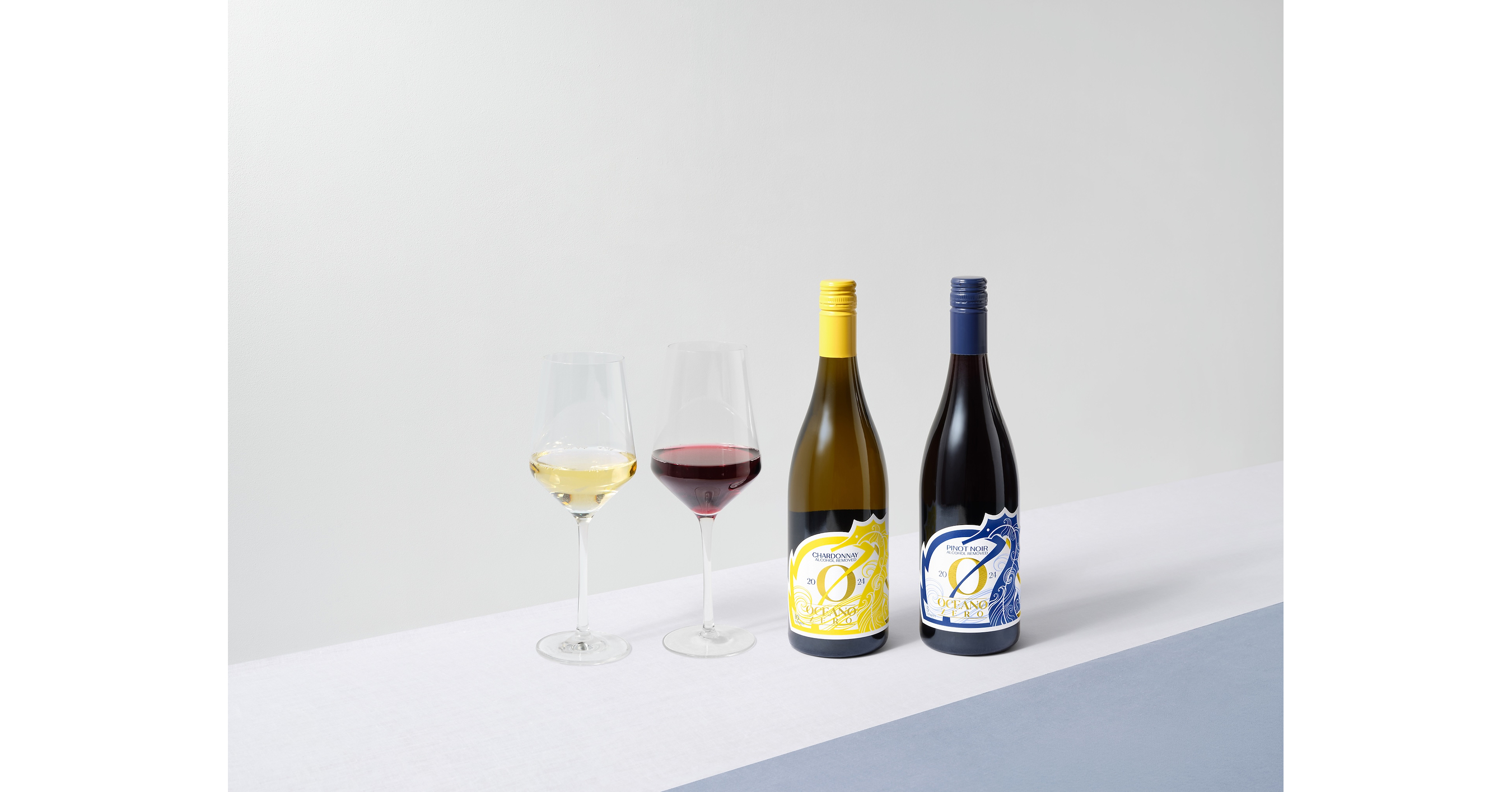
Oceano Wines launched nationally available 2024 alcohol-removed Chardonnay and Pinot Noir from California's Spanish Springs Vineyard, priced at $45 and $55, respectively. The products use Solos' aroma-recovery technology to restore compounds lost during dealcoholization and contain 5–10 calories per serving with 1–2 grams per liter of residual sugar. The rollout targets accelerating moderation demand: U.S. non-alcoholic wine volumes grew at a 23% CAGR from 2019 to 2024, while 92% of non-alcohol beverage buyers also purchase alcoholic products.
Analysis
This is not investable as a standalone catalyst: Oceano is private, distribution economics are undisclosed, and the quality claims originate with the issuer. The relevant public-market read-through is that premiumization—not simply moderation—could be the route by which alcohol-removed wine expands category value. If credible sensory quality closes the historical gap versus alcoholic wine, it reduces substitution risk for wine occasions and may shift no/low from a low-margin adjunct into a higher-ASP hospitality and direct-to-consumer offering.
Near term (1-3 months), there is no reason to expect material earnings impact for public beverage companies from a niche national launch. The more useful signal is competitive: alcohol brands with established zero-proof distribution, restaurant relationships, and brand equity can monetize consumer trial far more efficiently than small entrants. Constellation Brands (STZ) and Brown-Forman (BF.B) have broader moderation-adjacent optionality, while Diageo (DEO) is better positioned in zero-proof spirits; none has sufficiently disclosed alcohol-free wine exposure to underwrite an incremental estimate.
The contrarian view is that high shelf prices may constrain repeat purchase rather than validate luxury positioning. Wine buyers may accept a premium for provenance, but dealcoholization adds cost while removing the core functional attribute; sustained demand will depend on velocity and repeat rates, not sommelier endorsements or retailer count. Over 6-18 months, broader adoption could pressure conventional wine suppliers to spend on innovation and trade promotion, worsening margins in an already challenged wine category before it creates meaningful incremental revenue.
Watch syndicated retail velocity, on-premise menu penetration, gross-margin disclosure from scaled category participants, and evidence that no/low purchases are incremental rather than cannibalistic. A sustained slowdown in discretionary consumer spending would likely hit $45-$55 non-alcoholic bottles first, falsifying the premiumization thesis.
AllMind Terminal
AI-powered research, real-time alerts, and portfolio analytics for institutional investors.
Request TrialMarket Sentiment
Overall Sentiment
moderately positive
Sentiment Score
0.42
Key Decisions for Investors
- No standalone trade: treat this as a category-monitoring datapoint, not a catalyst for STZ, BF.B, DEO, or alcohol ETFs; the issuer provides no sales, distribution-door, repeat-rate, or unit-economics data.
- Create a 1-3 month watchlist on STZ and BF.B for zero/low-alcohol product, distribution, and gross-margin disclosures. Upgrade only if management quantifies incremental revenue or reports premium no/low velocity materially above its core wine portfolio.
- For a defensive consumer-staples expression, prefer DEO over wine-exposed peers if zero-proof demand broadens: its global distribution and brand architecture offer better optionality, but keep sizing modest because the direct wine read-through is weak. Reassess if U.S. on-premise traffic or premium spirits demand deteriorates.
- Avoid shorting traditional wine exposure solely on this development. A bearish thesis requires evidence of cannibalization, promotional intensity, or margin compression across multiple quarters; absent that, the category remains too small to move consolidated earnings.
More News
- This AI-picked stock jumps 18% on Amazon’s $8 billion power deal
- Asian stocks rise as oil retreat eases inflation fears, BOJ in focus
- How record diesel prices will rip through the U.S. economy. Trucks and rails are only the start
- Crusoe raises $3.9B to build massive data centers and small modular “AI factories”
- Jensen Huang says Nvidia will sell twice as many chips next year
- Waymo to launch robotaxis in Singapore, its first Southeast Asia market, by 2028
From AllMind Research
- Anthropic IPO Preview: Valuation, Timing, and What to Watch
- Shein After the IPO: Venue, Valuation, and What Must Be Proved
- What AI Research Tools Should a Small Hedge Fund Buy First?
- What Is an AI Investment Research Platform?
- What Exactly Does Post-Training in LLMs and Finance-Focused AI Actually Mean for Asset Managers?