
Value-Conscious Consumers Look for Options as Iran War Drives Up Costs
Source: Bloomberg
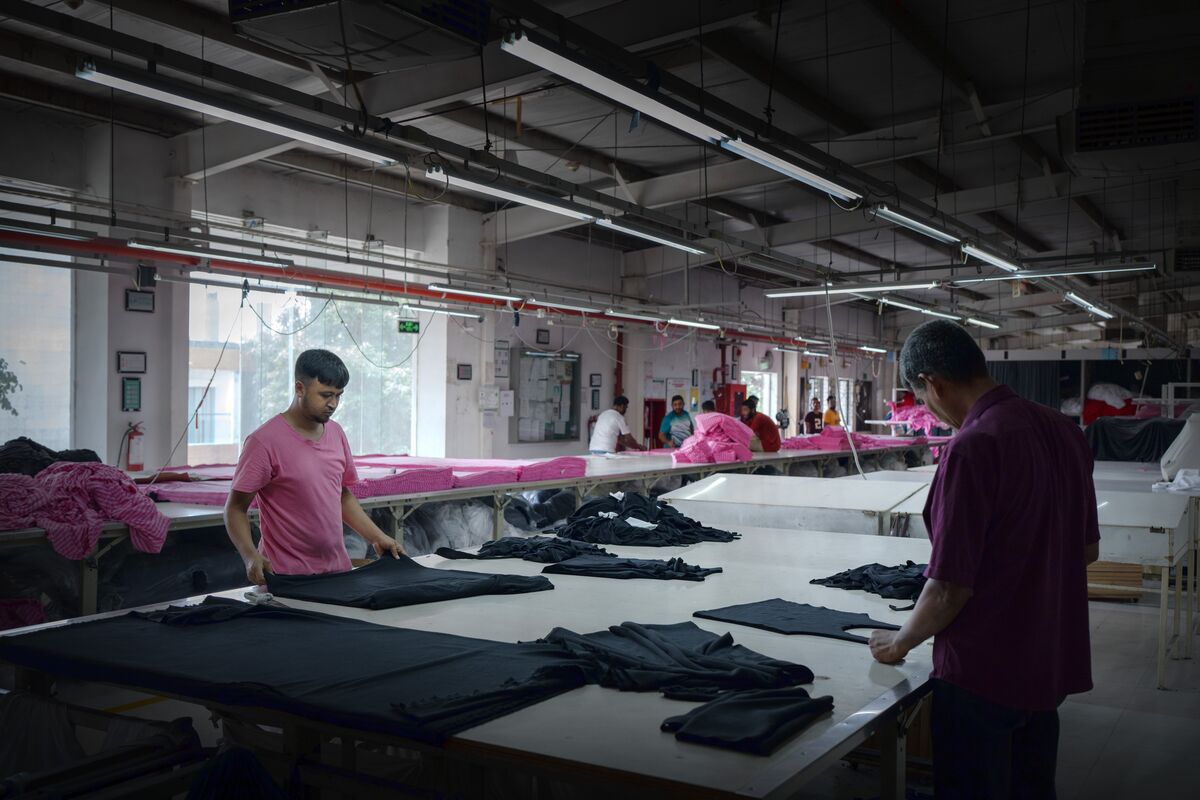
Cash-strapped shoppers and manufacturers are facing rising costs, with clothing prices increasing. The pressure on household budgets may constrain apparel demand and force consumers to seek lower-cost options, creating a challenging retail environment.
Analysis
The investable issue is not nominal ticket inflation but whether unit elasticity forces a renewed promotional cycle. Apparel retailers with high fixed store, freight, and labor costs can show stable sales dollars while deleveraging gross margin and SG&A on lower transactions; this is most damaging for mid-market mall concepts with limited pricing power. The first confirmation should appear over the next 1-3 months in traffic, units-per-transaction, markdown reserves, and forward inventory commitments rather than in reported revenue.
Off-price chains such as TJX and ROST are the likely relative beneficiaries if branded vendors and department stores rebuild excess inventory, because their buying model converts supplier distress into branded assortment and inventory turns. The second-order loser is the wholesale/vendor complex—PVH, VFC, GIL, and potentially NKE—where retailers can delay orders well before consumer weakness is visible in sell-through. This is a relative, not absolute, call: reduced discretionary spend can eventually constrain off-price traffic as well.
The consensus risk is that price pressure is interpreted as a top-line tailwind for branded apparel. It is more likely a test of demand segmentation: affluent consumers may sustain premium brands, while the middle-income cohort trades down or defers purchases. A better-than-expected retail-sales control group print, improving apparel units, or broad reductions in promotional activity would falsify the margin-compression thesis; absent those signals, this is insufficient evidence for a broad retail short.
AllMind Terminal
AI-powered research, real-time alerts, and portfolio analytics for institutional investors.
Request TrialMarket Sentiment
Overall Sentiment
mildly negative
Sentiment Score
-0.30
Key Decisions for Investors
- Establish a 1-3 month relative-value position: long TJX / short KSS, sized dollar-neutral. The thesis is a widening inventory-access and traffic-quality gap; target 10-15% relative return, with a 5% adverse relative-performance stop or evidence that TJX inventory turns deteriorate.
- Maintain a watchlist short on wholesale-exposed apparel vendors PVH, VFC, and GIL rather than entering immediately. Trigger only if management commentary or channel data show order deferrals, higher inventories, or gross-margin guidance pressure; cover on a material improvement in wholesale bookings or inventory-to-sales ratios.
- Avoid adding broad XRT shorts solely on this signal. WMT, COST, TJX, and ROST can offset weakness in specialty apparel, making a sector ETF a poor expression of the discretionary-stress thesis.
- Before upcoming retail earnings, monitor traffic, unit sales, markdown rates, and inventory growth versus sales for ANF, AEO, URBN, KSS, TJX, and ROST. A simultaneous rise in inventory and promotional expense is the highest-conviction confirmation for the relative trade.
More News
- Kevin Warsh just revealed a huge change for the Fed. The press missed it
- Three words from Kevin Warsh have Wall Street wondering how far the Fed will go with rate hikes
- American, United and Southwest are all cutting ‘marginal routes’ as jet fuel prices spike
- Time for Cyclical Sector ETFs?
- Why Japanese stocks rose as government bond yields and the yen fell after rate hike
- Bank of Japan Hikes Interest Rates in a Split Vote; Yen Drops