
Geely Farizon представляет на выставке IAA Transportation 2026 полную линейку электрических коммерческих автомобилей
Source: PR Newswire
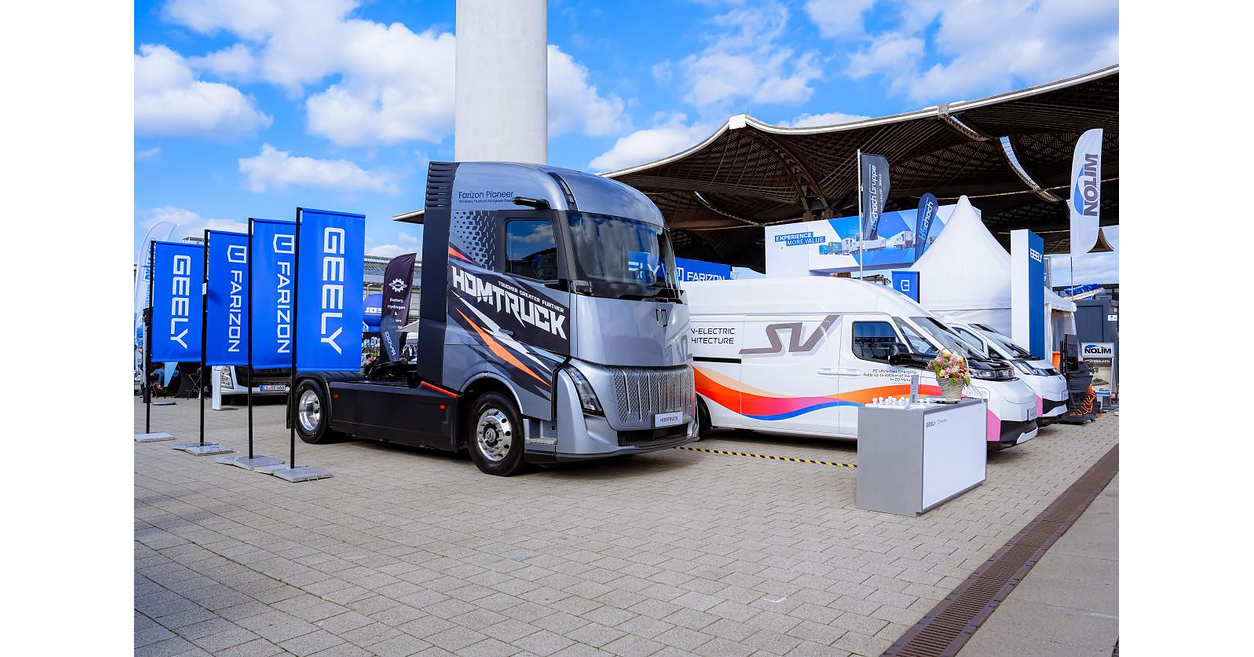
Geely Farizon debuted its full European electric-commercial-vehicle lineup at IAA Transportation 2026, including the Farizon SV and V7E vans and the zero-emission Homtruck heavy-duty truck. The company is expanding in Europe with distribution coverage across 28 countries, supported by a German parts hub offering delivery within one to six business days. The SV has earned a five-star Euro NCAP safety rating, while a 2027 version is planned with an upgraded battery powertrain and all-wheel drive.
Analysis
This is principally a competitive pricing and residual-value risk for European commercial-vehicle incumbents, not yet a material earnings catalyst for Geely. In light vans, a credible low-cost entrant pressures Stellantis (STLAM), Renault (RNO), Ford (F), Mercedes-Benz (MBG.DE) and Volkswagen (VOW3.DE), where fleet buyers increasingly evaluate uptime, financing, service coverage and residual values rather than upfront price. The larger near-term vulnerability is likely legacy diesel van pricing: incumbent dealers may need higher incentives or guaranteed buybacks to defend fleet renewals, compressing mix and finance-arm returns before unit share visibly moves.
The heavy-truck proposition faces a more difficult adoption curve than the van offering. Daimler Truck (DTG.DE), Traton (8TRA.DE) and Volvo (VOLV-B.ST) retain moats in maintenance density, depot integration and customer trust; an unproven entrant is unlikely to disrupt long-haul economics without independently validated payload, charging, residual-value and service-level data. Conversely, any successful early deployments could accelerate European OEM capex on battery-electric medium/heavy platforms, benefiting charging and power-management suppliers such as ABB (ABBN.SW) and Eaton (ETN) over 6-18 months.
The consensus error would be to extrapolate exhibition visibility into rapid European share capture. Fleet procurement cycles are commonly 6-18 months, and the pivotal data are delivered units, utilization, warranty claims, financing rates and used-vehicle values—not awards or stated distributor reach. Near-term, this is a watch item; the investable signal emerges only if incumbent order books or pricing commentary deteriorates while Farizon discloses independently verifiable fleet contracts and service-performance metrics.
AllMind Terminal
AI-powered research, real-time alerts, and portfolio analytics for institutional investors.
Request TrialMarket Sentiment
Overall Sentiment
moderately positive
Sentiment Score
0.48
Key Decisions for Investors
- No directional Geely-related trade: the relevant operating subsidiary is not separately listed and disclosed information does not establish European volume, pricing or margin impact.
- Monitor Q3/Q4 results and 2027 guidance from STLAM, RNO, F and VOW3.DE for electric-van order intake, fleet incentive intensity, residual-value provisions and dealer inventory. A 100-200bp deterioration in commercial-vehicle margin or explicit pricing pressure would support a 3-6 month underweight in the most exposed name versus MBG.DE.
- Maintain a 6-18 month watchlist long ABBN.SW / ETN against short DTG.DE or 8TRA.DE only after European depot-charging orders and battery-electric truck backlog show sustained acceleration. The pair is invalidated if charging capex is deferred or truck OEMs demonstrate stable pricing and service-margin resilience.
- For a tactical incumbent-risk hedge, consider small puts on STLAM or RNO around earnings only if consensus forecasts still assume stable van margins despite rising fleet incentives; cap premium at roughly 50-75bp of NAV because evidence of entrant-led share loss remains preliminary.
More News
- Trump signs sweeping Russia sanctions over Ukraine war
- Saudi Oil Cuts Tied to War Hit Europe: Evening Briefing Americas
- Houthis accuse Saudi Arabia of launching 26 strikes in 24 hours
- Stocks face a key hurdle in next week’s U.S.-China summit. Here’s what’s at stake
- European Economies Eye Another Energy Crisis Heading Into Winter
- European Oil Supply Pressure Mounts After Saudi Cuts