
Durabook présente la tablette durcie R12, plateforme Active Edge AI
Source: PR Newswire
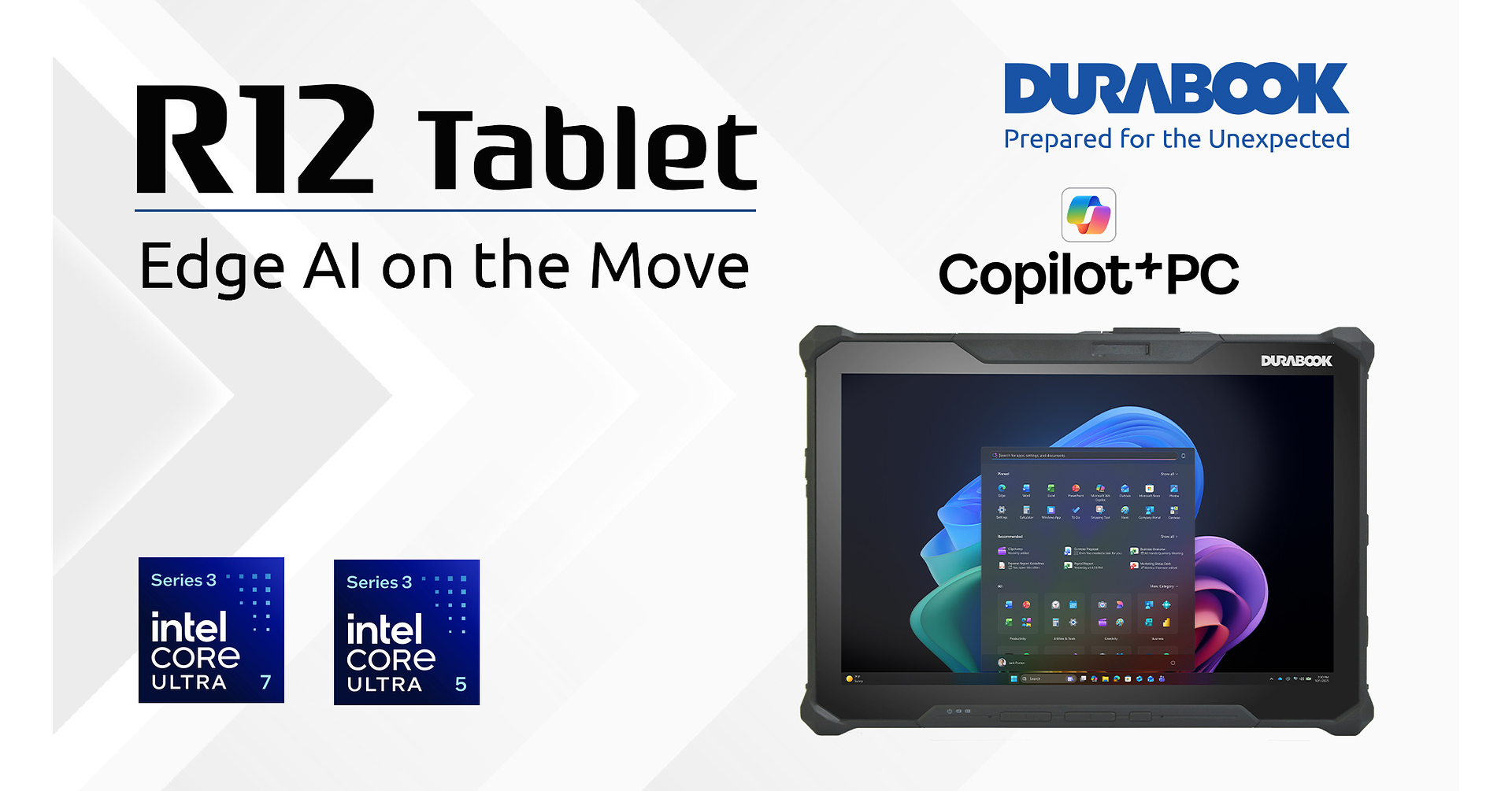
Durabook a lancé et rendu disponible à la commande la tablette durcie R12, conçue pour l’IA en périphérie dans les secteurs de la défense, de la sécurité publique et de l’industrie. Elle offre jusqu’à 412 TOPS de calcul IA, une autonomie annoncée pouvant atteindre 20 heures et des certifications de résistance, dont MIL-STD-810H et IP66. L’article décrit un nouveau produit, sans communiquer de prévisions de ventes ni de réaction du marché.
Analysis
This is a product-level signal, not yet an earnings signal. The economic question is whether rugged-device buyers will pay for local AI capability and whether this model wins repeat, multi-unit deployments; the release provides no pricing, customer commitments, shipment outlook, or attach-rate data. Until procurement evidence appears, any read-through to Intel Corporation (INTC) or NVIDIA Corporation (NVDA) is speculative and unlikely to support a material estimate change. The optional NVIDIA GPU creates a possible component-content benefit, but it is not evidence of a meaningful volume contribution. Microsoft Corporation (MSFT) has no clear incremental read-through beyond the use of Windows.
Over 1–3 months, watch for named deployments, channel availability, pricing, and evidence that the platform is qualified in defense, industrial, or public-safety fleets. Qualification cycles can make a successful design-in valuable over time, but also slow adoption; competing rugged-device vendors such as Panasonic and Getac can limit pricing power. The contrarian angle is that high advertised TOPS may be less decisive than battery life, device manageability, software compatibility, and total fleet cost. Local inference may suit disconnected use cases, but this single launch does not establish a broad shift away from cloud workloads.
Over 6–18 months, a broader move toward on-device inference could support silicon demand while shifting some workloads away from cloud inference; scale and workload mix are unproven here. The thesis weakens if buyers do not convert trials into fleet orders, if independent testing shows limited real-world performance or battery trade-offs, or if procurement remains focused on replacement cycles rather than AI features.
AllMind Terminal
AI-powered research, real-time alerts, and portfolio analytics for institutional investors.
Request TrialMarket Sentiment
Overall Sentiment
mildly positive
Sentiment Score
0.25
Ticker Sentiment
Key Decisions for Investors
- No trade on the announcement alone: it is a vendor launch without disclosed orders, pricing, or volume guidance, so the near-term public-equity signal is weak.
- Keep INTC and NVDA on watch rather than treating this as a revenue catalyst. Reassess only if Twinhead or channel partners disclose shipment scale, customer wins, or a meaningful GPU attach rate; verify product availability and actual configurations.
- For a 1–3 month catalyst check, track defense and industrial fleet awards and competitor responses from Panasonic and Getac. Falsify the adoption thesis if pilots fail to convert, procurement cycles slip, or buyers select lower-cost non-AI devices.
- Do not infer a material MSFT catalyst from Windows inclusion. Revisit only if evidence shows incremental Windows deployments or software revenue attributable to this device class.
More News
- US tech stocks tumble as investors fret over AI spending
- AI debt and French bonds face a stress test — why it may not be over
- SK Hynix shares slide after chipmaker scraps Solidigm IPO plans
- 10-year Treasury yield tumbles below 5% to lowest level in nearly a month
- The perfect storm behind the Nasdaq's rout — plus, some of the bright spots in the market
- Markets sell off worldwide as further conflict looms in the Middle East and Elon Musk cuts capex guidance