
Ascentiz Brings H + K to IFA 2026, Showcasing the World's First Modular Exoskeleton Platform
Source: PR Newswire
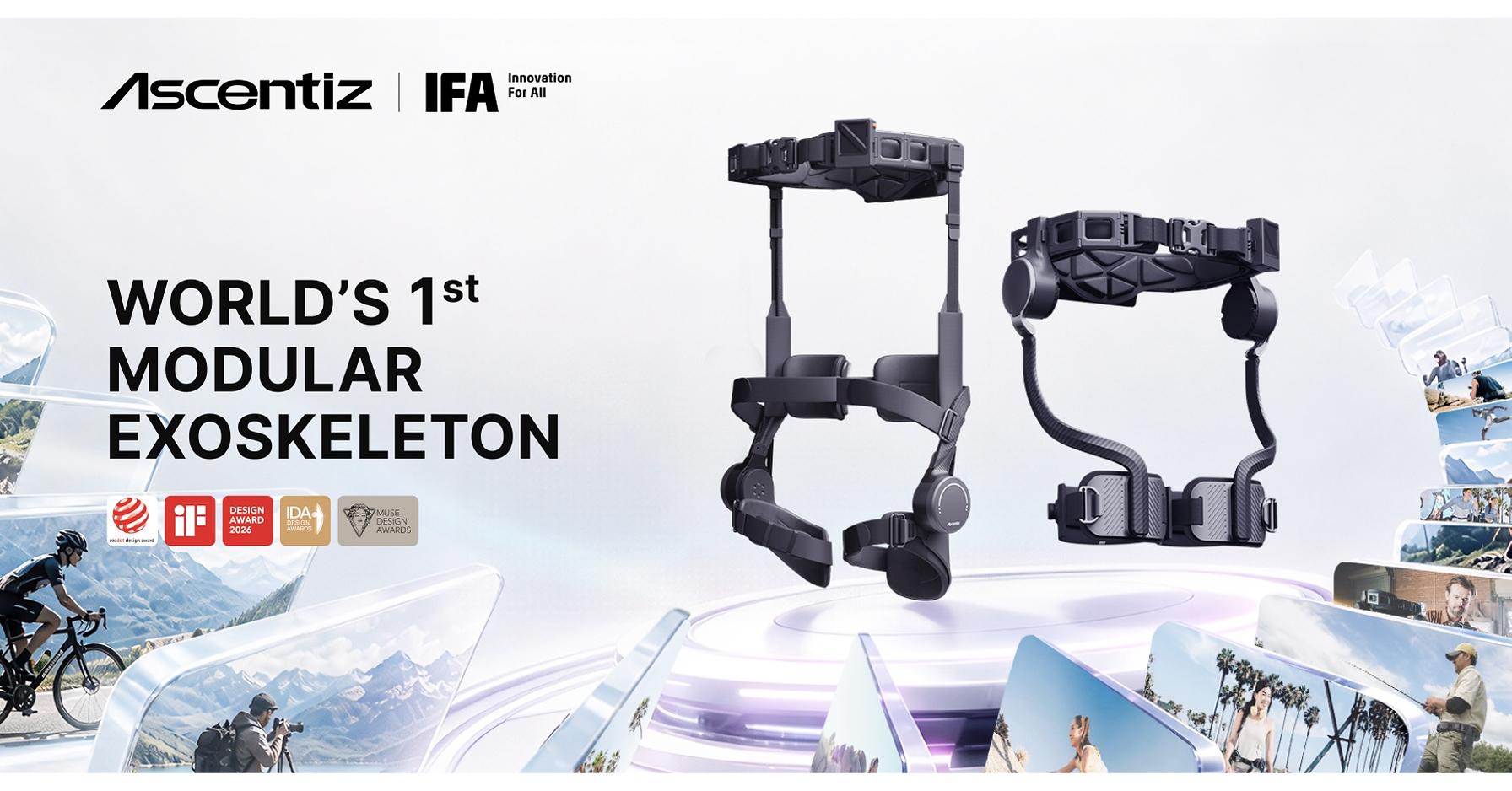
Ascentiz will showcase its modular exoskeleton platform at IFA 2026, featuring a single Exo-Belt with interchangeable hip (H) and adaptive knee (K) modules, plus an open software foundation (BodyOS) for future upgrades. Pricing is set at €1,599 (H Pro) / €2,299 (H Ultra), €2,399 (K Pro) / €2,999 (K Ultra), and €3,599 (H+K Pro Combo) / €3,999 (H+K Ultra Combo), with K and H+K availability to be announced soon.
Analysis
This reads more like category seeding than an immediately monetizable product event. The strategic implication is that exoskeletons are trying to move from one-off devices to a platform model, which usually helps the company that can own the software layer and replaceability economics; over time that can pressure closed-architecture peers because buyers will compare upgrade paths and serviceability, not just first-sale performance. The catch is that in wearables, the adoption bottleneck is rarely product architecture alone — it is fit, durability, reimbursement, and whether the device survives real-world friction without heavy support costs.
The open-platform angle is a double-edged sword: if third parties actually build on it, the ecosystem broadens, but margin capture may migrate away from the base hardware vendor toward accessories, software, and integrators. That creates a potential long-term margin compression story for the platform owner unless recurring module attach and software revenue show up quickly. In the next 1-3 months, the key catalyst is not the launch itself but whether there is evidence of paid demand beyond enthusiast/PR interest; in 6-18 months, the question is whether this becomes a licensing layer or just a capital-intensive niche product line.
Contrarian view: the market may be overrating modularity as a demand driver. For this category, the bigger signal is institutional adoption or reimbursement access, and absent that, even a well-designed platform can stall at hobbyist pricing. Falsifier is simple: if orders, repeat module attach, or gross margin fail to improve after the launch window, the platform thesis should be discounted aggressively. WWRL has no obvious direct public-market linkage here, so the tradeable impact looks limited for now.
AllMind Terminal
AI-powered research, real-time alerts, and portfolio analytics for institutional investors.
Request TrialMarket Sentiment
Overall Sentiment
mildly positive
Sentiment Score
0.18
Key Decisions for Investors
- No direct position in WWRL on this release; treat as a watch item until there is verifiable sell-through, module attach data, or recurring revenue evidence.
- Set a 30-60 day alert for any disclosed preorder, shipment, or channel inventory data; without conversion metrics, the launch should not justify multiple expansion.
- If forced to express a sympathy view, look at EKSO only as a tactical trade on confirmation of institutional/reimbursement traction; otherwise fade any launch-driven pop.
- Monitor whether the open-platform strategy leads to third-party developer activity or just commoditizes hardware; if the base device becomes a low-margin anchor, avoid chasing the story.
- Reassess only if gross margin on H/K combos and repeat purchase behavior can support a platform multiple; absent that, this is a niche product, not a scalable category inflection.
More News
- Meta's quick success with Muse puts consumers back in the driver's seat of the AI trade
- The SaaS debt trap
- DraftKings CEO doesn’t know why his stock loves bad prediction market news. Wall Street says it’s rational
- A New Distressed-Debt Club Gives Litigious Creditors an Edge
- Alibaba says it built the ‘most powerful AI chip in China’ as the country races to catch up with the U.S.
- Circle lands $100 million from Binance to ramp up global USDC expansion