
Iran’s New Attacks Cloud Middle East’s Back-to-Business Push
Source: Bloomberg
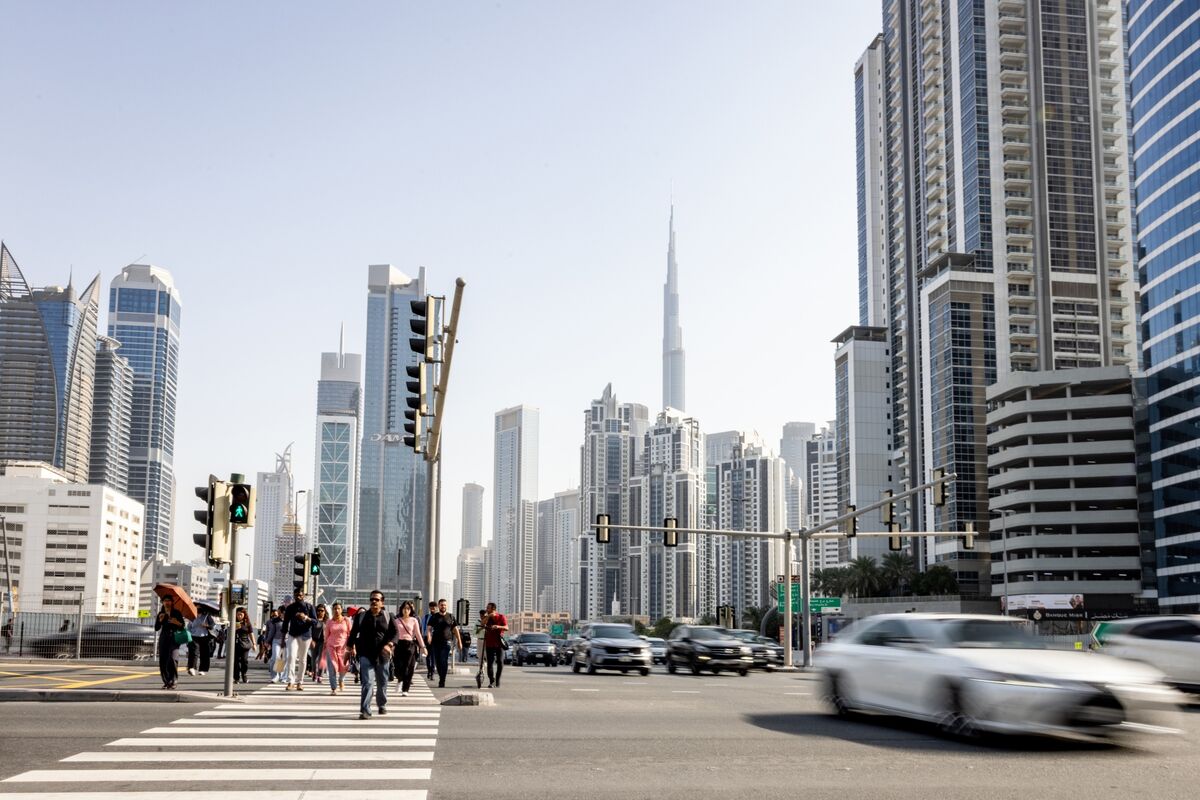
The Middle East’s “on-again/off-again” conflict is described as disrupting the region’s return to normalcy, raising near-term risk to business activity. In parallel, Saudi Arabia is reported to be exploring an $8 billion loan, while the kingdom’s AI boom is fueling wealth creation and additional partnerships such as a self-driving truck effort. Overall signals are mixed: policy/financing momentum continues, but geopolitical uncertainty remains a key headwind.
Analysis
The key market mechanism is not the headline conflict itself, but the repeated interruption of normalization. That keeps a higher risk premium on Saudi/GCC domestic cyclicals: banks, retail, real estate, airlines, and IPO-sensitive names lose on deferred capex, delayed listings, and weaker FDI conversion, even if oil is unchanged. A prolonged “wait-and-see” regime also raises the cost of external funding for project-heavy issuers, so any sovereign or quasi-sovereign borrowing is read as a signal that private credit conditions remain fragile rather than as a one-off balance-sheet event.
The more interesting second-order effect is that the AI buildout in the Gulf likely bifurcates. The spend that survives uncertainty should flow to imported infrastructure — hyperscale compute, power equipment, cooling, networking, and semis — while local venture and non-core urban development are more exposed to timing slippage. That argues for owning global picks-and-shovels rather than chasing local beneficiaries until there is evidence that procurement is moving from memorandum to cash flow.
Contrarian view: the market may be underestimating duration. Every temporary de-escalation is being treated like a durable reopening, but the path likely remains choppy, which caps multiple expansion in regional equities. The flip side is that if there is no material supply disruption, broad energy longs may be the wrong hedge; relative-value shorts on regional normalization are cleaner than outright risk-off. What would falsify this is 1-3 months of stable ceasefire conditions plus visible revival in deal flow, tourism, and financing spreads.
AllMind Terminal
AI-powered research, real-time alerts, and portfolio analytics for institutional investors.
Request TrialMarket Sentiment
Overall Sentiment
mildly negative
Sentiment Score
-0.25
Ticker Sentiment
Key Decisions for Investors
- Short KSA vs. long XLE for 1-3 months: express that Saudi domestic normalization assets should lag while energy retains geopolitical optionality. Cover if regional volatility fades for two weeks and Brent fails to hold recent highs.
- Buy 3-6 month put spreads on KSA or a similar GCC equity proxy rather than outright shorts: cleaner way to monetize a stalled reopening with defined risk. Target a 15-20% drawdown in the ETF if conflict noise keeps capital formation frozen.
- Long NVDA / SMH on pullbacks only as a 6-18 month way to play Gulf AI capex that survives political noise; the thesis is infrastructure spend, not local venture hype. Falsify if there are no meaningful contract awards or datacenter/power procurement announcements over the next quarter.
- Avoid bottom-fishing Saudi banks, consumer, or real-estate proxies until there are two consecutive months of improving tourism, IPO, and spread data. These are the names with the highest operating leverage to a real normalization.
More News
- CoreWeave credit default swaps hit distress levels as investors sour on AI debt
- Brian Sullivan: Why the 'real' price of oil is likely $30-$40 higher than where it is now
- Treasuries Soar as Tech Slump Threatens Growth
- Penske Automotive agrees to be taken private by Penske, Mitsui
- Faraday Copper completes acquisition of BHP’s San Manuel project
- Latest Oil Market News and Analysis for Oct. 16