
Ouverture du Salon chinois 2026 du secteur international des mégadonnées à Guiyang
Source: PR Newswire
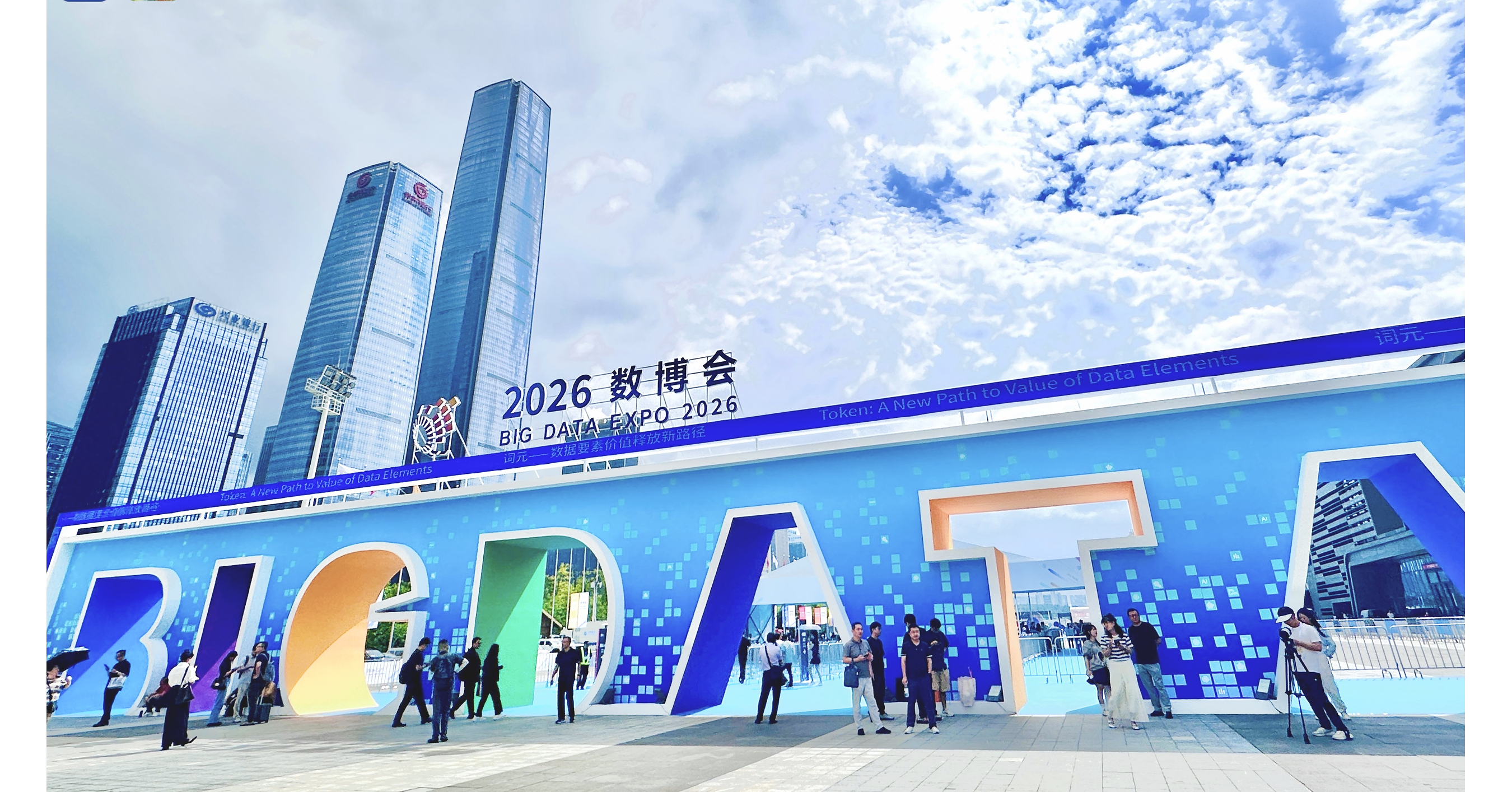
Le Salon chinois 2026 du secteur international des mégadonnées a ouvert ses portes le 28 août à Guiyang, rassemblant plus de 300 exposants et s’articulant autour de l’idée de “jeton” comme nouveau levier de valorisation des données. La région revendique 26 centres de données pour une capacité totale de calcul >174 EFLOPS, une informatique intelligente représentant >98% de la puissance, et un indicateur d’efficacité énergétique moyen de 1,19. L’essor du pôle local porte le chiffre d’affaires des logiciels et services informatiques au-delà de 100 Md¥, avec des partenariats visant à accélérer échanges et développement commercial.
Analysis
This reads more like a policy-and-capex signaling event than a near-term revenue catalyst. The market mechanism is a gradual reallocation of spending toward data-center density, cooling, power distribution, security, and cloud orchestration inside China; that is constructive for infrastructure-adjacent vendors, but not necessarily for headline AI chip demand. The bigger implication is that China is trying to localize the value chain around data monetization, which can compress the addressable market for imported compute hardware while expanding demand for domestic software, security, and grid-efficient buildouts.
The second-order winner set is likely to be equipment and infrastructure names with exposure to power/thermal management and enterprise networking, while legacy, inefficient facilities and pure commodity power producers may lag as utilization shifts to lower-PUE sites. If the theme gains traction, the real beneficiaries are companies selling picks-and-shovels to the data stack, not consumer-facing internet names; BABA/BIDU-style cloud monetization could improve, but only if the policy layer turns into actual procurement and platform usage. For US semis, this is more of a localization headwind than a demand shock.
Time horizon matters: the immediate price reaction should be muted, the 1-3 month catalyst is contract announcements or provincial subsidy/prioritization, and the 6-18 month effect is a structurally more efficient, more centralized China compute footprint. The contrarian view is that the market may overread this as incremental AI demand, when it is mostly spend substitution and industrial policy theater unless hard orders show up. What would falsify the bullish infrastructure read is a lack of follow-through in capex guidance, no visible project awards, or evidence that power/data regulations slow deployment rather than accelerate it.
AllMind Terminal
AI-powered research, real-time alerts, and portfolio analytics for institutional investors.
Request TrialMarket Sentiment
Overall Sentiment
mildly positive
Sentiment Score
0.25
Key Decisions for Investors
- Small long VRT / short SMCI pair for 1-3 months: thesis is that the next AI capex leg favors power, cooling, and rack integration over standalone server box economics; stop if SMCI re-accelerates orders or VRT fails to outperform by 8-10%.
- Buy 3-6 month call spreads in BIDU or BABA on pullbacks: use as a China AI/cloud proxy only if management commentary confirms cloud or enterprise AI monetization; otherwise treat as a watch item, not a conviction long.
- Do not short NVDA or AMD on this headline: the article is supportive of Chinese localization but not enough to prove lost GPU demand; wait for hard evidence in export-sensitive guidance or channel checks.
- Monitor KWEB versus FXI over the next 30-60 days: if the theme converts into actual cloud/security capex, KWEB should outperform broad China beta; if not, fade the move as policy-driven noise.
More News
- The IEA wants to empty its oil reserves faster. A federal watchdog says the US isn’t ready for what comes next
- Deadly Houthi Attacks on Saudi Arabia; EU Caps Chinese Hybrid Car Imports
- Saudi Arabia says 1 dead, 11 injured in latest attack on Riyadh airport
- RBI Tightens Rupee Defense as Pricey Crude, Foreign Outflows Bite: USD/INR
- TotalEnergies, KKR expand U.S. solar venture with 700 MW addition
- Why is SK Hynix stock sliding today?