
LUCA ANNOUNCES AGREEMENT TO ACQUIRE EL BARQUEÑO FROM AGNICO EAGLE
Source: PR Newswire
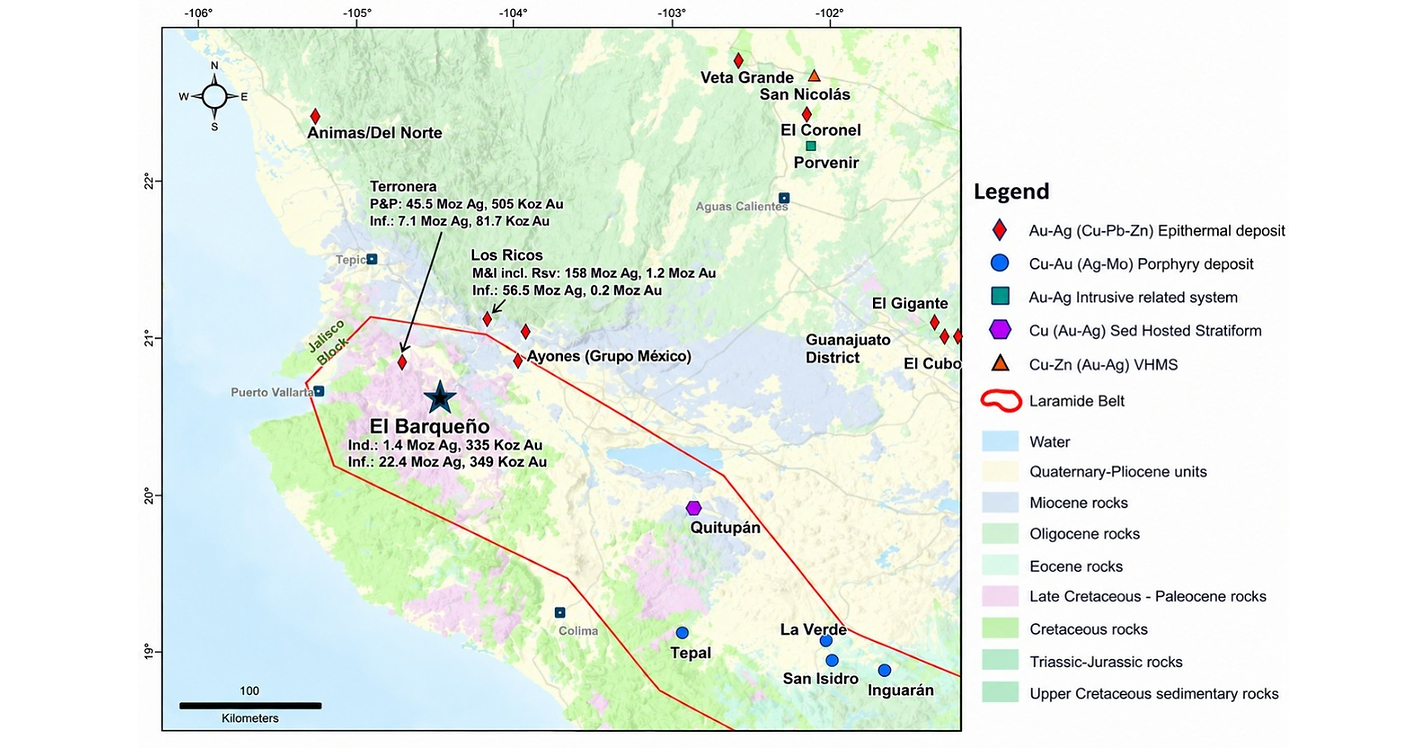
Luca Mining agreed to acquire 100% of Agnico Eagle's El Barqueño gold-silver-copper project in Jalisco, Mexico, for $10 million in shares at closing, up to $30 million in contingent payments and up to $20 million in production-linked payments, plus a 2% NSR royalty on defined-resource areas. The project carries a historical, non-current NI 43-101 estimate of 399,265 indicated AuEq ounces at 1.47 g/t and 650,046 inferred AuEq ounces at 1.43 g/t, which Luca says must be independently validated. Closing is targeted for Q4 2026, but value realization depends on regulatory approvals and resolving a legal challenge over ecological-planning restrictions that currently prevent exploration drilling.
Analysis
For AEM, the transaction monetizes a non-core, legally constrained Mexican exploration asset while preserving asymmetric upside through equity ownership, staged consideration, production-linked payments and a retained royalty. The structure transfers permitting, verification and development-capex risk off AEM's balance sheet; absent a meaningful ownership mark in Luca, the direct earnings impact should be immaterial, but it modestly improves portfolio quality and reduces management distraction.
The key market mechanism is adverse selection rather than resource optionality: a major producer that drilled extensively did not advance the asset, so Luca must prove that its smaller-scale operating model, local execution, and a higher gold-price deck can overcome the permitting and economic hurdles. The initial post-closing drilling milestone can force an early cash-or-equity payment before a compliant resource or feasibility study exists, creating dilution/financing risk for LUCA and potentially delaying actual field work if permits remain unresolved. Royalty stacking materially matters: areas with legacy royalties plus AEM's retained interest could face lower project-level NPV and a narrower mine-plan envelope than headline contained ounces imply.
Near term, this is not a catalyst for AEM shares; the relevant 1-3 month watchpoint is whether transaction approvals and the legal pathway progress without conditions. Over 6-18 months, a permit resolution and independently verified resource would convert AEM's retained instruments into valuable optionality, while an adverse ruling or prolonged administrative delay makes the asset effectively dormant. Consensus may overvalue the strategic narrative: infrastructure and historic drilling do not substitute for permit certainty, current resource validation, metallurgy, recoveries, capex, or community agreements.
AllMind Terminal
AI-powered research, real-time alerts, and portfolio analytics for institutional investors.
Request TrialMarket Sentiment
Overall Sentiment
mildly positive
Sentiment Score
0.24
Ticker Sentiment
Key Decisions for Investors
- No standalone AEM trade: maintain core exposure only if supported by AEM's operating assets and gold view; this divestiture is too small to alter NAV or earnings. Treat any announcement-driven strength as non-fundamental.
- Monitor AEM disclosures for the size and liquidity of its Luca equity position and any fair-value gain; only then assess whether a permit/resource catalyst could be material enough to influence AEM's other-income line within 6-18 months.
- For investors able to trade TSXV liquidity, place LUCA on a watchlist rather than buy the announcement: require closing, a favorable Amparo/permitting outcome, and a current NI 43-101 resource before underwriting value. Falsifier: drilling commencement or the associated deferred payment funded primarily with discounted equity before those de-risking milestones.
- If LUCA rerates materially on historic-ounce extrapolation, consider a tactical short or avoid participation until royalty burden, metallurgy, mine method, and development capex are disclosed; those inputs, not gold-equivalent ounces, determine whether the asset can carry the contingent consideration.
More News
- Italy to deploy warships to protect shipping through Bab al-Mandeb
- UN mission finds evidence of U.S. war crimes in Iran; Washington rejects report
- Oil prices fall as Saudi supply hopes outweigh fresh Houthi strikes
- Oil prices fall for 3rd day as supply concerns ease, diplomacy in focus
- Oil Traders Stymied by Iran War Stalemate: Evening Briefing Americas
- California AG Says Paramount-WBD Merger Would Hurt the State
From AllMind Research
- Anthropic IPO Preview: Valuation, Timing, and What to Watch
- Shein After the IPO: Venue, Valuation, and What Must Be Proved
- What AI Research Tools Should a Small Hedge Fund Buy First?
- Capital Intensity as Gravity: The AI Trade Enters Its Industrial Era (Looking at Q3 2025 Earnings in Tech)
- AI Portfolio Monitoring: Build an Alert Policy Analysts Can Audit