
Alexandria Real Estate: The Risk Was At $220, Not At $51
Source: seekingalpha.com
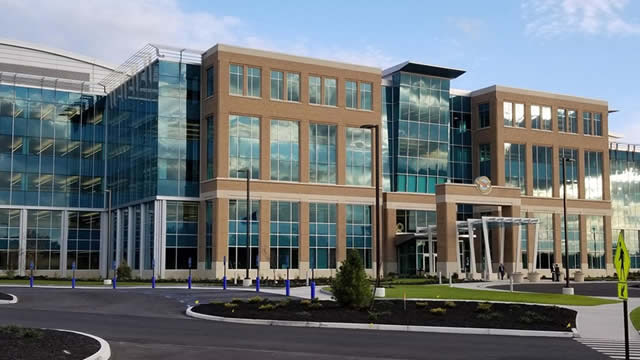
Alexandria Real Estate has fallen 75% over five years amid life-sciences real estate oversupply, higher interest rates, and weaker biotech funding. Recent rental-rate declines and lower occupancy remain headwinds, but shrinking construction pipelines and early recovery signs in key markets could support a flight to quality for ARE's premium assets as excess supply is absorbed.
Analysis
ARE is effectively a leveraged call on two variables that are beginning to inflect independently: biotech tenant formation/capital availability and the cost of capital applied to long-duration real estate cash flows. A reduction in new deliveries should improve leasing economics before headline occupancy visibly recovers, because competing landlords lose the ability to offer large blocks of newly built, concession-heavy space. The key second-order beneficiary is ARE's development pipeline: assets delivered into a tighter 2027-28 market could earn materially higher stabilized yields than projects underwritten during the recent weak leasing environment.
The near-term risk is that stabilization in demand does not equal a return to pre-2022 rent growth. Venture-backed biotech remains unusually sensitive to IPO windows, follow-on issuance and NIH/federal research budgets; a renewed risk-off move could extend tenant decision cycles and force additional concessions. Moreover, if the 10-year Treasury remains elevated, even modest operating improvement may be offset by cap-rate pressure and refinancing concerns across office-adjacent REITs, limiting multiple expansion over the next 1-3 months.
Consensus may be too focused on current same-store leasing metrics and insufficiently on the asymmetry created by shrinking supply. ARE's premium campus concentration means it should capture a disproportionate share of scarce large-scale requirements when funding conditions normalize, while lower-quality suburban lab conversions face higher obsolescence and re-tenanting risk. That said, this is a 6-18 month recovery setup rather than an immediate earnings-revision trade; the thesis requires evidence that leasing volume, not merely management commentary, is improving.
AllMind Terminal
AI-powered research, real-time alerts, and portfolio analytics for institutional investors.
Request TrialMarket Sentiment
Overall Sentiment
mixed
Sentiment Score
0.05
Ticker Sentiment
Key Decisions for Investors
- Maintain ARE as a watch-to-accumulate rather than chase: initiate a 50% position only after two consecutive quarters of improving leasing activity or occupancy stabilization, then add if cash rent spreads turn positive. Target a 6-18 month holding period; falsify if occupancy declines accelerate despite a shrinking construction pipeline.
- Express relative quality through long ARE / short BXP in equal dollar amounts for 6-12 months, subject to confirming comparable interest-rate duration. ARE has more direct exposure to purpose-built life-science campuses, while BXP retains greater conventional office-cycle sensitivity; exit if biotech leasing fails to improve by mid-2027 or BXP demonstrates materially stronger leasing conversion.
- Use long-dated ARE calls only after a meaningful rates catalyst, such as a sustained decline in the 10-year Treasury or clear Fed easing expectations, rather than buying volatility ahead of uncertain quarterly results. A 12-18 month call spread limits premium decay; the trade fails if lower rates do not translate into improving leasing guidance.
- Monitor biotech financing as the leading indicator: sustained reopening of IPO/follow-on issuance and improving XBI relative performance would support tenant expansion 1-2 quarters later. If XBI weakens materially while ARE continues to outperform, reduce exposure because the equity move would likely be rate-driven rather than supported by future space demand.
More News
- Trump says Iran war will end 'when I want it to' as costs reportedly balloon to $47 billion
- SK Hynix third-quarter profit sharply beats estimates on AI memory boost
- SK Hynix Posts Record Profit Amid AI Rush
- Anthropic's IPO could be 'speculative fiction' or a 'generational moment' — investors are split
- Fed expected to hold rates steady, but Warsh may point way to more hikes
- Anthropic Gives Traders a Pure-Play Bet on Frontier AI