
Hart Solar Project Advances Michigan's Clean Energy Future
Source: PR Newswire
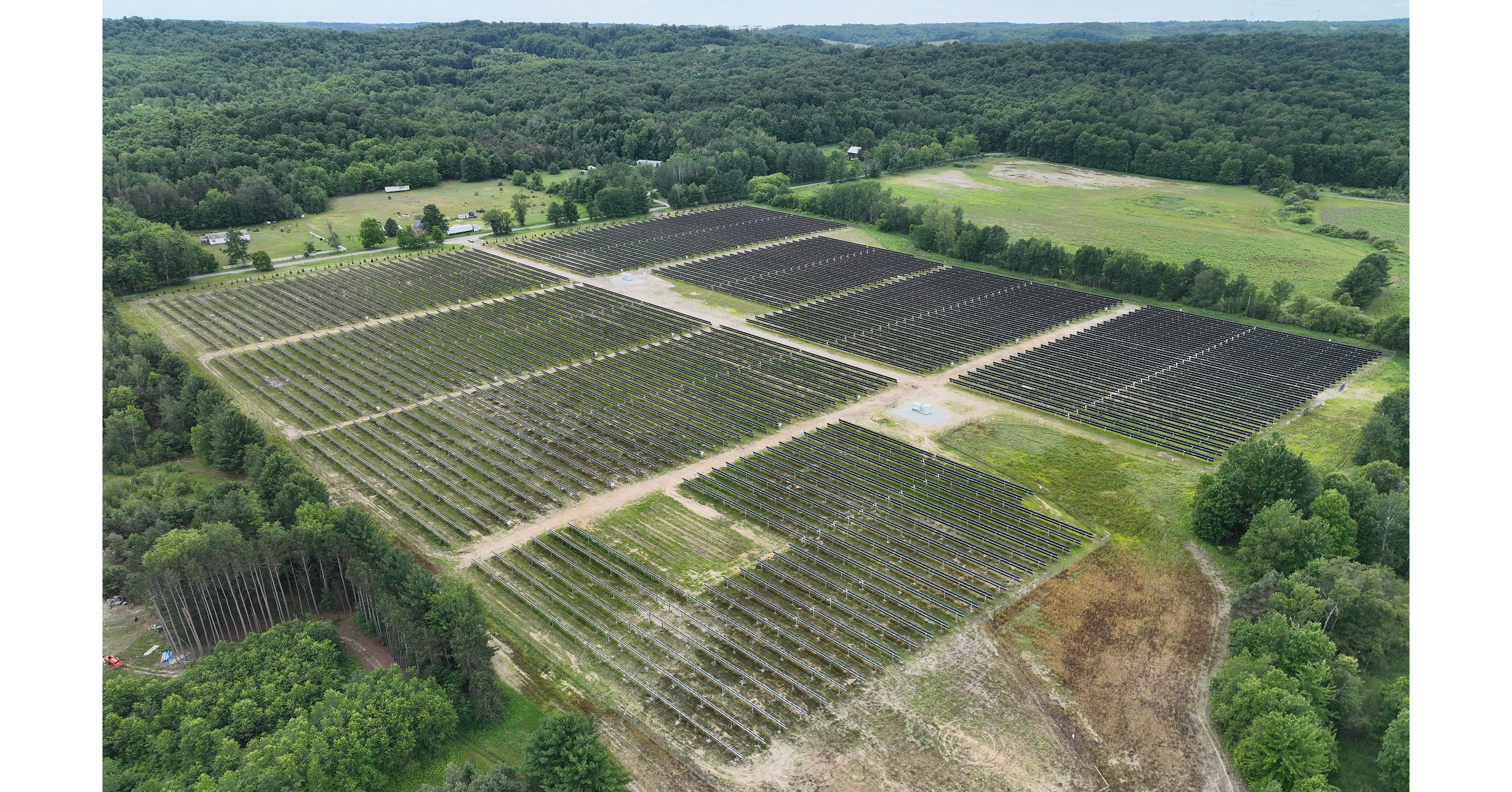
NorthStar Clean Energy completed the 120MW Hart Solar Project in Oceana County, Michigan, which is expected to generate more than 200GWh annually, power over 21,000 homes, and avoid about 96,000 metric tons of CO2 emissions per year. The project created more than 300 construction jobs and supports long-term renewable-power agreements with Executive Energy Services and the Michigan Public Power Agency. Oakland Schools and 45 other Michigan public school districts are projected to save approximately $25 million over a 10-year agreement through the project.
Analysis
The relevant public-market read-through is CMS, whose NorthStar subsidiary is converting a modest amount of development capital into contracted, long-duration cash flows. At 120 MW, Hart is immaterial to consolidated earnings, but it is directionally supportive of CMS's ability to earn regulated-like returns through customer-backed clean-energy investments without relying solely on Michigan rate-base growth. The more important signal is that public entities are accepting multi-year solar contracts as a budget hedge, which lowers offtake risk for future Michigan projects and can support NorthStar's development pipeline valuation over the next 6-18 months.
The claimed customer savings should not be extrapolated directly into higher CMS margins: lower supply costs can create political pressure for utilities to share renewable-cost benefits with customers and regulators, limiting upside if projects are rolled into regulated constructs. Incremental solar also raises midday energy-supply pressure and increases the value of dispatchable capacity, storage, and grid upgrades; that is potentially more economically meaningful for CMS over several years than the generation asset itself, assuming Michigan's load-growth forecasts hold. Watch for interconnection and transmission-capex disclosures, as those determine whether renewables become a rate-base accelerator or a source of curtailment and lower realized project returns.
Consensus is likely to treat this as generic ESG-positive news, correctly assigning little near-term EPS value. The non-obvious upside is optionality: if municipal and school procurement becomes a repeatable channel, NorthStar can lock in investment-grade-like counterparties and reduce merchant exposure, which could justify a modestly lower risk premium for its unregulated portfolio. This thesis fails if CMS's next filings show rising renewable curtailment, project returns below authorized utility ROE, or state regulatory resistance to recovery of associated grid spending.
AllMind Terminal
AI-powered research, real-time alerts, and portfolio analytics for institutional investors.
Request TrialMarket Sentiment
Overall Sentiment
strongly positive
Sentiment Score
0.58
Ticker Sentiment
Key Decisions for Investors
- No event-driven trade in CMS solely on Hart Solar; the project is too small to move FY2026-27 EPS. Maintain CMS only as a 6-18 month regulated-utility/clean-grid exposure, with a review after the next earnings call for NorthStar backlog, contracted offtake duration, and Michigan transmission-capex guidance.
- Use CMS relative to more merchant-power-sensitive renewable exposure: consider long CMS / short a broad clean-energy proxy such as ICLN on a 6-12 month horizon if contracted offtake and grid investment accelerate. The thesis is that CMS's contracted/customer-backed model should be less exposed to power-price compression; exit if CMS guides to elevated curtailment or weak project returns.
- Set a monitoring trigger around Michigan regulatory filings and CMS capital-plan updates: an upward revision to distribution, transmission, or storage investment is the actionable catalyst for multiple support, while a rate-case disallowance or lower authorized ROE would invalidate the grid-spend upside.
- Avoid CETY and ROOF as direct read-throughs. Neither has a demonstrated economic linkage to this specific project, and treating the press release as a sector-wide catalyst would create unsupported basis risk.
More News
- CMS Energy stock hits 52-week low at 65.13 USD
- All Iranian airlines to be 'shut down' from Wednesday, Bessent tells CNBC
- Jamie Dimon says hyperscaler AI spending could hit $1 trillion next year
- Latest Oil Market News and Analysis for Sept. 22
- Oil Settles Near $100 as Hormuz Flows Stunt Rally
- World Leaders Converge on United Nations General Assembly
From AllMind Research
- Anthropic IPO Preview: Valuation, Timing, and What to Watch
- Shein After the IPO: Venue, Valuation, and What Must Be Proved
- What AI Research Tools Should a Small Hedge Fund Buy First?
- Weekly Update: Live Event Center, In-App Documents, and Faster Transcripts
- How to Automate Equity Research Workflows: A Control-First Guide